Harris' centrist campaign draws mixed reviews from progressives

Add Axios as your preferred source to
see more of our stories on Google.
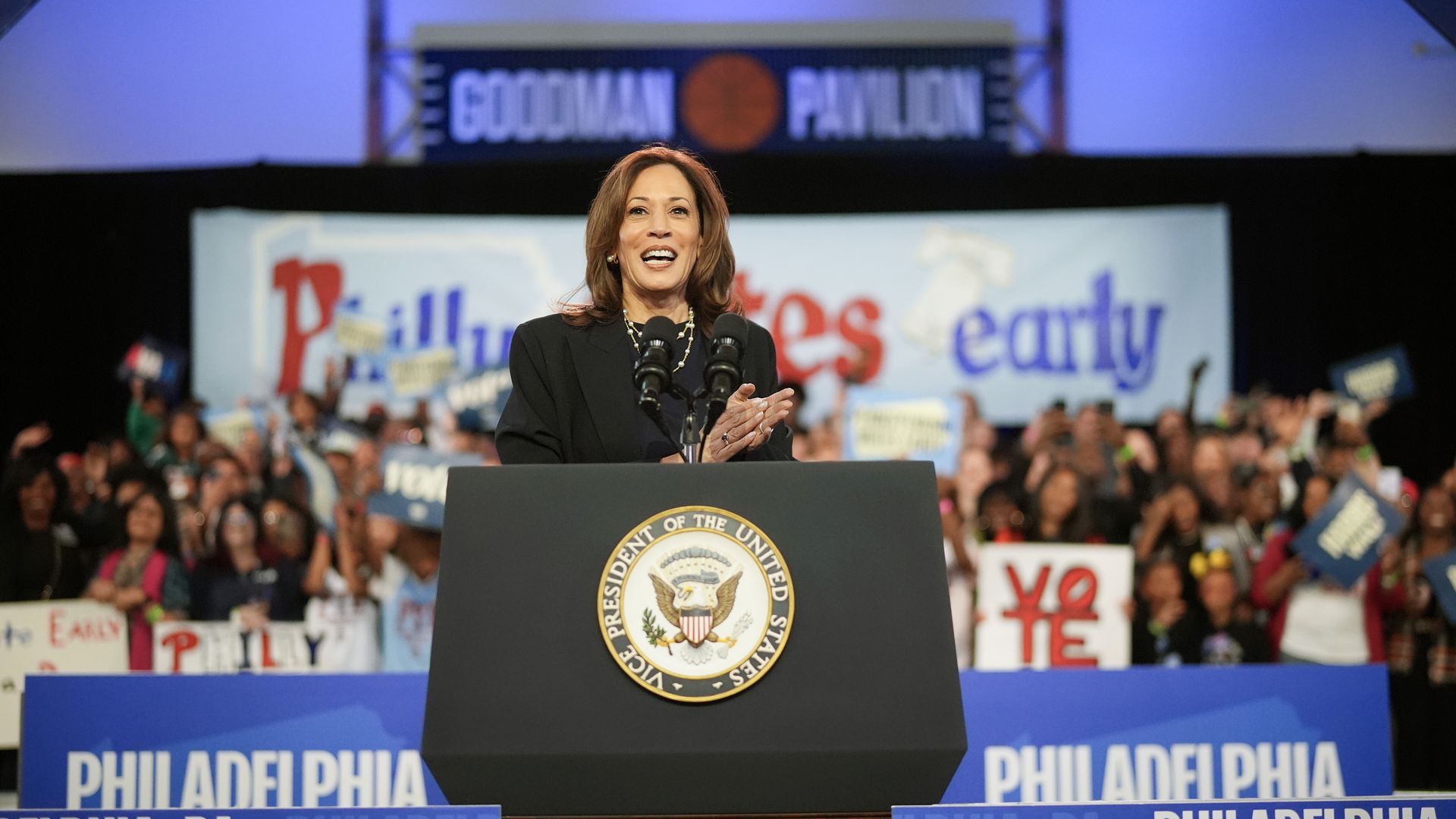
Vice President Harris speaks during a campaign rally on Oct. 27 in Philadelphia. Photo: Andrew Harnik/Getty Images
As the 2024 race winds down, some progressives have mixed feelings about how effectively they feel Vice President Harris has championed their causes.
Why it matters: Progressives were a major, energizing force in the last two presidential election cycles and helped move the Democratic party further left on a number of issues, from student loan relief to climate action.
- However, they've played a less central role in the 2024 campaign. While Sen. Bernie Sanders, Sen. Elizabeth Warren and Rep. Alexandria Ocasio-Cortez spoke at the DNC and campaigned for Harris, they haven't appeared on stage beside her.
- Harris has also notably moved away from some of her previously held progressive stances in favor of more moderate ones.
Yes, but: That's not to say some progressives aren't excited about Harris.
What they're saying: Andres Parra, the deputy executive director of the Georgia Youth Coalition Fund, told Axios he felt the Harris campaign has done a "great job" reaching out to a diverse swath of voters, including progressives, citing the campaign's savvy social media presence.
- Dakota Hall, executive director of the Alliance for Youth Action, felt Harris had shown a "willingness to listen and hear out" progressives on different issues.
- "I'm feeling really good about the energy that I'm seeing in the field, about the momentum and ... people understanding the stakes of this election," Hall told Axios.
For Joseph Geevarghese, the executive director of the progressive group Our Revolution, Harris' campaign message has been a "fairly centrist" one.
- He felt Harris should have instead energized her base by zeroing in on an economic message that appealed to workers and championing progressive efforts to bring structural change, Geevarghese told Axios.
- For instance, while her position to end medical debt is "great," it doesn't address the its root case, which is a "healthcare system that is run for-profit," Geervarghese said.
Zoom in: Harris' decision to campaign alongside former Rep. Liz Cheney (R-Wyo.) has drawn mixed reactions in progressive circles.
- Geevarghese told Axios he saw it as Harris "taking the base for granted." He added he wasn't convinced that touting Republican endorsements would move that many voters, compared to the number of young and progressive voters she could turn out by appealing directly to her base.
- Sanders voiced a similar sentiment to AP last month, saying "there are a hell of a lot more working-class people who could vote for Kamala Harris than there are conservative Republicans," he said.
- However, Parra viewed the Cheney appearances as "smart," aimed at showing Harris' broad appeal in a tight race.
- Hall appreciated the appeal of a Cheney endorsement but noted it didn't equate to influence on a potential Harris White House's agenda. He pointed out that Minnesota Gov. Tim Walz had voiced a similar sentiment during an appearance on The Daily Show last month.
What they're saying: A spokesperson for the Harris campaign said the campaign had partnered with progressives to reach key parts of the base, pointing to the many campaign events progressives have done on behalf of the Harris campaign — including Ocasio-Cortez' recent Twitch livestream with Minnesota Gov. Tim Walz.
- The spokesperson also defended Harris' decision to campaign with Cheney, noting that it helped the campaign engage with conservative and independent voters through someone they could identify with.
State of play: Both Geevarghese and Hall agreed the progressive movement has played a smaller role in the 2024 election cycle than it did in the previous two.
- For Geevarghese, Harris' centrist appeals are evidence that the "strategists and consultants in the Harris campaign forgot about 2016 and 2020, and where the center of energy is within the Democratic Party."
- "Part of the reason they've been given license to run this central strategy is because there wasn't really a primary" after President Biden's late-stage exit from the race, he said. Competitive 2016 and 2020 primaries underscored how much support there was for candidates like Sanders and Warren, he added.
- "I don't think the American electorate has shifted so much" since then, Geevarghese said.
For Hall, the influence of progressives can be seen in a number of Harris' economic policies, like tax credits for first-time home buyers and lowering prescription drug costs.
- The need to court moderate Republicans and independents is partly a result of how fractured the left is, he noted.
- The diminished role of progressives this cycle is also due to how effectively the GOP has "vilified" progressives like Warren and Sanders as "too radical, too extreme," Hall said.
Zoom out: Harris' support for Israel amid the war in Gaza has prompted concerns that it could hurt her standing with young progressives.
- However, both Parra and Hall said many they'd spoken to were still voting for Harris because they believed she could still be pushed on the issue and would handle the war better than Trump.
- "People recognize that the Kamala Harris administration is going to do more for Palestinians and we can ... have more of those conversations there than we could" with Trump, Parra said.
- Hall also believed that young voter turnout would be driven by their desire to defend abortion rights and bodily autonomy.
The bottom line: "Young people are going to turn out for the issues that they care about," Hall said.
Go deeper:
