Trump win prompts judge to postpone Jan. 6 defendant's trial

Add Axios as your preferred source to
see more of our stories on Google.
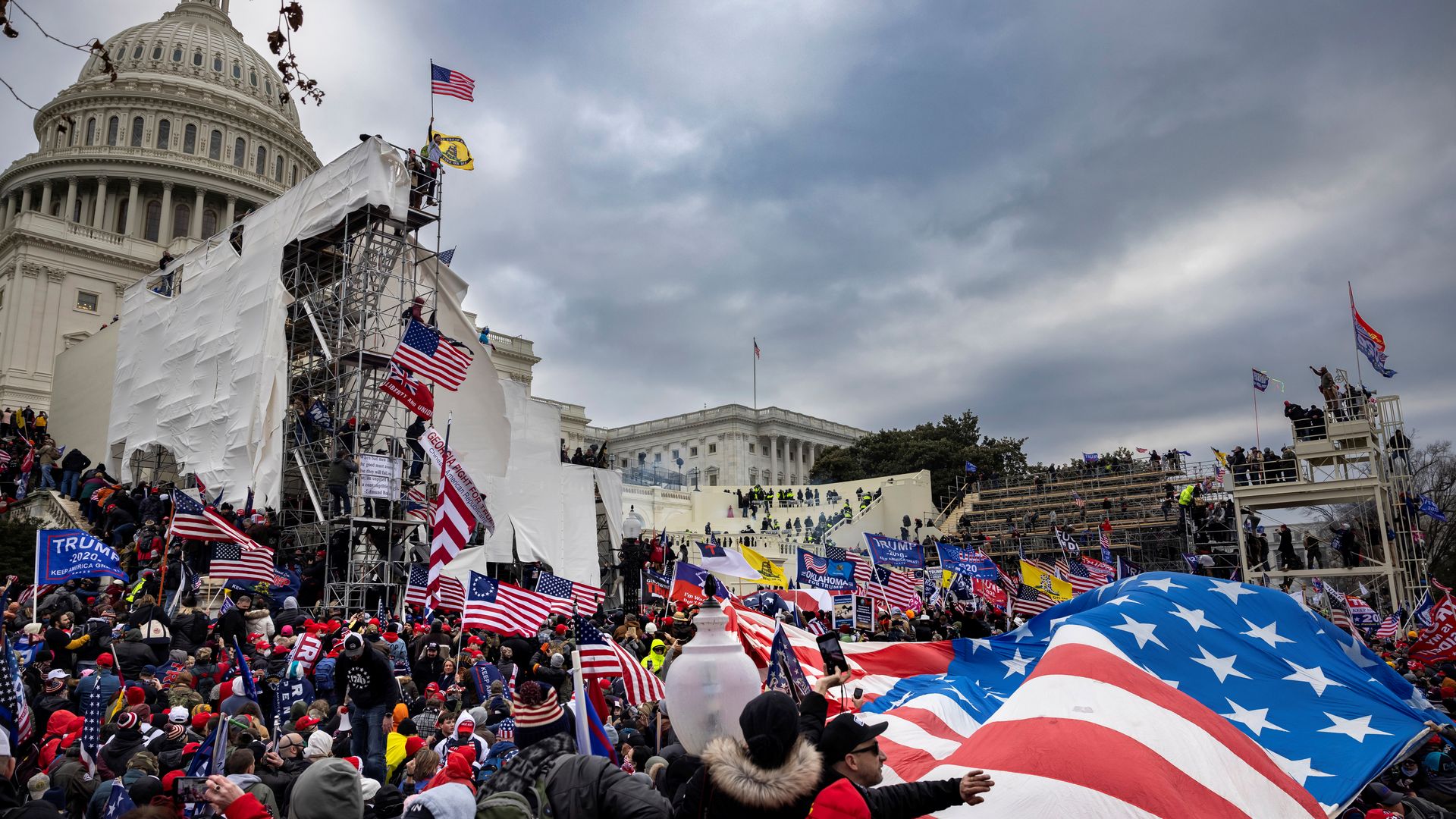
Trump supporters clash with police and security forces as people try to storm the U.S. Capitol on January 6, 2021. Photo: Brent Stirton/Getty Images
A U.S. district court judge consented to a request from a Jan. 6 defendant to delay his trials after President-elect Trump's win, agreeing that his White House return could make the proceedings a moot point.
Why it matters: The judge's decision could set a precedent, prompting others handling Jan. 6 defendants cases to reach similar conclusions despite DOJ opposition.
- During his 2024 campaign, Trump vowed to "free" Jan. 6 rioters as one of his first acts in office.
- He told ABC's Rachel Scott during his now-infamous NABJ appearance he would "absolutely" pardon rioters "if they're innocent," adding they were "convicted by a very tough system."
- Defendants and their attorneys have pointed to his words in their attempts to postpone their cases, predicting a pardon is on the way.
Driving the news: U.S. District Court Judge Rudolph Contreras, an Obama appointee, agreed this week to postpone the trial for William Pope, who is charged with several misdemeanors stemming from his involvement in the Jan. 6 attack.
- Contreras said he wanted to avoid pointlessly bringing in dozens of jurors for cases that could soon dissolve, per multiple reports.
- Pope was scheduled for trial in early December, per a court representative.
- Pope, who is representing himself, argued in a Wednesday court filing, "the circumstances in my case are inseparable from the election of President Trump," adding that "to proceed with a trial that the government knows will result in my exoneration is unbelievably frivolous."
Yes, but: Other judges in the D.C. courthouse have not entertained requests for delays in sentencing hearings — but those would require far fewer resources than a jury trial.
- Obama appointee Judge Amit Mehta rejected defendant Terry Allen's motion to continue, saying "speculation" that he could receive a pardon is not sufficient cause to push back his sentencing.
- Allen's attorneys had argued in a Friday filing that Trump "is not shy when it comes to exercising his pardon powers," saying "there is clearly no reason to believe he won't do as he says" in pardoning convicted rioters.
- Similarly, Judge Colleen Kollar-Kotelly, a Clinton appointee, moved forward with sentencing rioter Nicholas Fuller, despite his attorneys' argument that there is a "real possibility" that the Trump administration would dismiss the case for his co-defendants, who are scheduled to go to trial in January.
The big picture: Defense attorney Joseph McBride, who has represented several Jan. 6 defendants, told CBS requests would be filed "across the board" to delay cases until Trump makes his return to the Oval Office.
- DOJ prosecutors have repeatedly pushed back on attempts to slow-walk cases until after January, arguing the expectation of a pardon is not enough to subvert justice, but the number of requests is likely to skyrocket in the coming weeks.
- A law enforcement official told NBC News the DOJ would focus on arresting the "most egregious" offenders in the days before Trump assumes office.
By the numbers: As of August, more than 1,488 defendants had been charged in district or superior court in connection to the riot, where more than 140 police officers were assaulted.
Go deeper: Who Trump might pardon as president
