Report: Extreme weather cost world $2 trillion in 10 years, U.S. worst hit

Add Axios as your preferred source to
see more of our stories on Google.
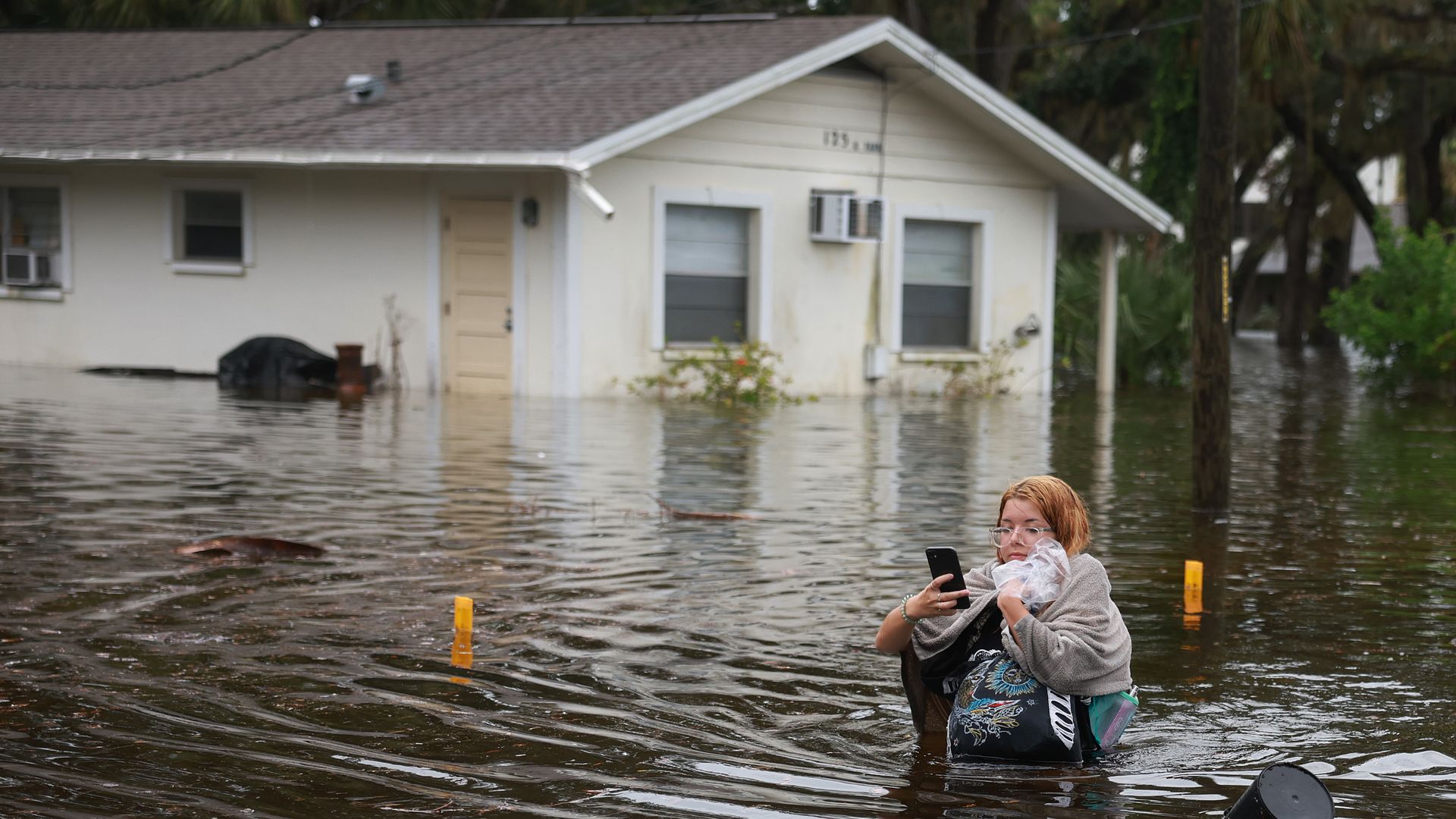
A woman wades through flood waters after having to evacuate her home after Hurricane Idalia's heavy rains inundated it in Tarpon Springs, Florida, in August 2023. Photo: Joe Raedle/Getty Images
Climate-related extreme weather events cost the global economy more than $2 trillion over the past decade and the U.S. was the worst-affected nation, per a report published as leaders gather for the COP29 summit in Azerbaijan Monday.
Why it matters: The damage estimates in the Oxera report for the International Chamber of Commerce for 2014-2023 roughly equate to those of the 2008 global financial crisis and ICC secretary-general John Denton said "the economic impact of climate change" needs a "response of similar speed and decisiveness," per CNN.
What they did: The report's researchers examined nearly 4,000 events that occurred over the 10-year period which impacted 1.6 billion people.
What they found: In the last two full years of the report alone, global economic damages reached $451 billion. That's a 19% rise compared to the previous eight years of the decade, according to the researchers.
- The U.S. had the greatest economic losses over the period from 2014-2023 ($934.7 billion), followed by China at $267.9 billion and India ($112 billion).
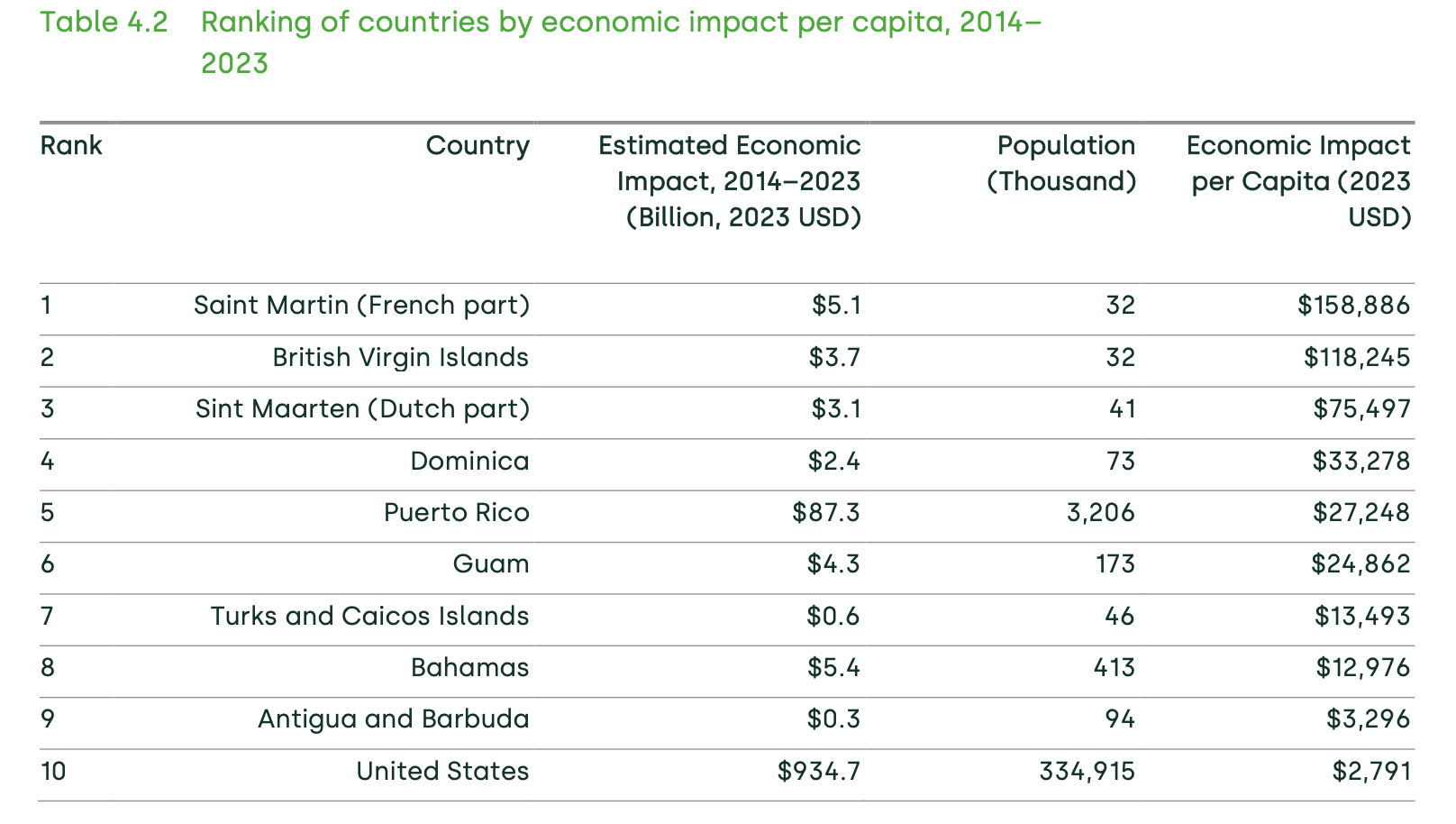
Yes, but: Per capita, the French part of the small island of Saint Martin incurred the greatest cost: $5.1 million in total, but the average cost per person was $158,886.
- U.S territory Puerto Rico, which has yet to full recover from 2017's devastating Hurricane Maria, was fifth on the worst-affected nations per capita.
- The U.S. was 10th in these rankings.
Threat level: The report found developing economies could be hit hard with single extreme weather events — which often reach economic costs higher than a nation's annual GDP.
What they're saying: "The data from the past decade shows definitively that climate change is not a future problem: major productivity losses from extreme weather events are being felt in the here and now by the real economy," said Denton in a statement accompanying the report.
- "The UN Climate Change Conference" in Baku "cannot be — as some have suggested — a 'transitional' COP," he said. What the summit needed were "outcomes capable of accelerating climate action commensurate with the immediate economic risks," he added.
- "This must start with a comprehensive package to accelerate the deployment of finance to ensure that all countries can transition towards low-carbon and climate-resilient development without further delay."
Between the lines: Ilan Noy, a disaster economist at Victoria University of Wellington, New Zealand, told The Guardian the findings were in line with similar research he had conducted.
- "The main caveat is that these numbers actually miss the impact where it truly matters, in poor communities and in vulnerable countries," added Noy, who was not involved in the ICC study.
Read the report in full, via DocumentCloud:
Go deeper: Trump victory has sweeping climate change consequences
