What markets see in the Trump 2.0 economy


Add Axios as your preferred source to
see more of our stories on Google.
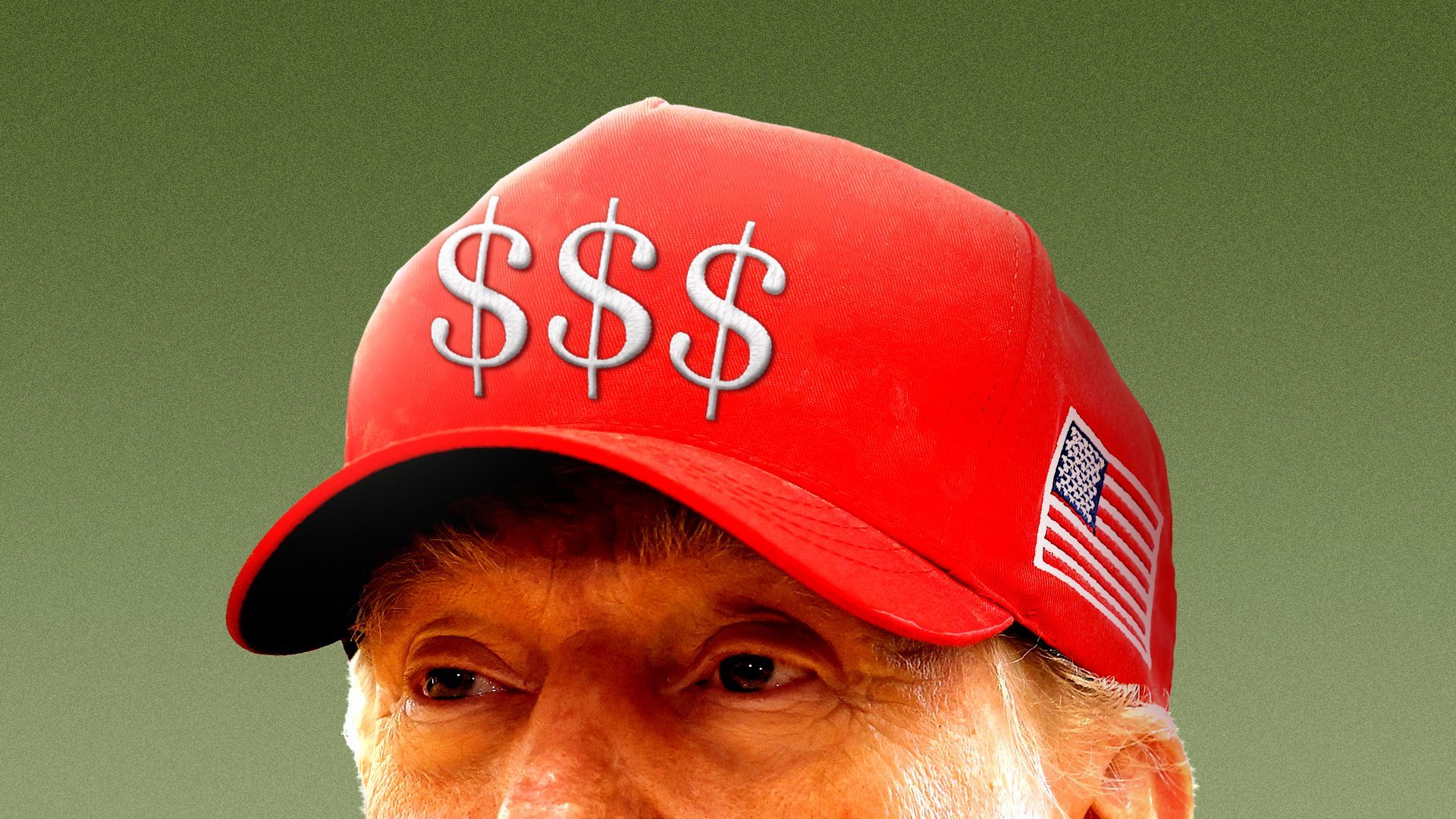
Photo illustration: Sarah Grillo/Axios. Photo: Chip Somodevilla/Getty Images
President-elect Trump won the U.S. presidential election in significant part due to voter dissatisfaction with the economy, including the legacy of high inflation. The question ahead is whether his policies will create a happier economic balance for Americans.
Why it matters: If Trump's campaign promises become reality, it would mean less immigration, high tariffs and tense trade relationships, lower taxes, and bigger fiscal deficits.
- The set of policies amounts to a shift away from the current economic backdrop many Americans spent the last few years hating.
By the numbers: Global financial markets anticipate that Trump's election will be good for corporations (with the possibility of looser regulations and lower taxes), but less so for inflation dynamics.
- The stock market hit a new record high. The S&P 500 rose 2%, while the Russell 2000 — an index of smaller publicly traded firms expected to benefit from Trump's domestic-oriented policies — shot up 4%.
- The yield on the U.S. 10-year bond soared by as much as 0.19, to 4.48%, reflecting expectations of both strong economic growth under Trump and wider deficits that may fuel higher interest rates and inflation.
- The U.S. dollar jumped the most since 2020. The flip side of dollar strength, of course, is weakening currencies elsewhere: The euro sank on the possibility of weaker growth from U.S.-imposed tariffs.
Of note: The breakeven rate between inflation-protected and regular Treasury securities soared Wednesday morning, indicating bond investors expect higher inflation in the years ahead than they did before Trump's victory.
- Markets were pricing in 2.44% annual inflation over the coming five years on Wednesday morning, up from 2.32% Tuesday and 1.9% in early September.
The intrigue: Exit polls showed voter disappointment with the state of the economy and their finances, despite solid growth, cooling inflation and low unemployment rates.
- NBC News said 45% of voters reported being financially worse off than they were four years ago — a larger share than in any election going back to 2008.
- The economy was among the top issues for voters, second only to democracy.
What to watch: The Federal Reserve will ultimately respond if Trump's policies have a meaningful impact on the economy. As we wrote Tuesday, don't expect much response from Fed chair Jerome Powell on how these policies might shake out.
- "[W]e think that a Trump win means higher inflation in the near-term versus the status quo with Harris," analysts at TD Securities wrote in a note Wednesday morning.
- "From a macro perspective, we think that the immigration plans could have the largest impact on the economy, though are the most difficult to handicap," they added.
