"Finance COP" climate summit to be shadowed by election, geopolitics

Add Axios as your preferred source to
see more of our stories on Google.
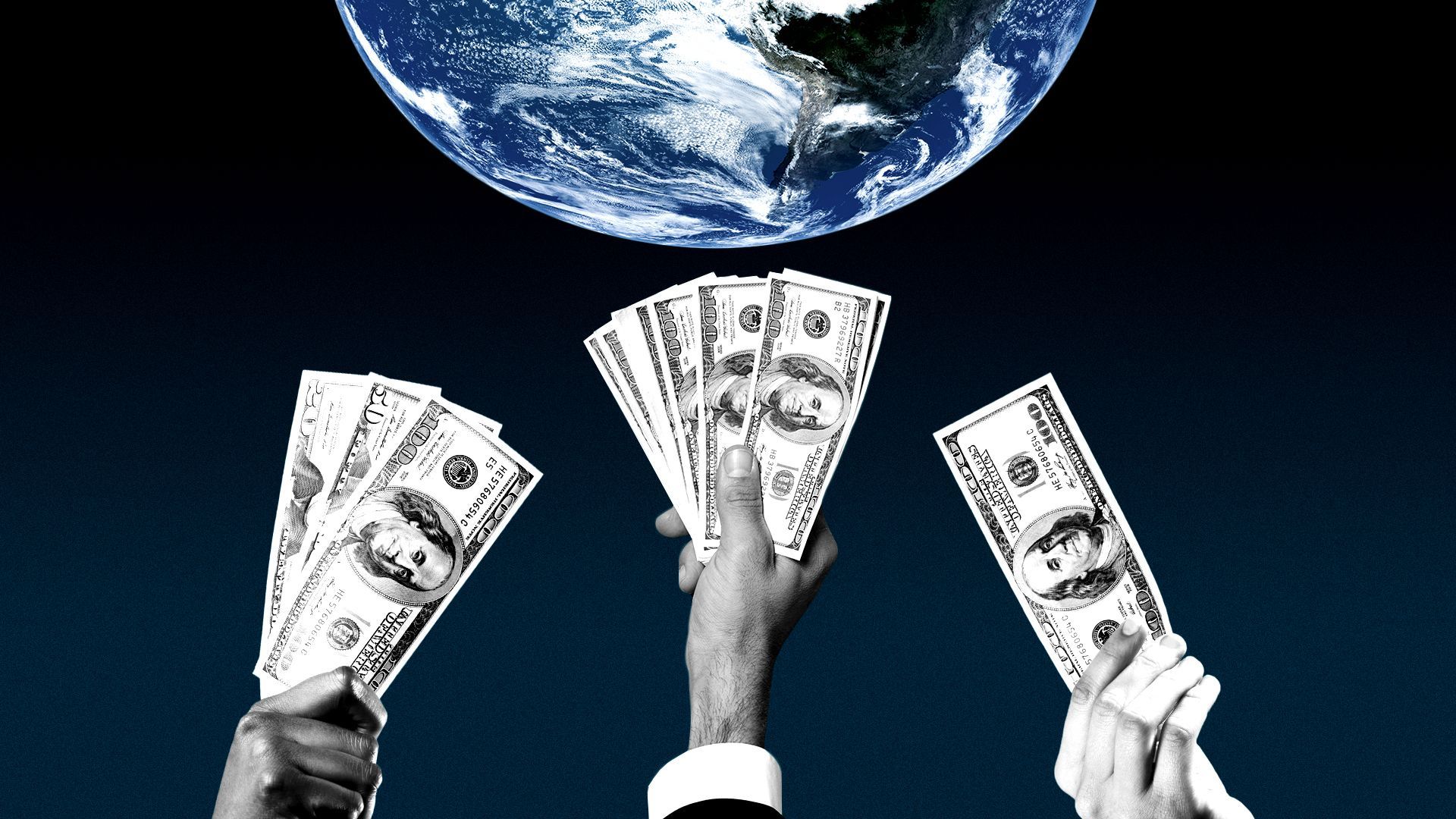
Illustration: Annelise Capossela/Axios
The upcoming UN climate summit in Azerbaijan, which begins Nov. 11, will focus on perhaps the thorniest topic in the history of such talks: money.
Why it matters: Getting countries to provide the funds required to meet the challenge head-on will be a stretch, given the shadow of an uncertain U.S. election, war in Ukraine and conflicts in the Middle East.
- Yet anything less than a significant scaling up of climate finance would further lock the world into a path to exceed Paris Agreement targets.
Driving the news: The world needs a massive course correction on greenhouse gas emissions and climate finance to meet the objectives of the Paris Agreement, which recent reports have warned are slipping away.
- The stakes couldn't be higher, particularly for developing nations suffering the worst impacts from climate disasters, sea level rise and other effects.
Zoom in: If former President Trump prevails in this week's election, it may sap momentum to raise significant funds and also deep-six expectations for an aggressive U.S. emissions reduction target to be put forward by February.
- By contrast, a win by Vice President Harris would open the door for a more aggressive U.S. diplomatic leadership on climate. It would also grease the wheels in Baku.
Friction point: At COP15 in Copenhagen in 2009, a group of major industrialized countries pledged to provide $100 billion annually by 2020 to developing nations to help them adapt to climate change and lower their emissions.
- That goal was finally met in 2022, two years after the deadline — a delay that sowed distrust between developing and industrialized nations.
- Now, a new goal — this time much greater than $100 billion annually — needs to be negotiated. The U.S. is expected to try to bring China, the world's largest present-day emitter of planet-warming greenhouse gases, into the list of contributors.
- Getting to a higher number, which is likely to total at least $200 billion to $300 billion per year, will require a mix of funds ranging from multilateral development bank financing to pledges from individual countries and private capital.
Curbing climate change impacts in vulnerable nations and preventing further warming will cost far more than what will be put on the table in Baku, likely on the order of many trillions of dollars.
What they're saying: A "strong" agreement at COP29 is crucial, World Resources Institute CEO Ani Dasgupta said on a call with reporters last week.
- "A strong outcome in Baku, a finance outcome, is possible," he said.
- He said success would propel the world toward more stringent emissions reduction commitments.
- "This COP actually is a basis for the next COP," Dasgupta said. "Without finance, you can't really have a lot of ambition."
Threat level: At stake at COP29 and COP30 is the world's ability to prevent potentially catastrophic climate change outcomes.
- The world is already seeing deadly calamities that human-caused climate change has made far more likely and severe.
- Just last week, one of the deadliest flash flood disasters in Spain's history killed more than 200 people.
What we're watching: Expectations for the summit are low compared to other recent confabs, particularly last year's COP28 in Dubai. There, the world agreed to the far-reaching but nonbinding goal of "transitioning away from fossil fuels in energy systems."
- This also stems from the meeting's logistical challenges, with fewer available hotel rooms and smaller facilities in the host country.
- This will translate into a smaller presence from major corporations and civil society organizations, who otherwise tend to exert pressure on negotiators and strike side deals of their own.
- The U.S. doesn't plan to send President Biden or Secretary of State Antony Blinken, instead dispatching a delegation led by John Podesta, the top U.S. climate diplomat.
Yes, but: Muted expectations don't mean consequential work won't be carried out at COP29, experts told Axios.
- The U.S. plans to urge China to start contributing to the new global finance goal. China has been reluctant to do so, since it's long been treated as a developing country in the UN climate system.
- This COP is also important for setting up for the international meetings that will follow it, including Brazil's hosting of the G20 in February, along with next year's COP30 in Belém.
The bottom line: The world heads into COP29 with deep divisions, lowering the chances that leaders will rally together to combat a shared foe.
