Axios interview: DeepMind CEO Demis Hassabis sees "watershed moment" for AI

Add Axios as your preferred source to
see more of our stories on Google.
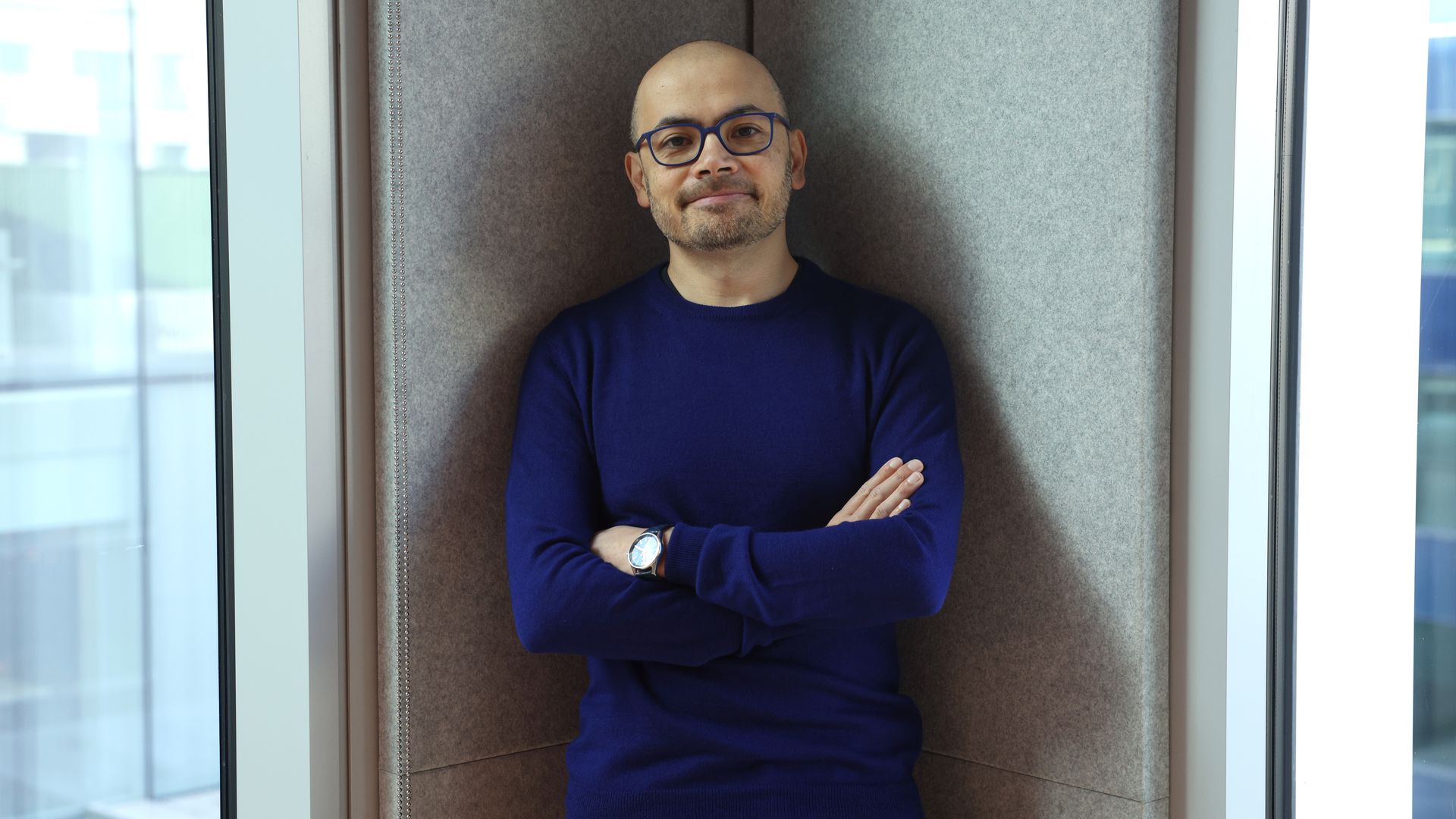
Google DeepMind co-founder and CEO Demis Hassabis in London on Oct. 9, the day he was awarded the Nobel Prize for Chemistry. Photo: Dan Kitwood/Getty Images
Demis Hassabis — co-founder and CEO of Google DeepMind, and one of the world's top AI pioneers — says the technology's coming power has been clear for so long that he's amazed the rest of the world took so long to catch on.
- "I've been thinking about this for decades. It was so obvious to me this was the biggest thing," Hassabis, 48, told Axios in a virtual interview from London, where DeepMind is based.
- "Obviously I didn't know it could be done in my lifetime. ... Even 15 years ago when we started DeepMind, still nobody was working on it, really."
Why it matters: AI clocked a Nobel moment earlier this month when Hassabis and a DeepMind colleague, John Jumper, were part of a joint Nobel Prize in Chemistry. The Nobel in Physics went to Geoffrey Hinton, the "godfather of AI," and machine-learning trailblazer John Hopfield.
- "Maybe it's a watershed moment for AI that it's now mature enough, and it's advanced enough, that it can really help with scientific discovery," Hassabis said.
- "We don't have to wait," he said, for artificial general intelligence — systems that can outsmart humans, the holy grail for AI developers. AI can already "revolutionize drug discovery," he added.
The big picture: Hassabis said AI may be "overhyped in the near term" because of the success of OpenAI's ChatGPT, which has fueled a frenzy among investors. He voiced a view shared by many big-name researchers who spent years working slowly and deeply, out of the spotlight, to make the present era possible. "I'd rather it would have stayed more of a scientific level," he said. "But it's become too popular for that."
- He thinks AI is "still massively underrated in the long term": "People still don't really understand what I've lived with and sat with for 30 years."
Between the lines: Hassabis has moved into the driver's seat for Google's total AI efforts, with other teams being consolidated under DeepMind, as Axios' Ina Fried reported last week.
- DeepMind co-founders now run AI at both Google and Microsoft. Mustafa Suleyman, another DeepMind co-founder, in March became CEO of Microsoft AI, leading Copilot and consumer AI.
The backstory: Hassabis started playing chess when he was 4, after watching his father and an uncle. "But they're not good chess players, so I was beating them within a couple of weeks," he recalls. Hassabis became captain of English youth chess teams, when England was second only to Russia.
- He says he wrote his first AI program when he was about 11, to help play the strategy board game Othello (Reversi). He then led the chess team at Cambridge, where he got top honors in computer science, before earning a Ph.D. in cognitive neuroscience at University College London.
Hassabis, who read lots of science fiction growing up, told us he was "always interested in the big questions" — which often leads to a life in physics. But even back then, he sensed there was something bigger.
- "Physics was my favorite subject," he said. "If you want to understand the fabric of reality or the nature of time or any of these big questions or just the universe, you study physics. But I felt that having read about all the physics greats ... we were lacking some tools to tackle such momentous questions."
Along the way, even his own professors were skeptical about Hassabis' AI passion — especially about pursuing it in the private sector rather than academia.
- "I never cared about that," he recalled. "I was going to do this no matter what."
The bottom line: Hassabis marvels at viewing Earth from a 747, or talking on Zoom 3,000 miles apart — both products of the human mind.
- "So if we could create that [intelligence] artificially and make that abundant and have even super-intelligence ... that would change the whole world," he said. "So it seems an obvious logical progression. It's sort of surprising to me that more people haven't realized that a lot earlier."
Axios managing editor Scott Rosenberg contributed.
