Trump assassination attempt shows Secret Service needs "fundamental reform"

Add Axios as your preferred source to
see more of our stories on Google.
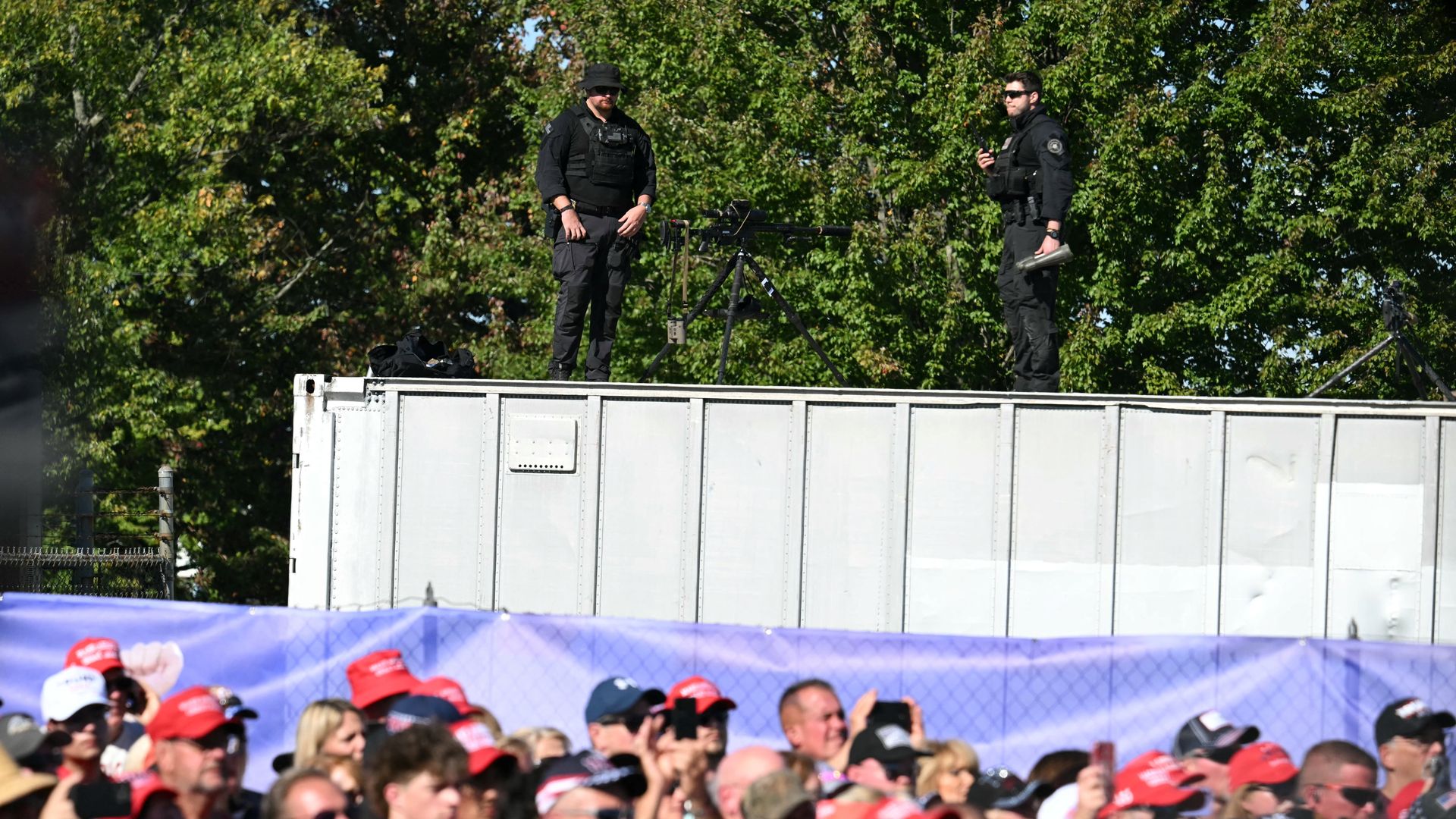
Secret Service snipers stand on a roof ahead of former President Trump's rally in Butler, Pennsylvania, on Oct. 5. Photo: Jim Watson/AFP via Getty Images
Without "fundamental" changes within the Secret Service, "another Butler can and will happen again," an independent, bipartisan panel investigating the July assassination attempt of former President Trump warned.
The big picture: The attempted assassination, which left one rally-goer dead and two others injured, prompted intense scrutiny of the embattled agency, revealing a plethora of communication, technology and planning breakdowns leading up to the shooting.
- The independent panel — which included Mark Filip, the deputy attorney general under President George W. Bush, and Janet Napolitano, the homeland security secretary under President Barack Obama — was formed at the direction of President Biden.
Driving the news: The panel in its new report outlined and recommended solutions to specific failures of that July day but also tied those shortcomings to deeper cultural concerns within the agency.
- The breakdowns outlined in the panel's findings have been widely reported in other investigations, notably the failure to encounter Thomas Matthew Crooks despite many reports of a suspicious individual as well as the lack of personnel securing the building where Crooks positioned himself.
The panel said the division of communications, with local law enforcement personnel operating from a trailer separate from the Secret Service security room, created a physical and structural split in the flow of communication.
- There was also a "widely inconsistent" approach to modes of communication, the panel found, highlighting a "a chaotic mixture of radio, cell phone, text, and e-mail being employed by different personnel at different points in the chronology."
- It further noted the Secret Service had to switch radio channels because radio communications from an event featuring First Lady Jill Biden were interfering with the channels of agents covering the Trump rally.
Friction point: The panel identified ten systemic issues within the agency in its 52-page report, noting a lack of clarity regarding who was in charge of the site and a "do more with less" attitude regarding resources and staffing.
- The panel reported a "repeated evidence of a lack of critical thinking among Secret Service personnel" and a "lack of ownership" among senior staff.
- It added that after the shooting, "Many of the Secret Service personnel involved in the events of July 13 appear to have done little in the way of self reflection in terms of identifying areas of missteps, omissions, or opportunities for improvement."
- Additionally, it noted that vital personnel, such as the site agent assigned to coordinate with the local field office and the agent operating counter-drone systems, had minimal experience.
The investigators highlighted what they deemed an "ineffective 'speak up' practice" concerning potential threats, pointing to an apparent "deeper problem concerning agents' knowing when to communicate about ambiguous but potential risks at a site to detail leadership."
- The panel called for a "a refreshment of leadership" to resolve cultural issues.
Zoom out: Investigations from Congress and the agency itself have reached similar conclusions about the Secret Service's lack of preparation and dire need for reform.
- A preliminary Senate panel report found that security failures preceding the assassination attempt were "foreseeable" and "preventable."
The bottom line: The panel recommended the agency implement centralized communications hubs for large events; deliver a "concise, face-to-face, verbal situation report" to a protectee's detail; and include line-of-sight mitigation descriptions in security plans, among other measures, by March 2025.
- It also offered broader recommendations to address deeper issues exposed by the July shooting and refocus the agency's protective mission.
Go deeper: "What I saw made me ashamed," Secret Service head says of Trump rally security
