What Secret Service and FBI told Congress about attempted Trump assassination


Add Axios as your preferred source to
see more of our stories on Google.
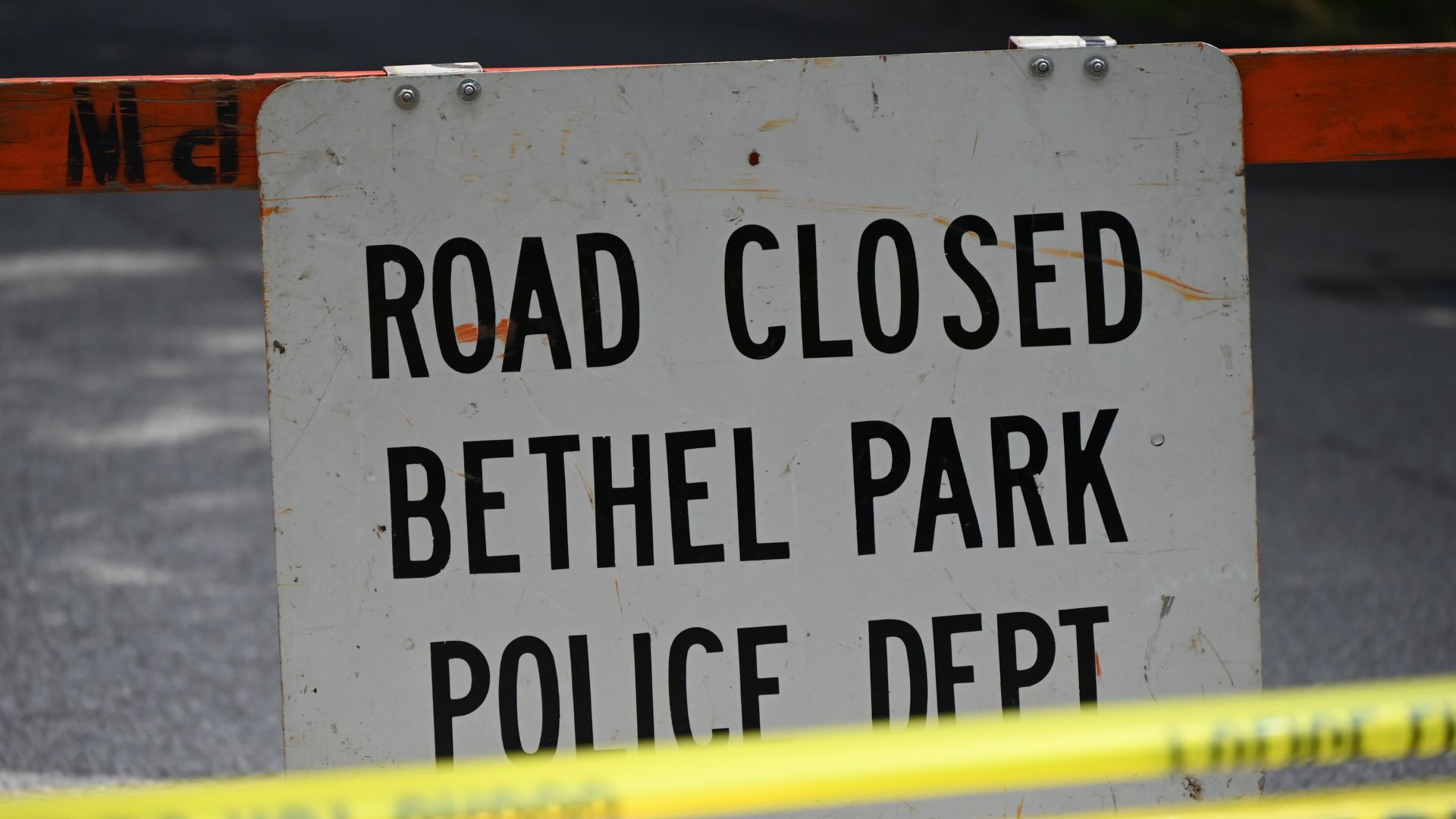
BETHEL PARK, PENNSYLVANIA, UNITED STATES - JULY 18: Street sign is seen as the house of 20-year-old Thomas Matthew Crooks, the suspected shooter who attempted to assassinate former President Donald J. Trump 4. (Photo by Kyle Mazza/Anadolu via Getty Images)
In a briefing yesterday to House lawmakers, the Secret Service said they knew of suspicious person reports at least nine minutes ahead of former President Trump taking the stage at the Pennsylvania rally where he was shot on Saturday, Axios has learned.
Why it matters: The briefing came amid frustrations from lawmakers over the lack of information provided about the shooting as multiple House committees launch probes into the assassination attempt on Trump.
- FBI and Secret Service officials briefed House lawmakers on Wednesday on their preliminary findings.
- The Secret Service said they identified the building used in the assassination attempt as "an area of concern" as early as five days ahead of the event, according to audio obtained by Axios.
- No political or ideological information was found in the suspect's house, including his bedroom, officials told House lawmakers.
Below is the timeline of Saturday's most crucial events, as relayed to lawmakers on Wednesday by Secret Service Deputy Director Ronald Rowe.
- 5:51pm: USSS notified of a suspicious person with a rangefinder on the outer perimeter.
- 5:52pm: The USSS Security room disseminated info to USSS counter sniper response team and additional response agents on the ground.
- 6:00pm: Trump walked on stage.
- 6:10pm: USSS counter sniper unit informed security room that local police were addressing an issue on the outer perimeter.
- 6:11pm: Trump's site agent contacted their USSS counterpart to inquire about the issue on the outer perimeter. Shots are fired.
FBI deputy director Paul Abbate walked members through the suspect's movements ahead of the attack on July 13, a source on the call confirmed to Axios.
- July 6: Searched "where will Trump speak from on Saturday 13" and "when is the DNC convention".
- July 7: Traveled to Butler to get an advance of the venue and he remained there for 20 minutes.
- July 11: Searched "Butler farm show photos".
- July 12: Went to the Clairton Sportsmen's Club where he shot two firearms.
July 13: The suspect searched "Trump rally Butler, PA and "Allegheny arms."
- At 10am, he revisited the Butler farm show grounds and was there for 70 minutes.
- At 1:30pm, the suspect returned to his home and his father provided him a rifle for the purpose of what he believed was to go back to the the sportsman club to shoot.
- At 1:54pm, the suspect purchased 50 rounds of ammunition and traveled back to the fairgrounds.
Between the lines: Officials said at the briefing that they've started putting together a profile of the suspect.
- He lived at home with his parents and a sister. Family members described him as fairly intelligent, a loner, and being a little odd.
- He never discussed politics or expressed any political ideology.
- He took firearms courses at a gun range, where an instructor recalls that he was quiet, non-aggressive and a loner.
The intrigue: The shooter used three encrypted platforms in Germany, New Zealand and Belgium.
- The FBI uncovered a number of the shooter's searches for images "of public figures of a variety, including both President Biden and former President Trump, and some limited online activity reflecting the subject's state of mind," but noted encrypted communications have limited their ability to obtain certain information.
- The FBI has served legal processes on 30 companies and is waiting on returns from 18 of those companies, including foreign encrypted applications.
What's next: Speaker Mike Johnson (R-La.) and Minority Leader Hakeem Jeffries (D-N.Y.) have requested a classified briefing take place next week, where members are slated to obtain additional information on the incident.
