Behind the Curtain: Dems' Blue Wall blues


Add Axios as your preferred source to
see more of our stories on Google.
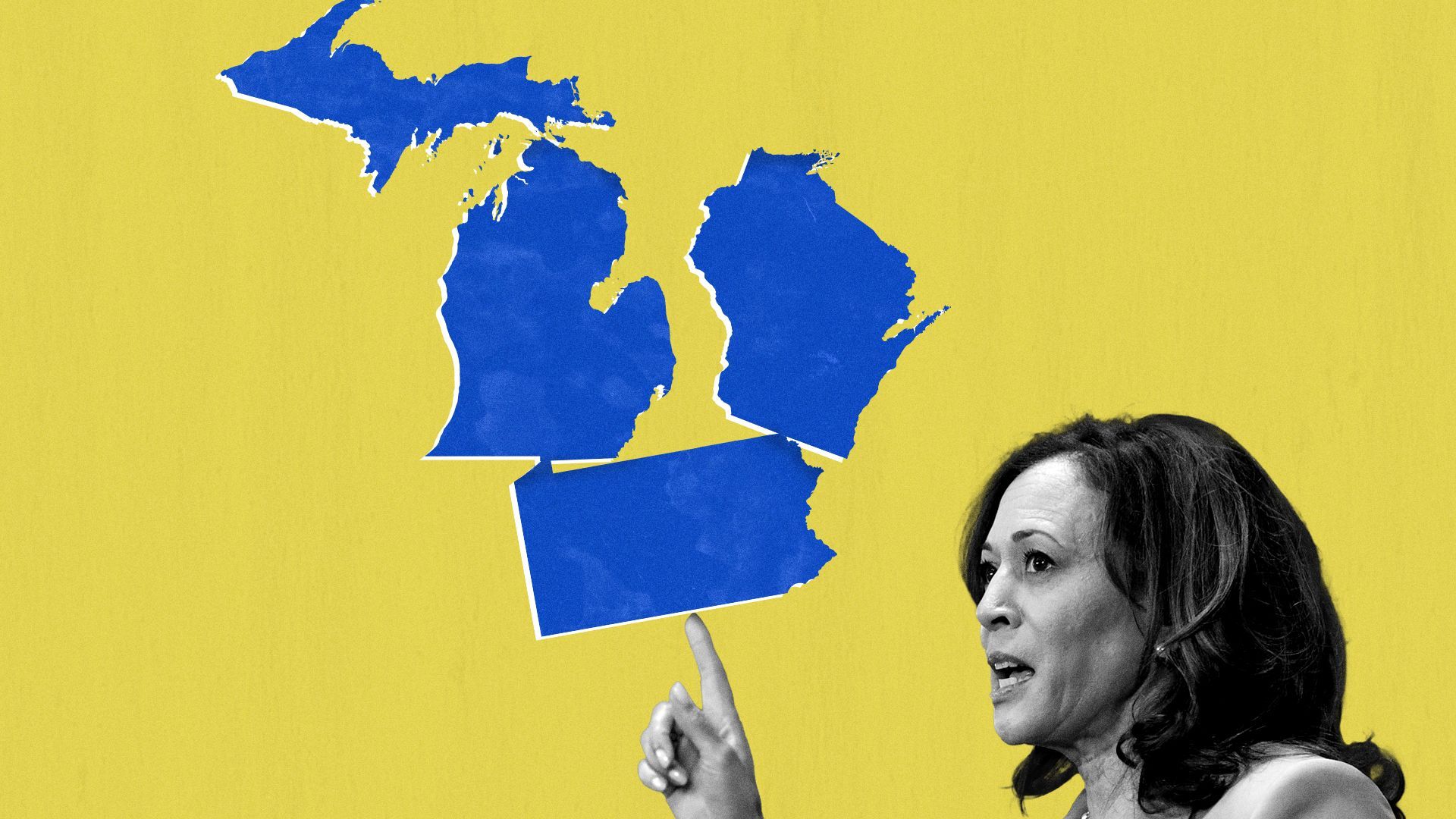
Photo illustration: Shoshana Gordon/Axios. Photo: Peter Zay/Anadolu via Getty Images
Top Democratic politicians and operatives tell us the vital states of Wisconsin, Michigan and Pennsylvania are getting tougher for Vice President Harris and the party's Senate candidates.
- Harris is depending on that Blue Wall to win the White House, even if she struggles in the Sunbelt. On private calls, some top Harris allies are saying they believe the race will come down to Pennsylvania and Michigan.
Why it matters: There's growing worry among Democrats that Harris seems stuck, even sliding a bit, after a strong start to her young presidential campaign. Her media blitz, heavy spending and largely favorable coverage don't seem to be moving the needle much, if at all, these Democrats say.
The big picture: Pennsylvania is arguably the most important state on the map for Harris. Tell us who wins Pennsylvania, and we can tell you who's very likely to be president-elect. Harris, former President Trump and their allies plan to spend $350 million on TV ads in Pennsylvania — $142 million more than the next closest state, Michigan, the N.Y. Times reports.
- Trump returned to Butler, Pennsylvania, the site of the first assassination attempt, for a massive rally with Elon Musk last Saturday — and held double-headers Wednesday in Scranton and Reading. Harris is heading to Erie for her 10th Pennsylvania visit on Monday, and her campaign says it knocked on 100,000 doors in the state on Saturday alone.
- Michigan is the most complex swing state — where Democratic erosion among union members, Arab Americans and young men all collide. It has one of just three Senate races the Cook Political Report rates a toss-up, along with Ohio and Wisconsin. Last month, Rep. Elissa Slotkin (D-Mich.), who's running for Senate, warned donors that her internal polling showed Harris was "underwater" in Michigan, Axios scooped.
- In Wisconsin, Cook this week moved the re-election race of Sen. Tammy Baldwin (D) to toss-up from "Lean Democrat." Axios Sneak Peek last week scooped that Democratic insiders suddenly fear they could shockingly lose the critical contest. Trump on Sunday visited Wisconsin for the fourth time in eight days.
All that leaves Democrats along the Blue Wall desperate for traction, with Election Day now 26 days away.
- Rep. Debbie Dingell (D-Mich.) tells us that neither Harris nor Trump has locked down the Great Lakes State. "People need to see the real Kamala Harris," said Dingell, who spends seven days a week campaigning. "They need to let her get in union halls and just talk to people. Whatever you think about Trump, he's personable."
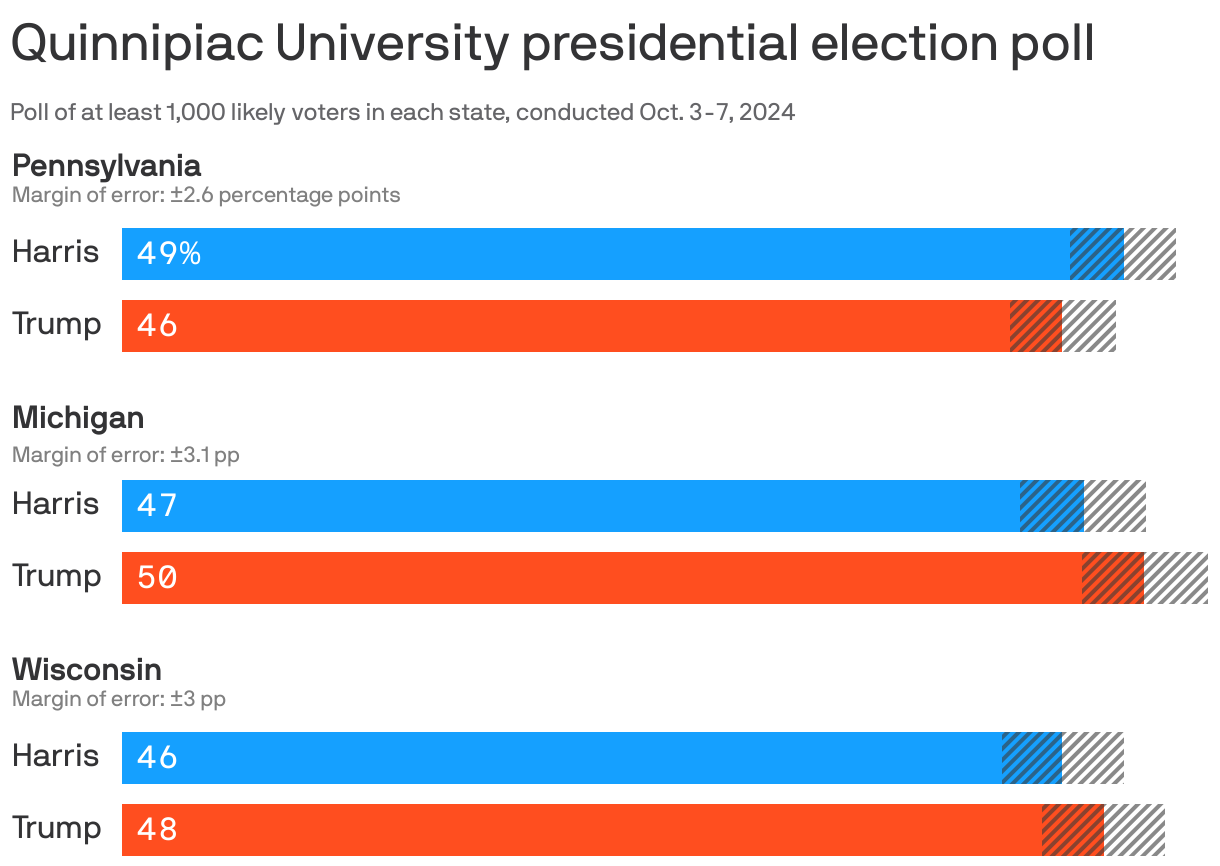
By the numbers: The Quinnipiac Poll on Wednesday declared that the "Blue Wall Shows Cracks As Race Tightens," with Harris slightly ahead in Pennsylvania, and Trump holding an edge in Michigan and Wisconsin.
- A Detroit News poll this week said the vice president "appears to have gained momentum" in Michigan, with a three-point lead over Trump. The poll shows 65% of Michiganders believe Trump's tariffs plan would raise consumer prices.
Reality check: Considering both polls' margins of error, it's all a big statistical tie — which top officials in both parties tell us is the true state of the race.
What they're thinking: A Harris official tells us the campaign "always expected the Blue Wall to be this close." The official reminded us that during the Democratic convention, "at the height of Dems' sugar high," campaign chair Jen O'Malley Dillon said again and again this would be a "margin of error race."
- "We're dealing with a polarized electorate — cycle after cycle, the pool of true swing voters just gets smaller and smaller," the official said.
Between the lines: Reflecting Democratic antsiness, James Carville — who helped mastermind Bill Clinton's victory in 1992, and is the subject of a fascinating new documentary — tells us the Harris campaign "needs to be more aggressive."
- David Axelrod, the operative behind Barack Obama's victory in 2008, says Harris "made steady, incremental progress in the 10 days after the [Sept. 10] debate, but now the race has plateaued."
Axelrod adds that Harris "had a great launch, right through the convention and the debate. But in these campaigns, every time you clear a bar, the bar gets raised. You have to lift your game and adjust your strategy."
- Axios' Zachary Basu contributed reporting.
