When and where you can see a "ring of fire" eclipse

Add Axios as your preferred source to
see more of our stories on Google.
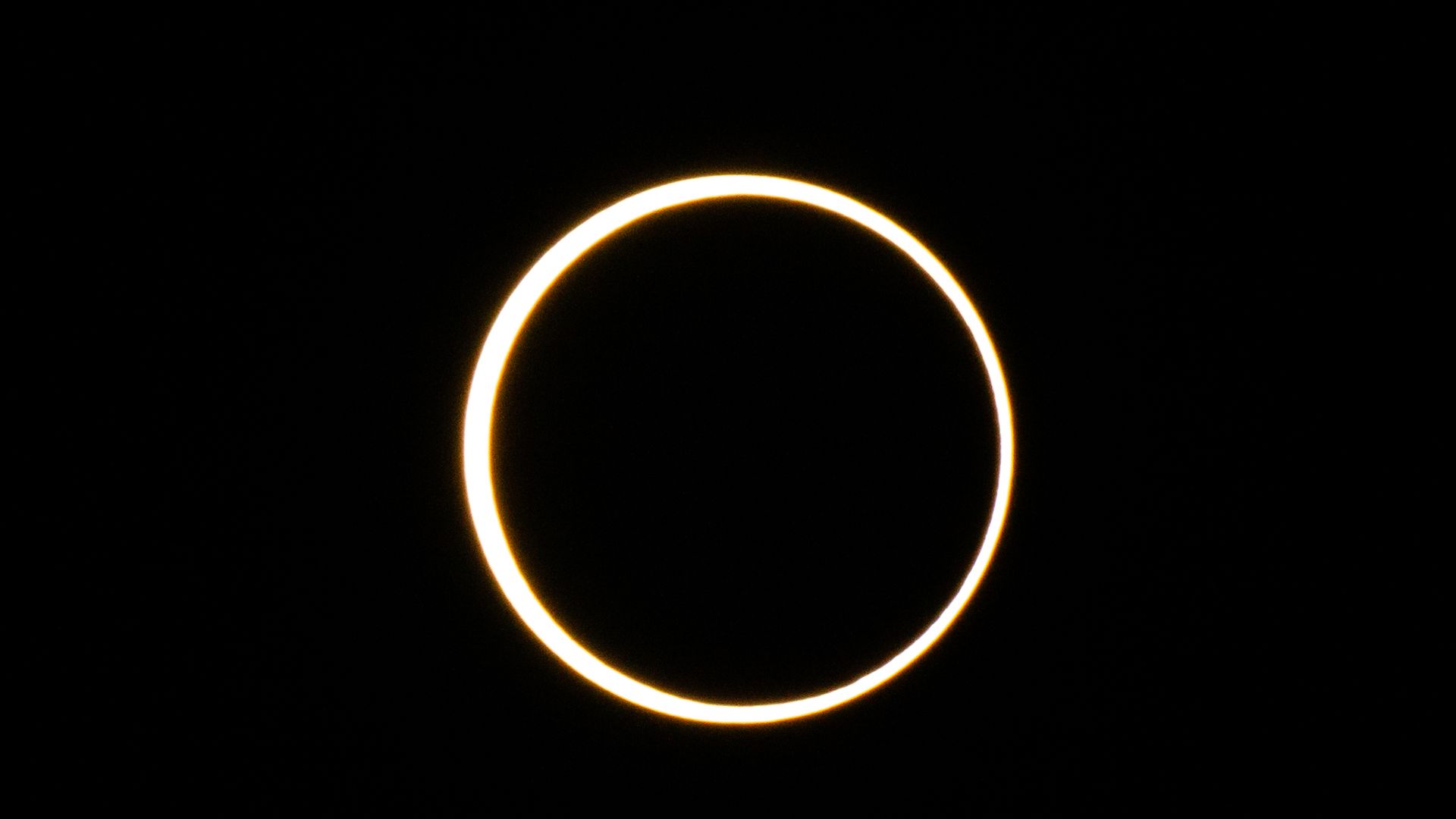
The Moon descends over the sun's horizon during an annular solar eclipse on October 14, 2023 in Kerrville, Texas. Photo: Brandon Bell/Getty Images
Nearly six months after April's rare total solar eclipse, a small sliver of Americans will get the chance to see an annular solar eclipse or a partial eclipse today.
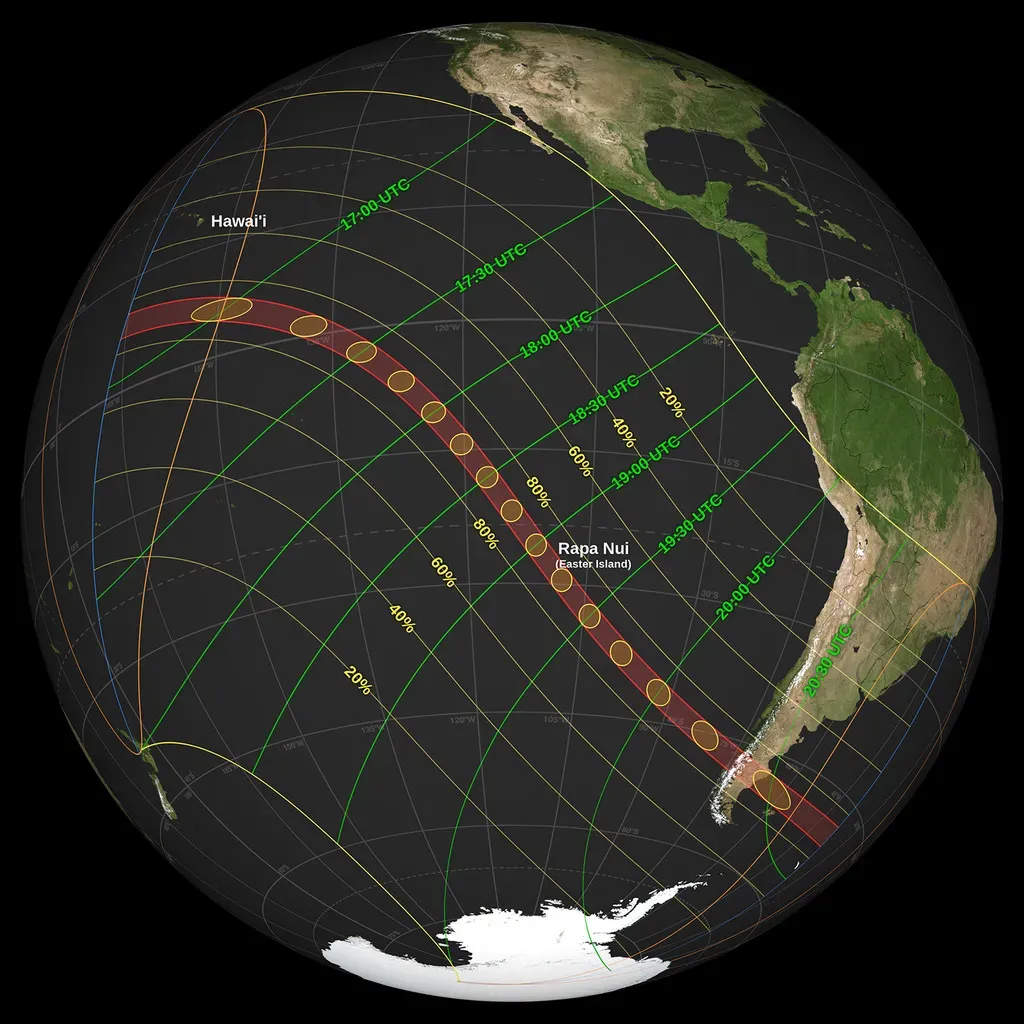
The big picture: An annular solar eclipse — also known as a "ring of fire" eclipse — will be visible from parts of Chile and Argentina with a partial eclipse visible from parts of the Atlantic Ocean and the Pacific Ocean, including Hawaii, according to NASA.
- The partial eclipse will also be visible from more of South America, including Brazil, Uruguay as well as Mexico and Antarctica.
Yes, but: The eclipse won't be visible from the continental U.S. like last October's ring of fire eclipse, which was visible in parts of nine states as an annular eclipse, and as a partial eclipse for most of the nation.
- It also won't be like the total solar eclipse from April that captivated most of the country.
What is an annular solar eclipse?
An annular solar eclipse happens when the moon passes between the sun and Earth while the moon is at its farthest point from Earth, per NASA.
- Because the moon is farther away from Earth, it appears smaller than the sun and doesn't completely cover it.
With a partial eclipse, only a part of the Sun will appear to be covered, which gives it a crescent shape.
Eclipse path mainly over oceans
Context: Since the path of this eclipse mostly sweeps over oceans, about 175,000 people or 0.002% of the world's population will see the Moon entirely surrounded by a ring of fire, Space.com reports.
- Around 245 million people, or 3% of the world's population, will be able to see the partial eclipse, the space website says.
Time to watch the eclipse
What we're watching: The first location to see the partial phase of the annular eclipse begin will be at 11:42am, according to TimeandDate.com.
- The first location to see the annular phase of the eclipse begin will be at 12:50pm EDT, the site said.
- The eclipse will start at 6:10am Hawaii Standard Time and end at 7:57am HST.
Watch eclipse live online
TimeandDate.com's live stream will begin at 1:15pm EDT on its website, YouTube channel and Facebook page.
Next eclipse: When are future eclipses
What's next: The next "ring of fire" annular eclipse for the U.S. is set for June 21, 2039, according to NationalEclipse.com.
- The next total solar eclipse that will be visible in the contiguous U.S. is Aug. 23, 2044, NASA said.
More from Axios:
