Apple's standoff with EU regulators enters new phase

Add Axios as your preferred source to
see more of our stories on Google.
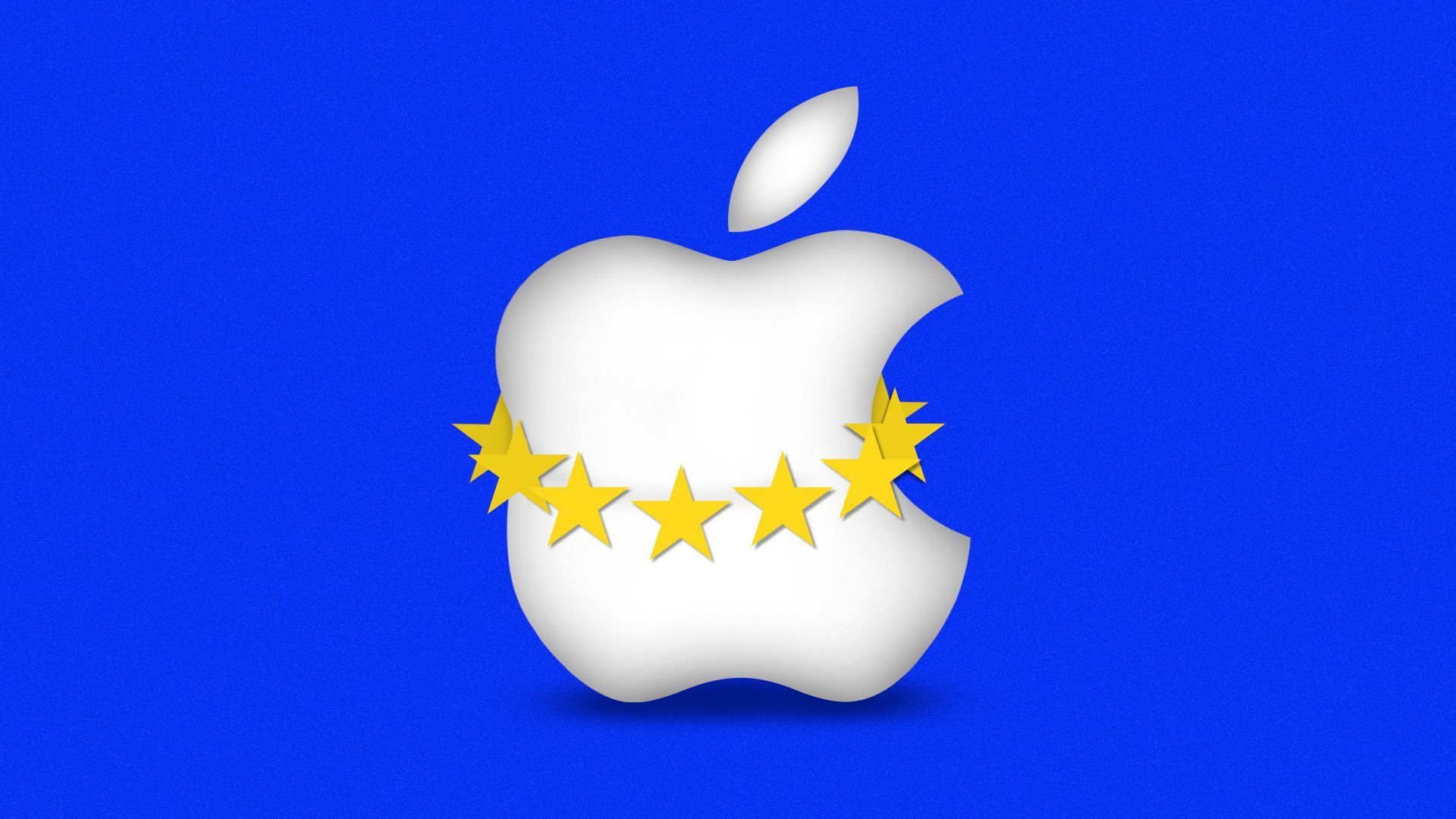
Illustration: Aïda Amer/Axios
Apple just received a very clear message that it still has a lot to do if it hopes to comply with Europe's new digital antitrust rules.
Why it matters: The tech giant, which has built its entire business around its own closed-world ecosystem, will now have to decide exactly how far it's willing to change in order to operate in Europe.
Driving the news: The European Commission Thursday morning said it's opening two "specification proceedings" designed to compel Apple to open up its iPhone and iPad operating systems to competing technologies.
- Compliance with the issue, known as "interoperability," is a requirement to satisfy obligations under the European Commission's Digital Markets Act.
Zoom out: Apple is one of six tech companies designated as "gatekeepers" under the DMA for their combined control of 24 core platform services.
- The others, like Amazon, have been more deferential in working with the EU to avoid the kind of tension that Apple has faced, notes Axios senior tech policy reporter Ashley Gold.
Apple has made some changes in an attempt to comply, such as loosening its App Store restrictions for developers and moving to USB-C cables.
- But those have largely been viewed as just tinkering around the edges, notes Axios tech managing editor Scott Rosenberg.
- The company has said that deeper changes required to meet some of the DMA provisions could compromise the integrity of its products, risking user privacy and data security.
What's next: Apple has six months to comply with measures to be outlined by the commission or face the threat of future fines or ongoing penalty payments.
What we're watching: The question now is what will happen if Apple continues to find that unworkable.
- Earlier this summer, citing the DMA, the company said it was withholding the release of three new features in the EU, including Apple Intelligence.
The bottom line: Apple may soon have to weigh whether it can function in the EU at all.
