Changing — and saving — 3,000 lives



Add Axios as your preferred source to
see more of our stories on Google.
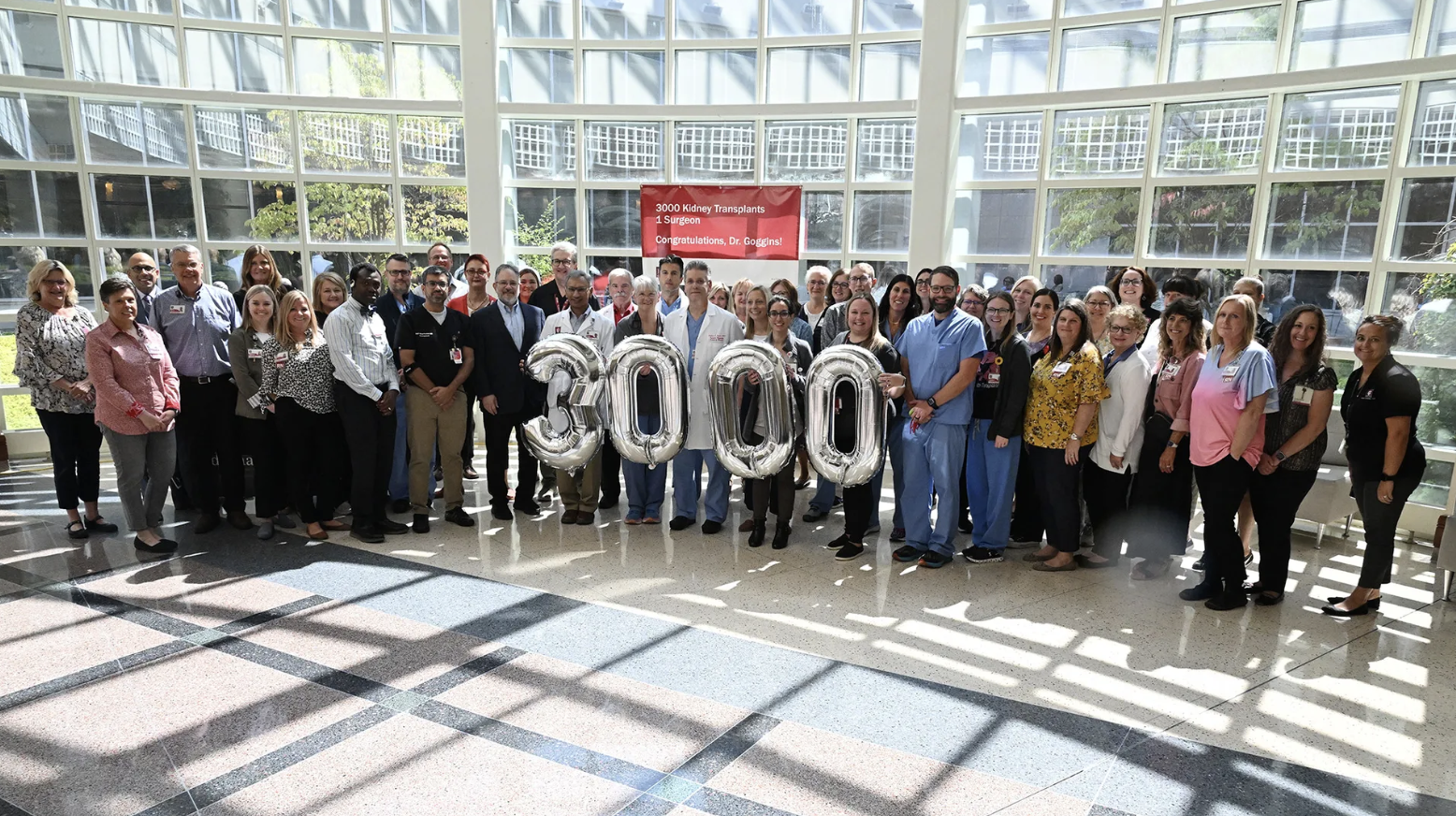
There's no record book for transplant surgeons. If there were, William Goggins would be listed among the greats.
- Goggins, the surgical director of the Indiana University Health kidney transplant program, is one of the most prolific transplant surgeons in the country, recently completing his 3,000th transplant, Axios Indianapolis' Arika Herron writes.
- That's a milestone that's more often celebrated by an entire transplant center (or region of the world) than a single surgeon.
Zoom out: More than 100,000 people are currently waiting for a donor organ — nearly 90% of them for a kidney.
- It's estimated that 17 people die every day waiting for an organ.
"It just makes you think about how many people are suffering from kidney disease," Goggins said, reflecting on the milestone. "There's such a need for organ donation."
- Kidneys are the most needed organ, and they're also one of the few that can be given by a live donor.
📈 By the numbers: Goggins performed his first transplant at IU Health in July 2003 and his 3,000th earlier this month. He averages around 150 transplants a year, sometimes doing two or three surgeries in a single day.
- His youngest patient was 20 months. His oldest was 83.
More than 20 years into his career, Goggins told Axios he doesn't get bored.
- "Every situation is different," he said. "The cases are different. Everybody's situation is unique. And I just enjoy taking care of people, getting to know them and being able to help them."
- He especially loves taking on patients who present with challenges or may have been turned down by other surgeons or centers.
🩺 Case in point: Joy Araujo.
- Diagnosed with kidney disease at age 10, she received her first transplant in 2005 but dealt with chronic rejection. The earlier transplant, a recent blood transfusion and other complications made her a difficult match but, in 2017, she got a call that Goggins had a kidney for her.
- "To be honest, I did not think I was getting that kidney until I woke up out of surgery and asked, 'Is it in?' and they told me yes," said Araujo, now 36.
Before that second transplant, she was on disability and dependent on regular dialysis.
- Since then, she has finished her bachelor's degree and a graduate program. Today she works for the National Kidney Foundation of Indiana, helping other kidney patients.
🔭 What's next: More transplants. "He'll totally go for 4,000," said Laurie Goggins, his wife. "He loves what he does so much."
