Pandemic-era learning loss recovering but not for all students

Add Axios as your preferred source to
see more of our stories on Google.
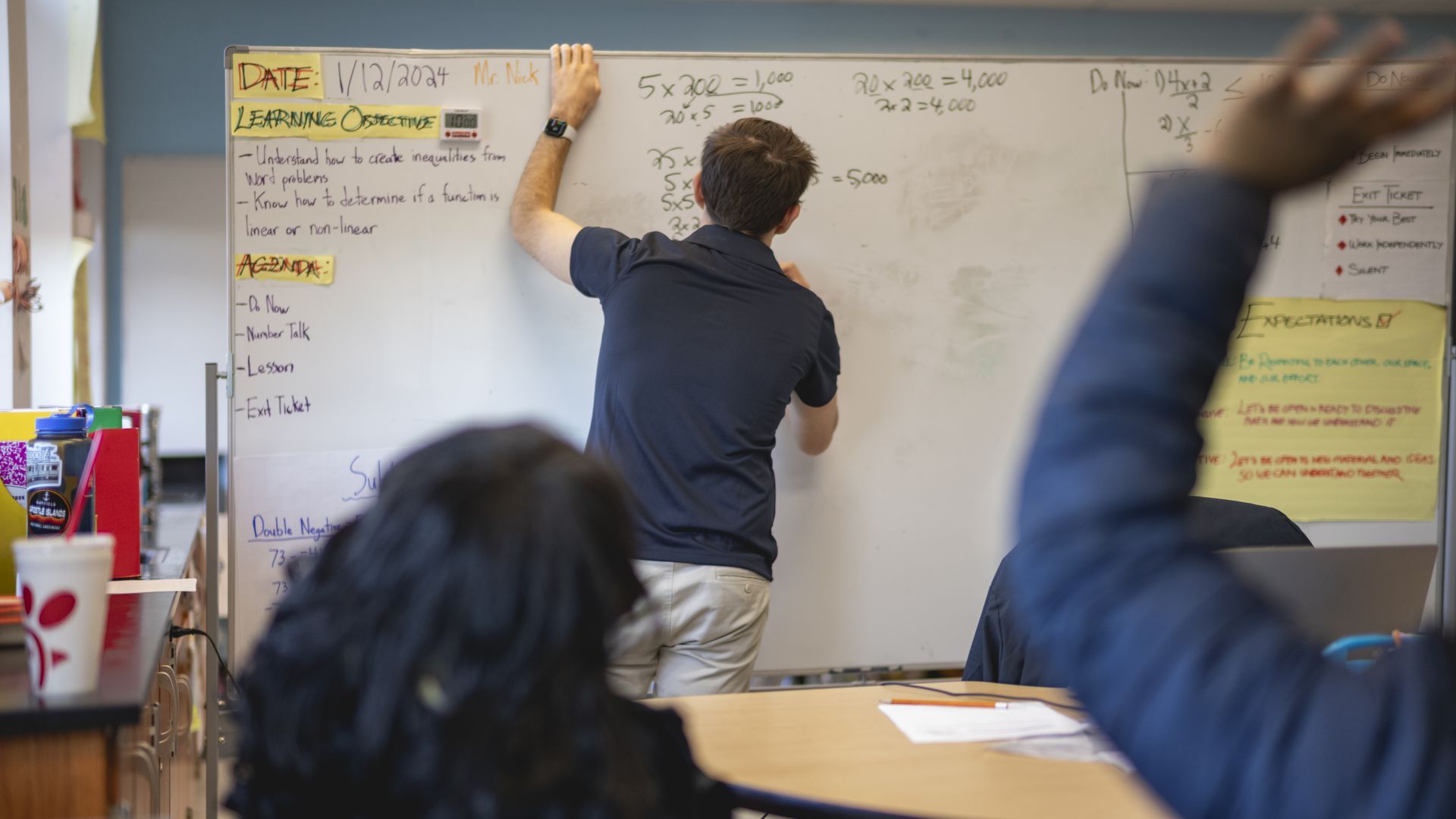
Nick Baar tutors 8th grade students in math at Perry Street Preparatory Public Charter School in Washington, D.C., on Jan. 12. Photo: Cheriss May, for The Washington Post via Getty Images
U.S. students have made up for some pandemic-era learning losses in math and reading — but the recovery has been slow and uneven, especially among students of color, per a new report.
Why it matters: The pandemic exposed deep racial and income inequalities in the nation's public school system, and the uneven recovery is showing few of those inequities have been addressed enough.
The big picture: Neither former President Trump nor Vice President Kamala Harris has offered any new ideas on their plans to improve public education.
- Trump has talked about abolishing the U.S. Department of Education and focused on conservative cultural policies like "patriotic" history lessons.
- Harris has leaned into fighting school shootings.
By the numbers: The typical U.S. student has recovered about a third of pandemic-era learning losses in math and a quarter in reading, according to a 30-state analysis by Stanford, Harvard, and Dartmouth.
- However, an analysis of that report and other data by Arizona State's Center on Reinventing Public Education (CRPE) found that the students who were already furthest behind have fallen even further behind.
- Tightening fiscal realities, educator fatigue, and student disengagement are threatening many efforts to make up for learning loss, the report said.
Zoom in: Many students whose learning was most severely interrupted still don't get the support they need or parents don't know about programs.
- In Louisiana, for example, just 1% of students eligible to participate in a state literacy tutoring program actually did so last year.
Between the lines: Following the pandemic, student absenteeism skyrocketed, achievement gaps grew, graduation rates fluctuated and English learner proficiency suffered.
- School closures also exposed systemic inequalities in school technology access, teacher shortages and transportation.
What they're saying: CRPR director Robin Lake says the first step in attacking a problem is admitting it, and the public, schools, and parents aren't doing that right now.
- Lake told reporters on Monday that elected officials rarely mention learning loss from COVID and the ongoing school inequality.
The intrigue: The majority of states also are failing to provide accessible, transparent school performance data on student learning loss from COVID-19 shutdowns, another CRPE study this month found.
- The lack of data makes it hard for parents to choose a school for their child using state report cards mandated by federal law or to put pressure on struggling schools.
What we're watching: CRPE researcher urged states and school leaders to immediately prioritize students with disabilities and English learners.
- They recommended prioritizing real accountability and said school districts should use AI and other technologies creatively amid an ongoing teacher shortage.
