Study: Parents are in the dark on schools' post-COVID performance

Add Axios as your preferred source to
see more of our stories on Google.
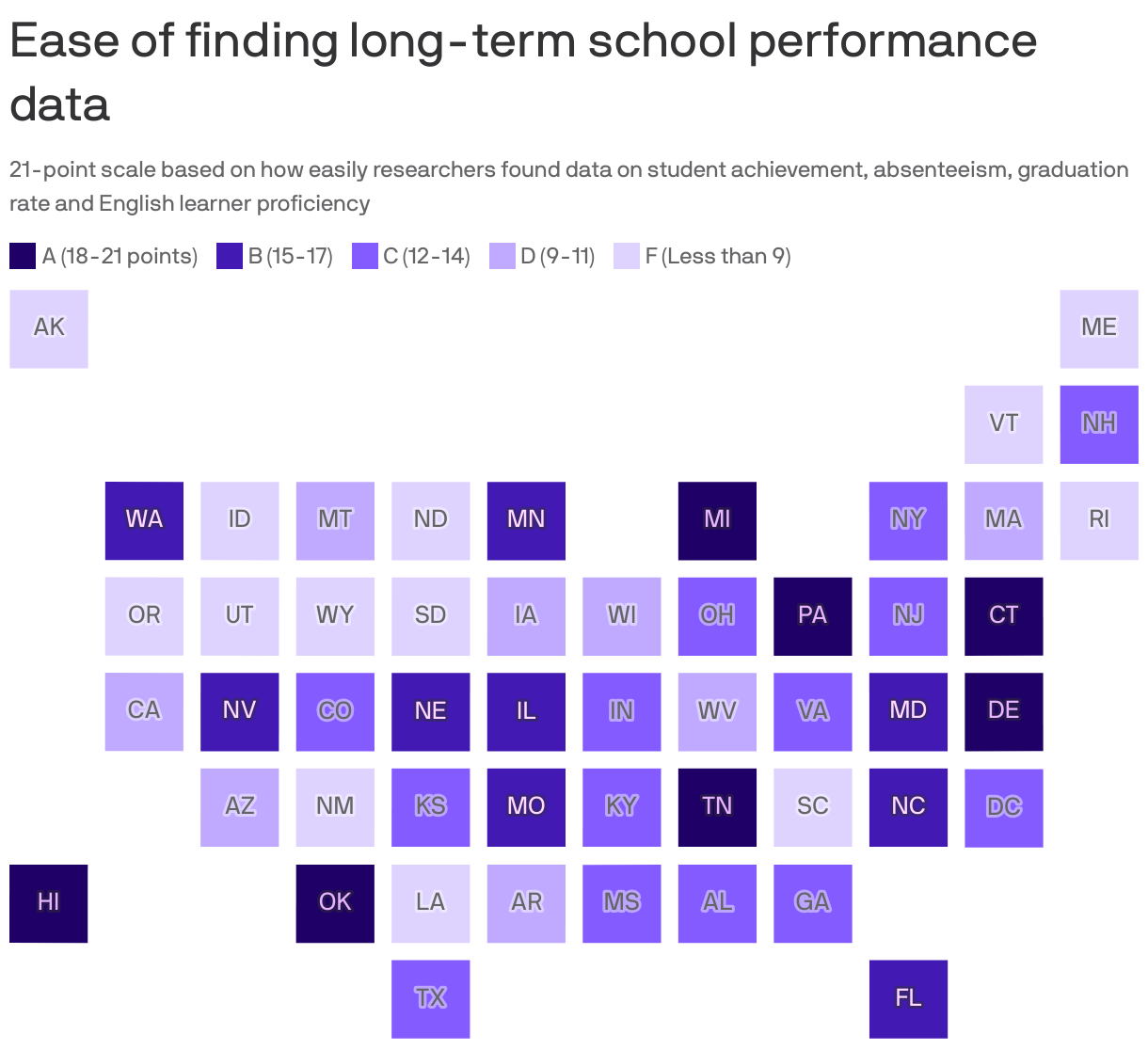
The majority of states are failing to provide accessible, transparent school performance data on student learning loss from COVID-19 shutdowns, a new study finds.
Why it matters: The lack of data makes it hard for parents to choose a school for their child using state report cards mandated by federal law or to put pressure on struggling schools.
The big picture: Following the pandemic, student absenteeism skyrocketed, achievement gaps grew, graduation rates fluctuated and English learner proficiency suffered.
- School closures also exposed deep systemic inequalities in school technology access, teacher shortages and transportation. Failures to report the pandemic's lasting effects hurt efforts to address them.
Zoom in: The study by Arizona State's Center on Reinventing Public Education (CRPE) released Thursday found that most states make it hard to find pre-COVID data to compare how far behind students are today.
- CRPE developed a grading system to judge state websites and found that 35 states earned a "C" or worse on making data available.
- 13 states received "F" ratings, with Maine, New Mexico, and North Dakota earning zero points out of the 21 possible under the grading system.
- Just seven states got "A" grades.
State of play: Neither former President Trump nor Vice President Kamala Harris has offered any new ideas on their plans to improve public education.
- Trump has talked about abolishing the U.S. Department of Education and focused on conservative cultural policies like "patriotic" history lessons.
- Harris has leaned into fighting school shootings.
The intrigue: The report also comes a day after the Biden administration called on governors and state education leaders to create statewide systems for chronic absenteeism-related data.
- The administration issued new school improvement guidance on Wednesday to accelerate academic achievement.
Between the lines: The manipulation of data or the refusal by some states and districts to report it makes it hard to get an accurate picture of what's going on in public schools, Morgan Polikoff, an education professor at USC Rossier who led the CRPE research, tells Axios.
- "We've been doing testing and accountability for like two decades, and the fact that you still have so much data that's just missing, or even if it's there, you have to have a PhD in education policy, is problematic."
What they're saying: "The accountability movement isn't dead, but it's on life support," says Dale Chu, a senior visiting fellow at the Thomas B. Fordham Institute.
- Chu says that since Trump's first term, red states have focused on school choice policies, and blue states have watered down accountability and testing requirements.
- "That's generally with broad brushstrokes for where we are right now, and I think we're going to be there for the foreseeable future."
What we're watching: Education advocates and parents could pressure the next administration to drop the partisan culture fights around education and bring back bipartisan coalitions that shaped accountability measures.
- The extremes of both parties will fight those.
