Apple's slow AI rollout threatens iPhone upgrade cycle

Add Axios as your preferred source to
see more of our stories on Google.
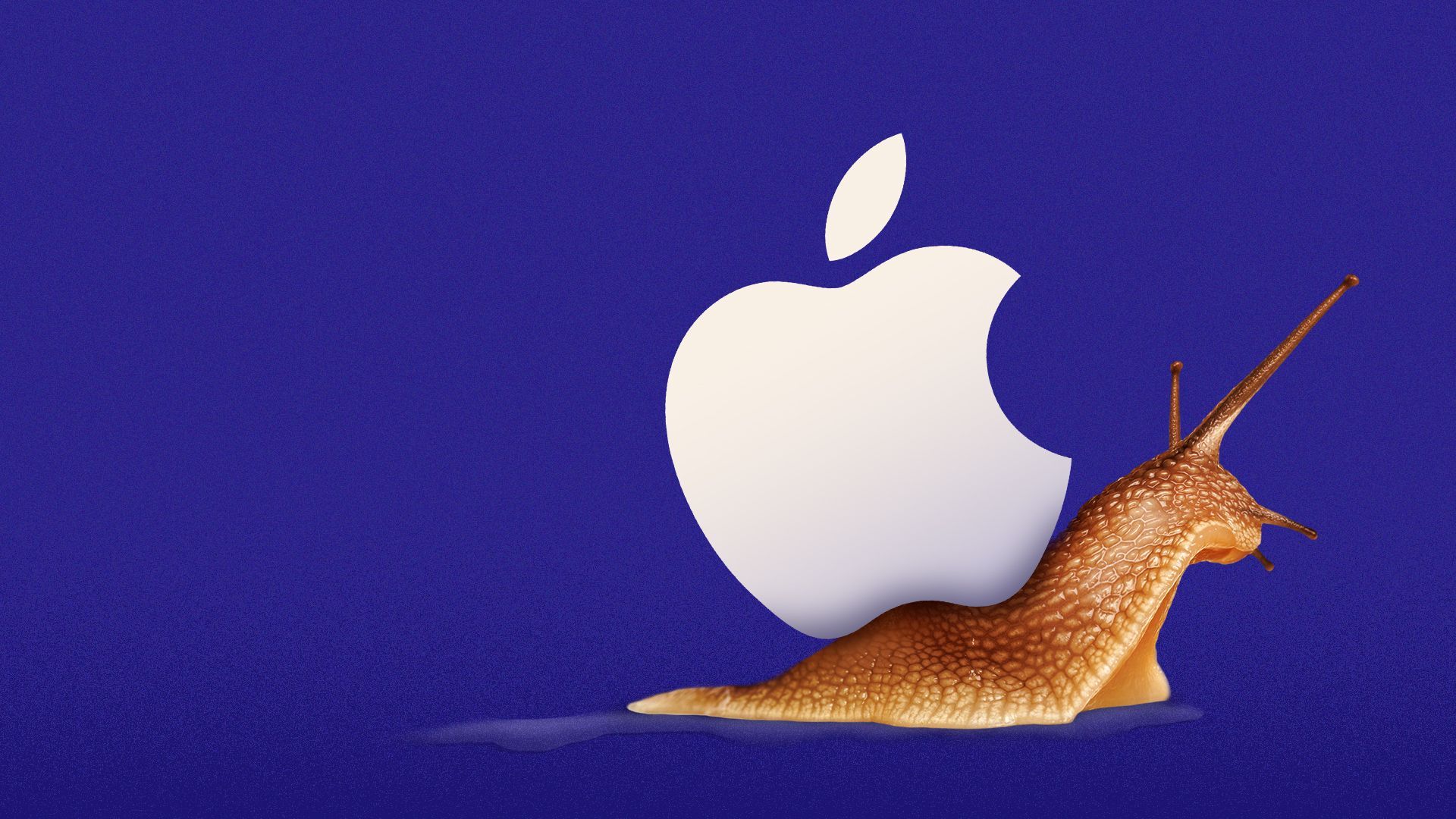
Illustration: Allie Carl/Axios
Tim Cook touted the new iPhone 16 series Monday as the first phones designed for Apple Intelligence — but the company's slower-than-expected rollout of its AI services and features could put a damper on this year's upgrade cycle.
Why it matters: Apple counts on a regular wave of iPhone sales kicked off each autumn by its new-model phones. Smaller retailers, wireless carriers and component suppliers depend on that wave, too.
Driving the news: As it unveiled the new iPhone 16 and iPhone 16 Pro phones on Monday, Apple also confirmed that none of the new Apple Intelligence features would be installed when the first devices ship later this month.
- Instead, the initial AI features will come — in beta form and only in U.S. English — next month.
- It's basically the same set of features included in Apple's most recent developer previews: things like AI-based writing help, summarization and photo editing.
- Other Apple Intelligence features — including the Image Playground art generator and AI-generated custom emoji — will come some time before the end of the year, while many of the most expansive features aren't coming until the first half of 2025.
Between the lines: When first outlined in June, Apple Intelligence seemed poised to woo a whole slew of buyers above and beyond whatever hardware advances Apple was cooking up.
- In particular, Apple painted a picture of how it could use everything its devices know about a person, in conjunction with AI, to serve up a host of useful information culled together from various apps and services.
- Apple also made privacy a big part of its push, with information being processed either on-device or in a secure, private cloud session that Apple itself won't have access to.
Even at the time, the company cautioned that Apple Intelligence features would come in waves, with only some available this fall.
- But Monday's announcements made clear that early iPhone 16 buyers will be paying for the eventual ability to run Apple Intelligence rather than anything immediately available out of the box.
The big picture: Apple's rivals aren't standing still.
- Samsung has been touting AI translation features for a while, and Google made AI features a big selling point with the Pixel 9 and Pixel 9 Pro.
- Some key Pixel 9 AI offerings are available now, including image generation, call transcribing and the "Add Me" feature, which uses AI to add an image of the person taking the photo to a group shot. Some other features are still to come for Google as well.
State of play: With Apple able to rely less on AI as a selling point, it will have to lean more heavily on a few key hardware improvements: a faster processor, larger screens and a new, surprisingly versatile camera control button.
- While leaks suggested a camera button was in the cards, Apple managed to offer far more than just a quicker way to take a picture.
- Depending on how users tap, press or slide along the inlaid pressure-sensitive button, they can control everything from zoom to complex settings such as exposure and depth of field.
Better battery life could also be a draw.
- With the iPhone 16 series, Apple is promising not only greater power efficiency but also larger-capacity batteries.
Our thought bubble: When it was announced, Apple Intelligence was already the last of the big tech companies' AI strategies to be unveiled.
- At the time, the company credibly claimed an advantage over competitors because it could take advantage of what Apple and its devices know about each of their users. While ChatGPT may know about the world, Apple's AI would know about you.
- But most of the Apple Intelligence features deploying early are similar to other products on the market, while the more ambitious stuff is almost all in the "next year" camp.
