Heat wave to break records from Ohio Valley to Mid-Atlantic

Add Axios as your preferred source to
see more of our stories on Google.
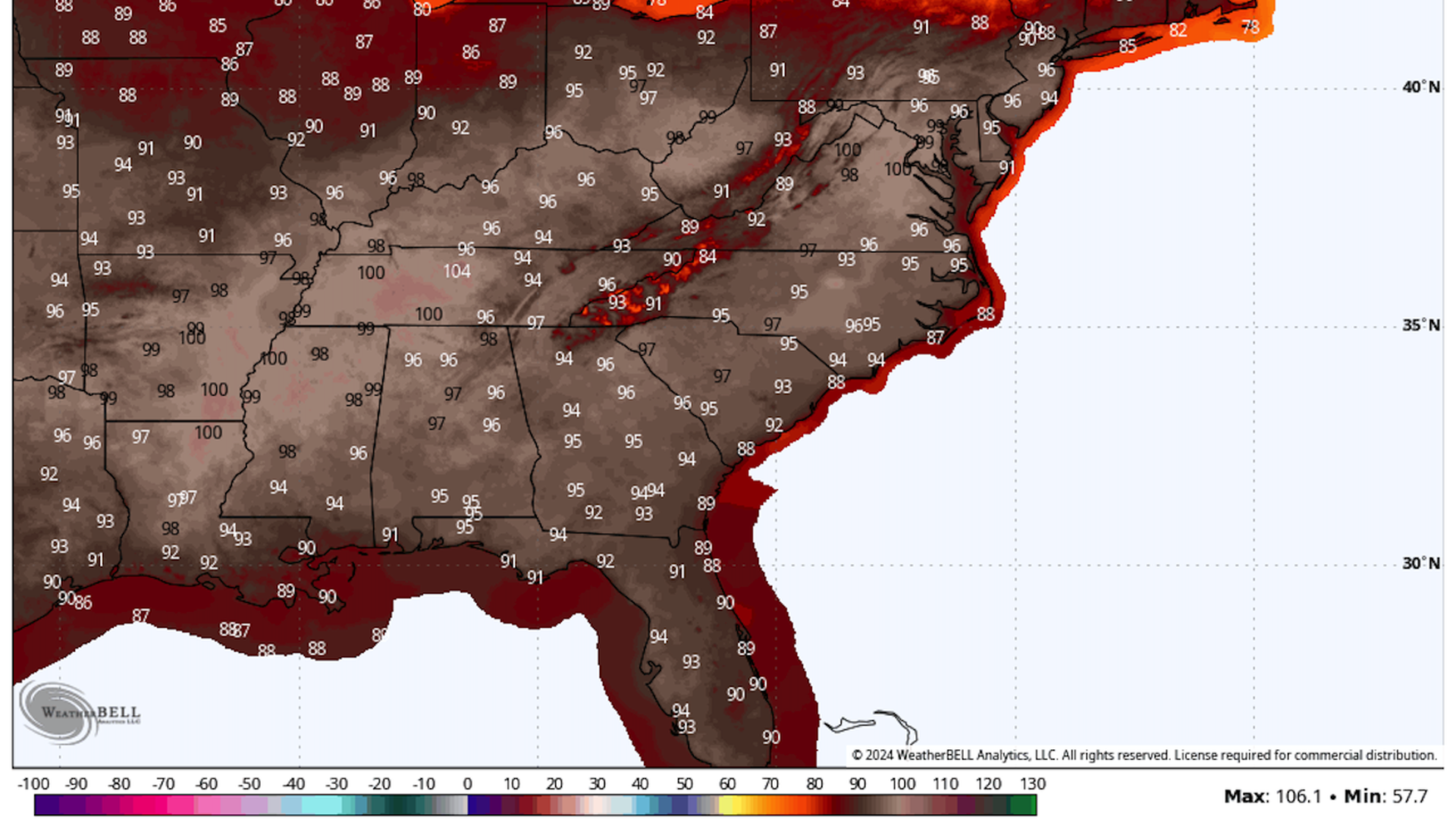
Map showing forecast high temperatures across the Ohio and Tennessee River Valleys and Mid-Atlantic on Aug. 28. Image: Weatherbell.com
A relatively brief but intense heat wave peaks Wednesday from the Ohio Valley, Tennessee Valley eastward into the New York to Washington corridor.
Threat level: Heat advisories and warnings are in effect for 55 million people in at least 10 states as temperatures soar into the low 100s°F, and heat indices climb to dangerous levels as high as 115°F.
- In Washington, D.C., the high temperature on Wednesday is likely to reach or exceed 100°F for the sixth time this season, after going seven years without hitting the mark.
- Philadelphia and New York City are forecast to be slightly cooler, but heat indices, which factor in humidity levels, are predicted to reach at least 105°F.
- To the south and west, Nashville is forecast to see its high temperature soar to 106°F, Columbus, Ohio is likely to reach 97°F, and Indianapolis is aiming for the low 90s°F.
The big picture: The National Weather Service has outlined the region from Indianapolis to Columbus, Pittsburg, Washington, Philadelphia and New York City as being at the second-highest level of heat risk on its experimental scale.
- Such extreme heat can cause heat-related illness, with the elderly and very young, along with people who have chronic health conditions, at the greatest risk.
- Extreme heat this summer has shown the threats this hazard poses to outdoor workers, from the construction industry to firefighters and ramp agents on airport tarmacs.
- In addition, it has revealed flaws in built infrastructure, with frequent train delays noted in Amtrak service due to lower speed limits amid extreme heat, along with electrical problems on overhead wires.
- In addition, with school now in session in many districts across this region, access to air conditioning is becoming a greater consideration, as is putting restrictions in place for outdoor activities are steps some are taking.
Context: Climate change is intensifying heat waves while also raising their likelihood and duration.
- Underscoring the health threat from this heat wave, a study out early this week showed that heat deaths in the U.S. last year reached a record high of 2,325 people.
- This was a peak since at least 1999, and is likely to be a vast undercount.
What's next: Fortunately for the New York to D.C. corridor, a cold front is forecast to drop temperatures and bring rain chances over the next few days.
- However, the Ohio and Tennessee Valleys may see high temperatures topping out in the upper 90s°F through the end of the week, as the cold front stalls near or to the north of this region.
The bottom line: Many cities in the U.S., particularly in the East, Gulf and West, were tracking towards one of their top 5 hottest summers, and this round of heat may seal the deal for some, since meteorological summer ends on Aug. 31.
