Maduro crackdown on aid groups and NGOs triggers fears

Add Axios as your preferred source to
see more of our stories on Google.
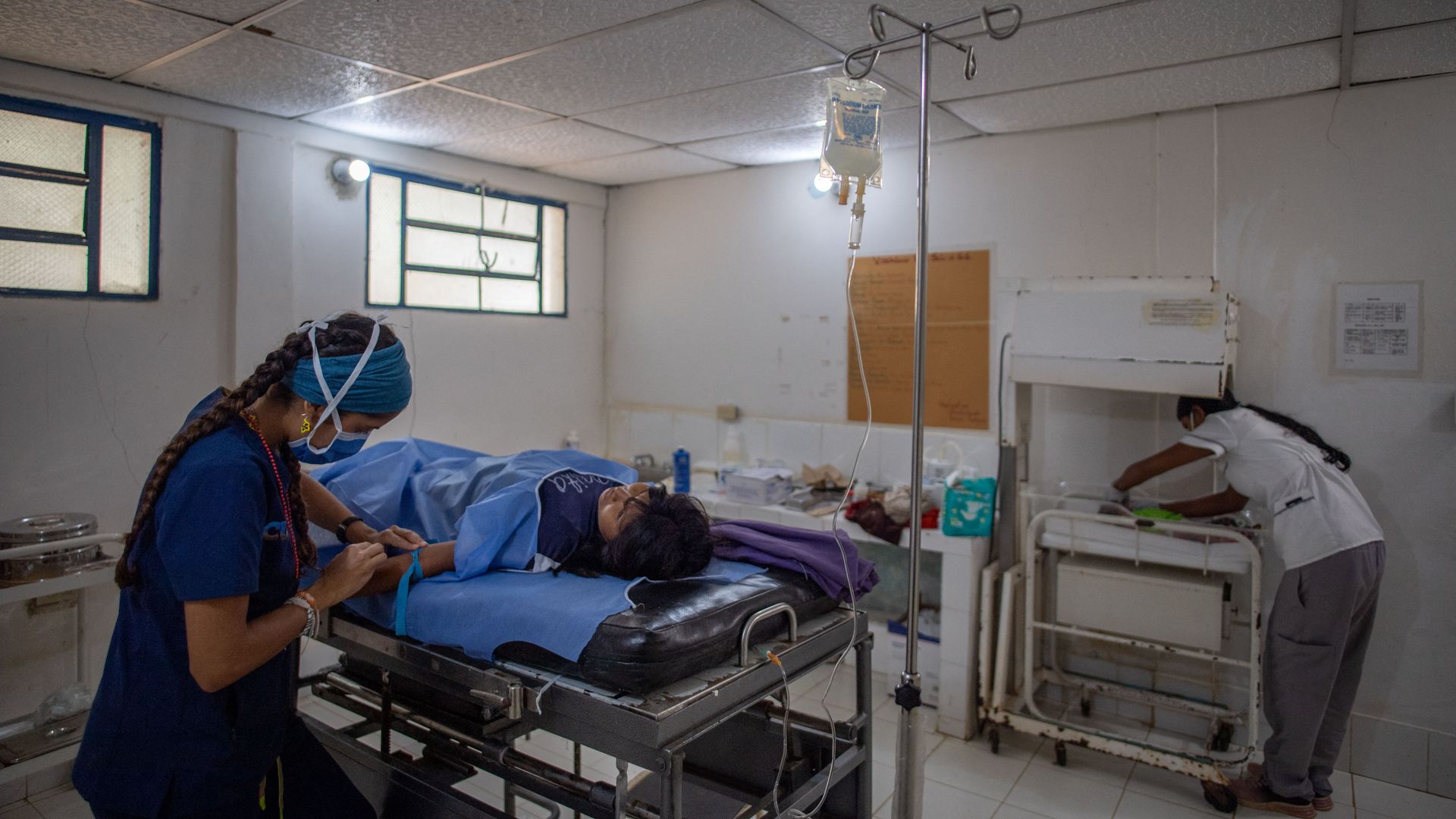
Medical staff tend to a woman after she gave birth in a clinic set up by the NGO Maniapure Foundation in Bolívar state, Venezuela, in 2022. Photo: Federico Parra/AFP via Getty Images
A new Venezuelan law could stifle the critical work of non-governmental organizations, aid groups and others, warn activists and international observers.
Why it matters: In a country marked by a yearslong medicine scarcity and hyperinflation that leaves few able to afford meals, food aid organizations are among those that could be shuttered.
- Amnesty International, the UN's Human Rights Office and the Inter-American Commission on Human Rights and other groups say the law, passed last week and set to take effect in 90 days, could be a death blow to freedom of speech and other civic rights.
- Other organizations that could be affected include those helping people arbitrarily arrested in lprotests over the disputed July 28 elections results.
Zoom in: Under the law, all organizations will need to register with the government for alleged financial auditing purposes.
- To stay in that registry, the groups will need to prove they don't do work that's "politically active."
- Authorities can close down any organization deemed to be "promoting fascism or intolerance" or "inciting violence," terms the regime of President Nicolás Maduro regularly hurls at the opposition and human rights groups.
- International groups operating in the country, like the World Food Programme that gives meals to schoolchildren, will need to get a special permit from the government to continue their work.
- The law is very similar to one enacted in Nicaragua in 2021 that's forced more than 5,000 organizations there to shut down — 1,500 of them this week alone.
What they're saying: The law at its core is meant "to control the life of people and the country," Provea, a human rights defense group, said in a statement.
- "This threat of dissolution or unbearably costly fines is going after groups that already have legal standing and fulfill tons of law and tax duties."
The other side: Lawmakers say the measure is meant only for regular accountability purposes and it would affect only organizations that commit "illegalities."
The big picture: The law was passed as the country is still reeling from the July 28 presidential elections.
- The opposition, which collected vote tallies from around 80% of poll sites, says its candidate Edmundo González Urrutia handily won and has been protesting for those results to be abided by.
- Meanwhile, the electoral authorities allied with Maduro have declared him the winner of a third consecutive term, without showing any vote count data.
- Thousands of anti-Maduro protesters have been arrested since the election.
Subscribe to Axios Latino to get vital news about Latinos and Latin America, delivered to your inbox on Tuesdays and Thursdays.
