

Driving the Next 50 Years of Growth in Women's Sports

Gender tensions at the Olympics are not new

Add Axios as your preferred source to
see more of our stories on Google.
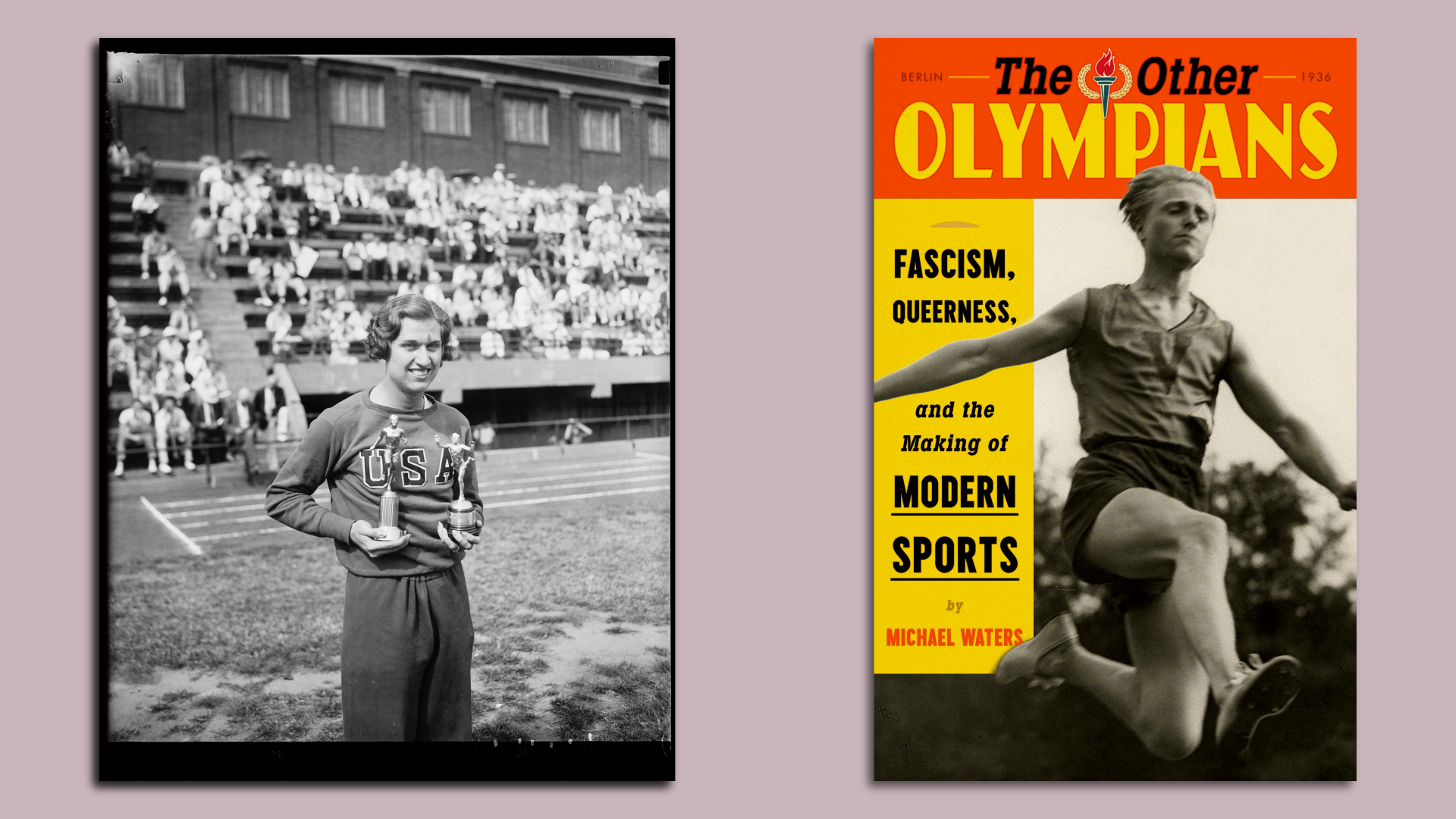
18-year-old Helen Stephens (left) won every race she ran, including the 100 meters at the 1936 Olympics. The cover of Michael Waters "The Other Olympians" (right). Photos: of Stephens (Library of Congress); of book (Macmillan)
With all the noise made about Imane Khelif at the Paris Olympics, it's easy to imagine that gender controversy is a new thing. But, as author Michael Waters points out, battles over gender are as old as the modern Olympics themselves.
- "You can actually draw a line from what we're seeing today all the way back to the early 20th century," says Waters, whose new book "The Other Olympians" explores some of the earliest gender bending and gender policing at the games.
- Water says this year's controversy, which centered around two boxers — Khelif and Taiwan's Lin Yu-ting — harkens back to 1936, when American sprinter Helen Stephens won gold and was criticized for her deep voice and large biceps.
- From the beginning of women's sports, Waters said there has been a push "to promote this specific notion of femininity and especially white femininity."
- "The anxieties we see today are really traced back to just that fixation on the bodies of women athletes," he said.
The Paris games also saw the first openly transgender male athlete, boxer Hergie Bacyadan, of the Philippines, who lost his match in the same boxing competition that saw *so much controversy around* Khelif and Lin Yu-ting.
- For Waters, Bacyadan's story is reminiscent of another athlete, Czech runner Zdeněk Koubek, who competed in the women's world games in 1934 and then announced he would be living as male and competing in men's sports.
- "It really sort of kicked off a conversation about like, just gender categories themselves and like sort of what it means to transition," Waters said.
The big picture: Koubek's participation — even though he didn't physically transition until after he ended his career in women's sports — also launched the first efforts to set rules around just who should be allowed to compete.
- Prominent sports doctor — and registered Nazi — Wilhelm Knoll used Koubek as a reason to push for regulation. Knoll wrote an op-ed in 1936 calling for physical examinations of all women who wanted to compete in sports
- "The most generous read is that he seems to be concerned about athletes who might fit on an intersex spectrum," Waters said. However, Waters notes that Knoll's beliefs also extended to wanting to restrict athletes of color and Jewish athletes.
- The track and field governing body took him up on his call for sex testing and passed the first such rules. Any female athlete could protest against any competitor who could then be forced to undergo a "strip test," Waters said.
Between the lines: While there are tests to determine one's chromosomes, hormone levels and other biological factors, they are all imperfect measures and any attempt to neatly divide the sexes inevitably collides with a biology that includes intersex athletes whose bodies are more complicated than traditionally male or female.
- "We've learned and then — if you look at today — seemingly unlearned those lessons over and over," Waters told Axios.
- Transgender women, he said, went from being able to participate in the Olympics so long as they reduced their testosterone below certain levels, to being all but banned.
- The first openly transgender woman New Zealand weightlifter Laurel Hubbard competed in Tokyo, while Team USA BMX rider Chelsea Wolfe was an alternate.
- Shortly after Tokyo, the International Olympic Committee updated its guidelines on the subject, allowing each international federation to set its own rules. Some, including the governing bodies of swimming and track and field, passed rules that make it nearly impossible for transgender women to compete — and there are no known transgender women competing in Paris.
- "It is striking that we have gone backwards in recent years," Waters said.
Yes, but: There are a number of athletes who, while assigned female at birth, identify as transgender and nonbinary competing in the women's division in Paris, including Canadian soccer player Quinn and Team USA runner Nikki Hiltz, who made the finals of the 1,500-meter race.
The big picture: Even if deciding just who should and shouldn't compete at the elite level of sports is a complicated and contested issue, Waters argues that the larger tragedy is how such rules are now being used "to very nefarious ends" exclude trans kids.
- "That is the scariest and most striking part of this," Waters said.
