Zuckerberg: Meta will help people build their own digital twins

Add Axios as your preferred source to
see more of our stories on Google.
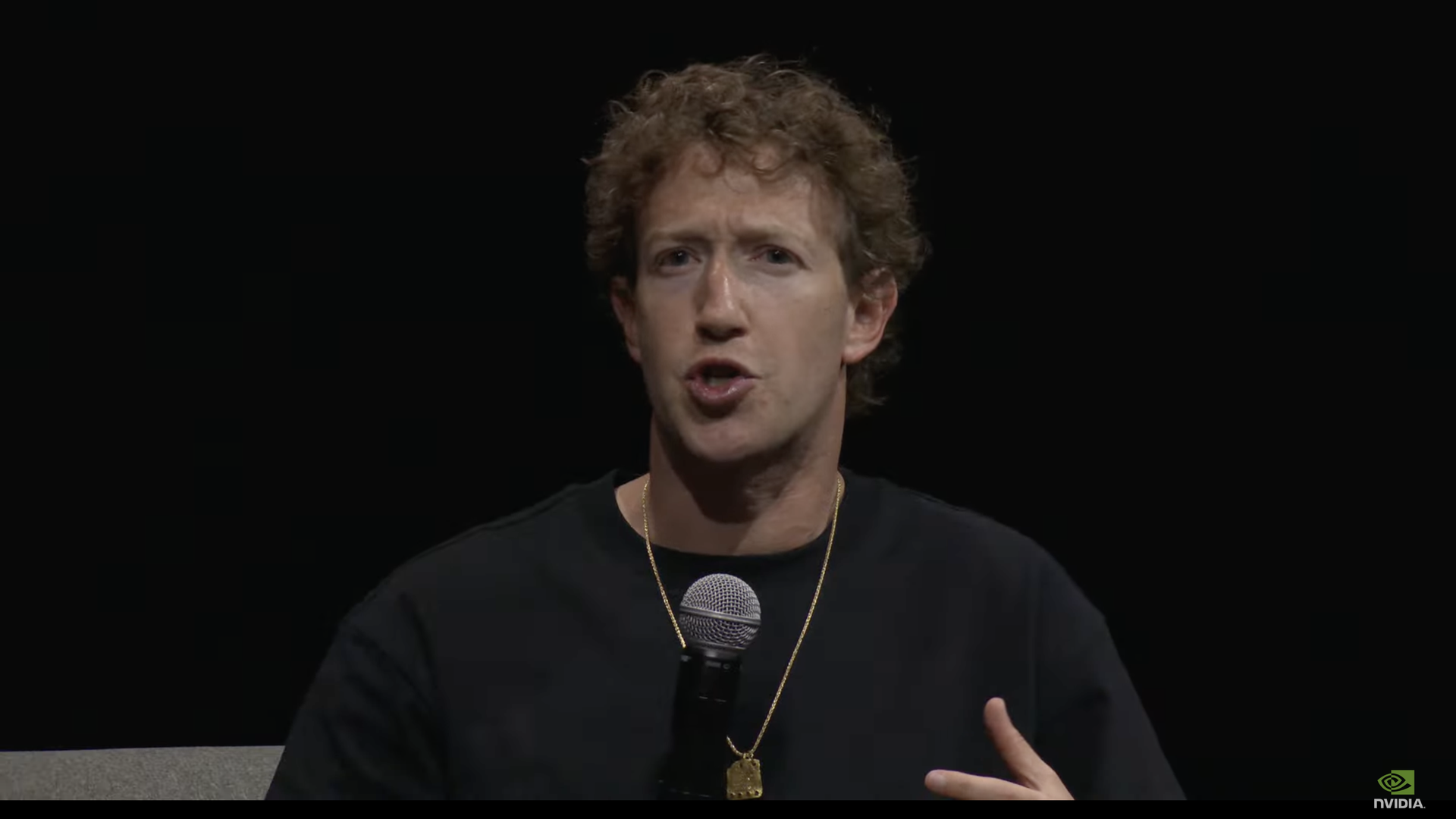
Meta CEO Mark Zuckerberg speaks during SIGGRAPH on Monday July 29, 2024. Screenshot: Nvidia/YouTube
Meta CEO Mark Zuckerberg sees big potential in AI's ability to help people — especially creators — do more, not less.
Why it matters: His vision of helping people digitally simulate their personalities and businesses online stands in contrast to the fear of generative AI's potential to destroy livelihoods.
Driving the news: Zuckerberg, in a wide-ranging fireside chat about AI with Nvidia CEO Jensen Huang on Monday afternoon at the SIGGRAPH conference, described a future in which Meta's AI tools could help small businesses and creators generate "an AI version of themselves as sort of an agent or an assistant that their community can interact with."
- "There's just not enough hours in the day" for creators to engage with their community the way the community wants, Zuckerberg said.
- The digital twins could answer DMs, chat with followers and perform other tasks.
- "The next-best thing," he continued, is to enable people to build digital agents trained on material that represents them in the way they want.
- People could "create their own agents for all different kinds of uses. Some will be sort of customized utility things ... some of them will be entertainment," he noted.
The big picture: Meta, like other Big Tech, is facing growing investor scrutiny for its AI spend.
- The company noted earlier this year that even with ample investments, revenue from Meta's AI products wouldn't be meaningful for a while, Axios' Sara Fischer reported.
Between the lines: With more than 3 billion people using at least one of Meta's apps every day, there's plenty of data for the company to use for its AI tools.
- "We eventually want to just be able to pull in all your content and very quickly stand up a business agent and be able to interact with your customers and do sales and customer support," Zuckerberg said on stage in Denver.
- All that data may also be used by Meta's platforms to generate content "on the fly" as well, he said, to capture user engagement.
My thought bubble: There's an aspect of this vision that's positive for creators facing burnout. At the same time, if these tools produce more AI-generated content in the feed this will create more competition and could put more pressure on creators to adjust their strategies and output.
- This doesn't sound less tiring at all.
Watching Huang and Zuckerberg interact on stage was newsworthy on its own.
- The two men complimented each other often on the success of their respective businesses.
- Huang repeatedly called Zuckerberg out for his new style — his longer hair and gold chain — and poked fun when Zuckerberg suggested he could influence glasses styles as Meta explores more interpretations of the Ray-Ban Smart Glasses.
- "How's your style influencing working out for you?" Jensen quipped.
- "It's early," laughed Zuckerberg. But he agreed that if the business is going to be building glasses that people wear, then "this is something I should probably start paying a little more attention to."
What we're watching: Meta reports second-quarter earnings Wednesday after markets close.
