White House: Risk of Israel-Hezbollah war is "exaggerated"

Add Axios as your preferred source to
see more of our stories on Google.
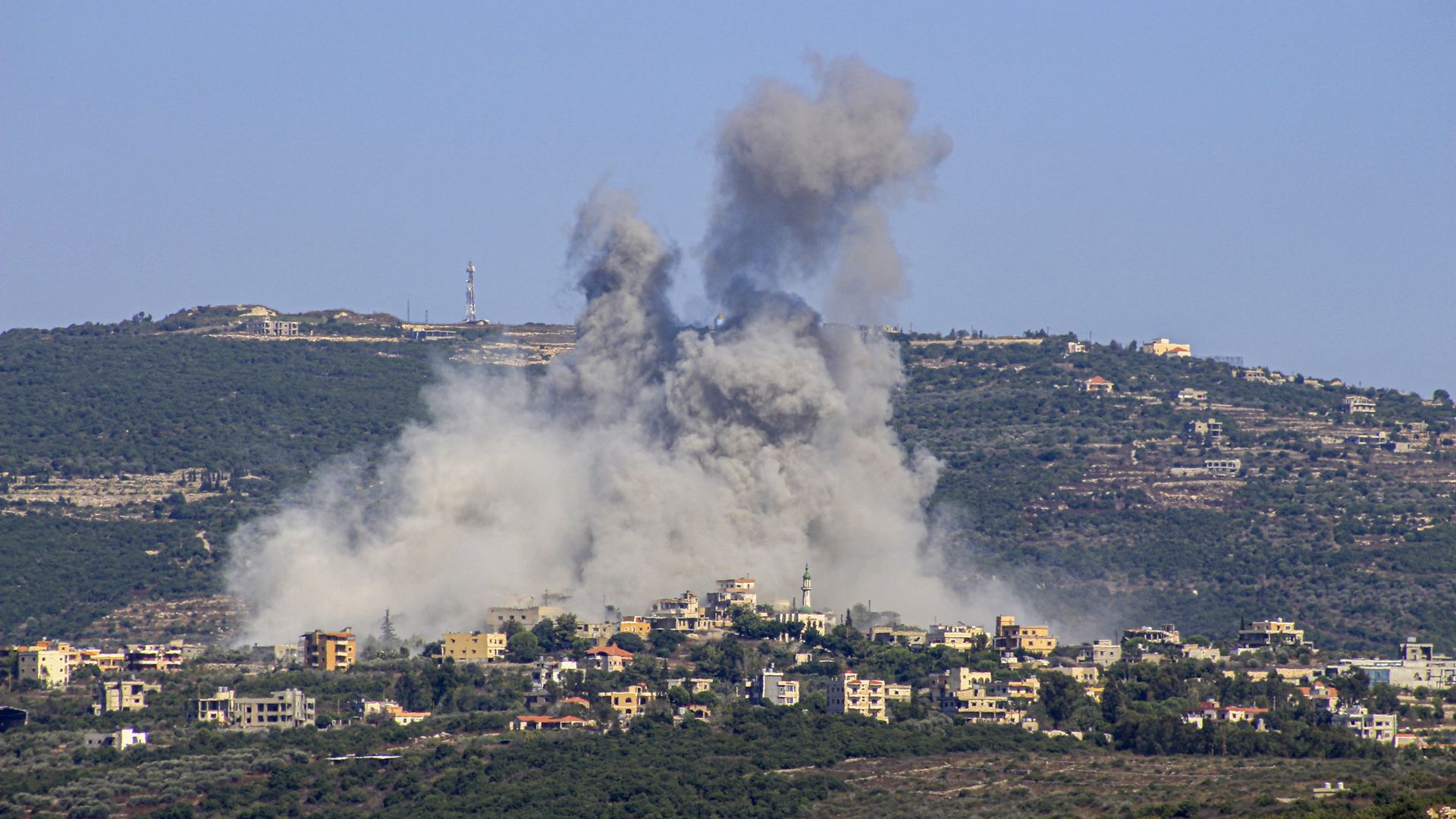
Smoke billows following an Israeli airstrike in the southern Lebanese border village of Chihine on July 28, 2024. Photo: Kawnat Haju/AFP via Getty Images)
The Biden administration thinks the scenario of an all-out war between Israel and Hezbollah is "exaggerated," White House spokesperson John Kirby said in a briefing with reporters on Monday.
Why it matters: The White House knows Israel is going to conduct a significant response against Hezbollah, but is trying to contain the situation as much as possible, U.S. officials said.
- Kirby's comment suggests the administration is trying to tone down some of the public rhetoric around the situation on the Israeli-Lebanese border, while it quietly works behind the scenes to prevent a major escalation.
Driving the news: The Israeli security cabinet authorized Israel's Prime Minister Benjamin Netanyahu and Minister of Defense Yoav Gallant to decide the timing and scope of the Israeli response to a rocket strike that killed 12 children and teenagers in northern Israel.
- Israel and the U.S. blamed Saturday's deadly strike on Hezbollah.
- Hezbollah denied being involved but Kirby said the U.S. is convinced the group was responsible.
The latest: Several airlines announced on Monday they are halting flights to and from Beirut's international airport and more countries called for their citizens to leave Lebanon ahead of a possible escalation.
- Netanyahu on Monday visited the site of the attack in the village of Majdal Shams in the Golan Heights.
- "The State of Israel will not, and cannot, ignore this. Our response will come and it will be severe," he said.
Behind the scenes: U.S. officials have been talking to their Israeli and Lebanese counterparts in an effort to prevent further escalation, Kirby said.
- U.S. Secretary of Defense Lloyd Austin spoke on Monday with Gallant who told him Israel is "determined to restore security to Israel's northern border and to exacting a heavy price from Hezbollah," according to a statement from Gallant's office.
- The Biden administration is trying to prevent the Israeli response and the Hezbollah counter-response from further deteriorating the situation, a U.S. official said.
- Kirby stressed Israel has the right to defend itself against Hezbollah but added that from the talks the U.S. had with both Israel and Lebanon this doesn't mean that an Israeli response will necessarily lead to an all-out war.
- "We still believe we have time and space for diplomacy in order to avoid an all out war. We are going to work hard so that it won't happen and we think it is possible," he said.
The big picture: Kirby said the Biden administration doesn't have any indication the escalation between Israel and Hezbollah would negatively affect the ongoing Gaza hostage and ceasefire deal negotiations.
- A meeting in Rome on Sunday between CIA director Bill Burns, Qatari Prime Minister Mohammed Bin Abdul Rahman al-Thani, Israeli Mossad director David Barnea and Egyptian spy chief Abbas Kamel ended without a breakthrough.
- Hamas said in a statement that it was informed by the Egyptians and Qataris about what happened in the Rome meeting and concluded that Netanyahu "returned to the strategy of procrastination, delay, and evasion from reaching an agreement by setting new conditions and demands."
- Netanyahu rejected Hamas' claims and said Israel "neither changed, nor added any condition" to the deal.
- "The Hamas leadership is preventing an agreement," Netanyahu said in a statement.
Nevertheless, Israeli officials admit Netanyahu's demands for an international monitoring mechanism that will prevent the transfer of weapons from southern Gaza to the north is a new demand.
- But Kirby stressed on Monday that the White House still thinks the gaps between the parties can be narrowed and a deal can be achieved.
