White House discussed sanctioning Israeli ministers over settler violence

Add Axios as your preferred source to
see more of our stories on Google.
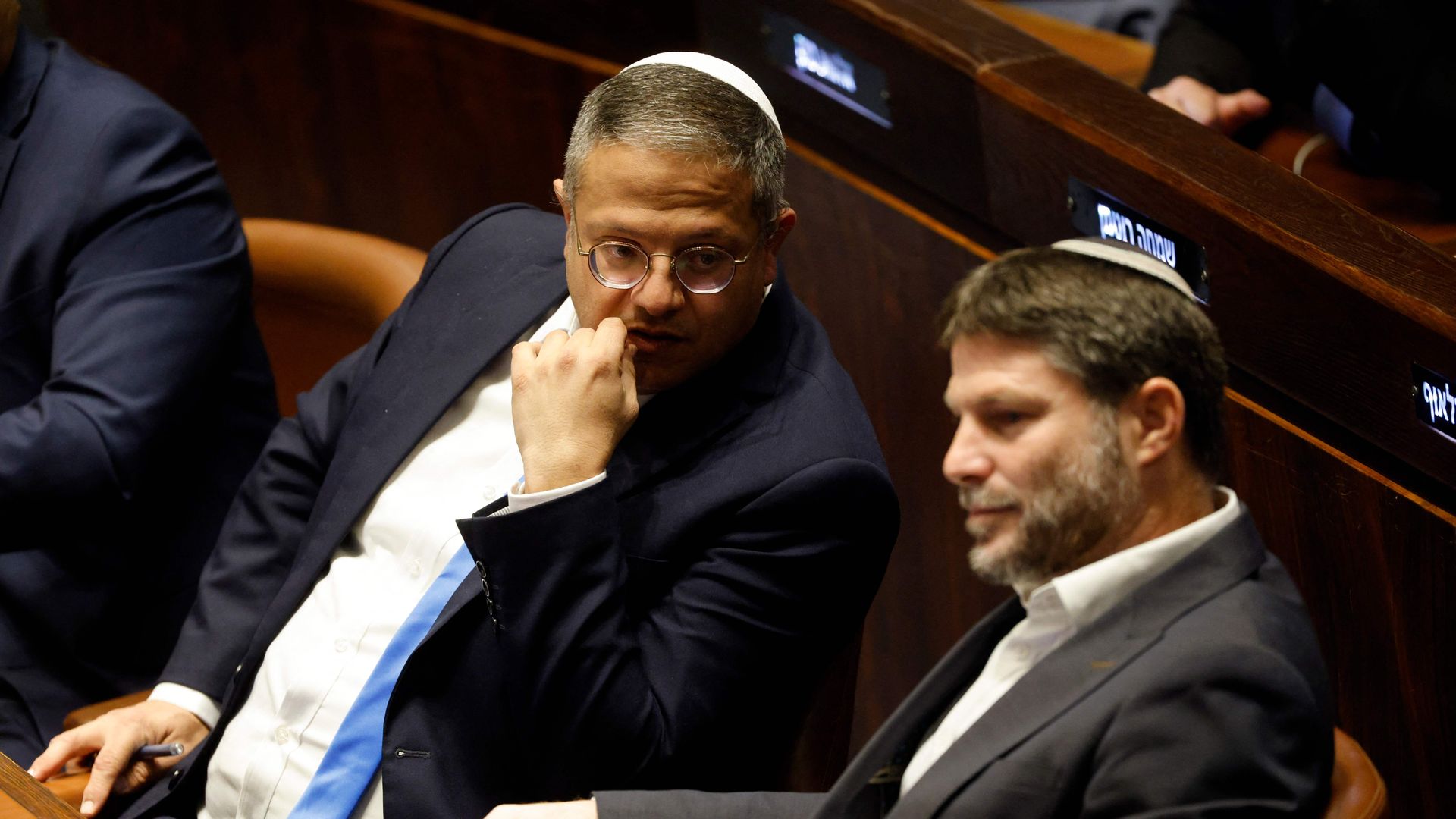
Ultranationalist ministers Betzalel Smotrich (R) and Itamar Ben Gvir. Photo: Amir Cohen/Pool via Getty
Sanctions against two hard-line Israeli Cabinet ministers were among the potential steps discussed at a White House National Security Council meeting Wednesday on how to respond to the deteriorating security situation in the West Bank, three U.S. officials tell Axios.
Why it matters: The Biden administration is deeply frustrated that the Israeli government has pursued a policy of expanding settlements and weakening the Palestinian Authority, and that more extreme members of the government are openly allied with extremist settler groups.
Driving the news: The White House meeting was convened after another surge in violence by extremist settlers against Palestinians, and an Israeli government decision to plan and build another 5,000 housing units in the settlements and legalize five outposts.
- The International Court of Justice (ICJ) stated in a non-binding opinion published on Friday that, through the settlements, Israel had illegally annexed large parts of the Palestinian territories.
- The Biden administration also considers the settlements inconsistent with international law.
- Earlier this year, President Biden signed an unprecedented executive order allowing sanctions on Israeli settlers. Two rounds of sanctions have been issued thus far.
Behind the scenes: When Biden signed that order, senior White House officials recommended the president sanction Betzalel Smotrich and Itamar Ben Gvir — the ultranationalist ministers of finance and national security respectively.
- Biden rejected that proposal on the basis that the U.S. should not sanction elected officials in democratic countries, according to a senior U.S. official.
- Several of their supporters and confidants have been sanctioned since, but not Smotrich or Ben Gvir. The idea was discussed again this week in the NSC meeting but no decision was made.
- U.S. Ambassador to Israel Jack Lew proposed engaging with Smotrich in hopes of changing his behavior, rather than boycotting him, the officials said.
Zoom in: Israeli Prime Minister Benjamin Netanyahu has delegated most authority over the West Bank to Smotrich, whose broad portfolio gives him wide-ranging authority over building in the settlements.
- Himself a settler, Smotrich has publicly vowed to make the two-state solution impossible. He has taken numerous actions to expand the settlements, legalize outposts, weaken the Palestinian Authority economically and support settlers who attack Palestinians.
- Meanwhile, Ben Gvir has ordered the Israeli police not to take action against settlers who attack Palestinians and not to protect aid convoys en route to Gaza from being looted by Israeli extremists.
State of play: All participants in the 90-minute meeting backed another proposal: overturning the Trump administration's policy of labeling of products from Israeli settlements in the West Bank as "made in Israel," the three officials said.
- The U.S.officials said another option under discussion is expanding U.S. sanctions on settler groups to include NGOs and entities involved in building settlements and outposts.
- The U.S. officials said the meeting was to discuss options, and any decisions — including over potential sanctions for Smotrich and Ben-Gvir — would have to be made by Biden.
- The NSC "deputies meeting" included senior representatives from across the foreign policy and national security agencies.
- The meeting for first reported by the Huffington Post's Akbar Shahid Ahmed in a thread on X.
- The White House declined to comment.
What's next: The instability in the West Bank and the Israeli government's role in exacerbating it are expected to be among the key issues Biden and Netanyahu next week at their planned White House meeting, two U.S. officials said.
