ICJ rules Israel has illegally annexed large parts of Palestinian territory

Add Axios as your preferred source to
see more of our stories on Google.
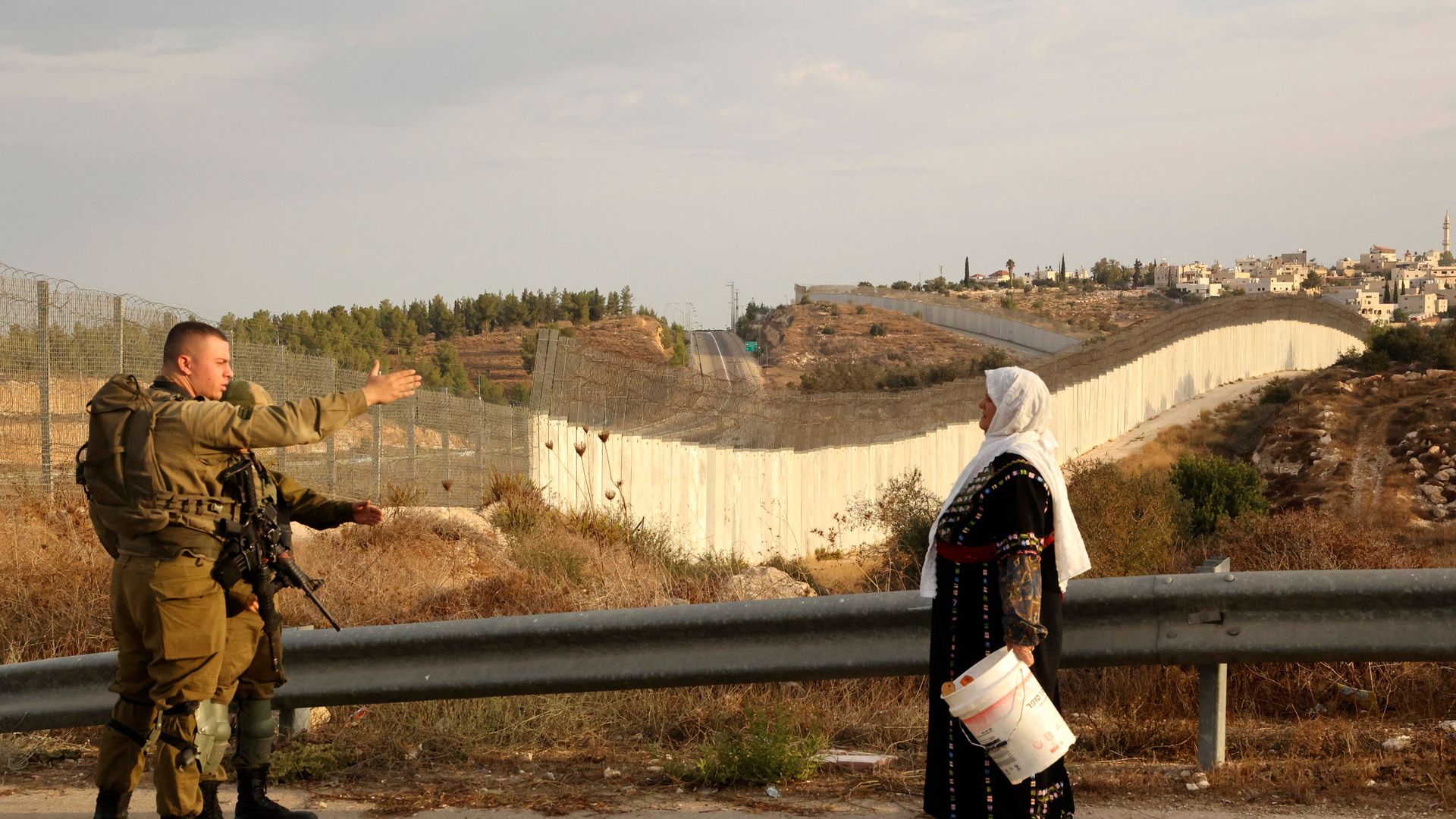
Israeli soldiers stop a woman at a checkpoint near the West Bank city of Hebron. Photo: Hazem Bader/AFP via Getty Images
The International Court of Justice (ICJ) stated in an advisory opinion published on Friday that Israel's policies and practices in the occupied West Bank and East Jerusalem amount to annexation of large parts of the Palestinian territories.
Why it matters: While the legal opinion is non-binding, it is one of the most significant determinations by an international court since the Israeli occupation began in 1967.
- Israeli officials are extremely concerned the advisory opinion will be used by Western countries, including the U.S., to impose sanctions against settlers, private entities which operate in the settlements, and the Israel government itself.
Flashback: The court was tasked with determining whether the Israeli occupation amounted to annexation by a UN General Assembly resolution, initiated by the Palestinian Authority, which passed in December 2022.
- Last February, the court held several days of hearings. Israel didn't actively cooperate with the legal proceedings but worked with its allies behind the scenes to register its own legal arguments with the court.
Driving the news: Friday's opinion finds that the Israeli settlements in the occupied West Bank — and by extension the Israeli government — are in violation of international law.
- "Israel's policies including expansion of settlements and associated infrastructure and exploitation of natural resources... are designed to remain in place indefinitely. These policies amount to annexation of large parts of the Palestinian territories," the court said.
- The court said Israel's presence in the West Bank and East Jerusalem are unlawful and must be ended as soon as possible, including by evacuating Jewish settlers from the territories.
The court added that Israel's legislation and measures in the West Bank and East Jerusalem constitute a violation of the Convention against Racial Discrimination.
- It stressed that Israeli settlements policy led to violence against the Palestinian civilian population, which the Israeli government failed to address.
- The court said Israel must provide reparations to Palestinians damaged by those policies and practices.
- It called all countries not to recognize as legal the Israel presence in the West Bank.
What they're saying: A spokesperson for the Israeli Foreign Ministry said Israel rejects the opinion, arguing it "mixes politics and law" and is "detached from the reality of the Middle East."
- "While Hamas, Iran and other elements are attacking Israel from seven fronts... the court ignores the atrocities that took place on October 7, as well as the security imperative of Israel to defends its territory and its citizens," the spokesperson said in a lengthy statement.
- Palestinian President Mahmoud Abbas' office welcomed the ICJ ruling and called it "a victory for justice." It called on the international community to compel Israel to end its occupation "completely and immediately, without any conditions."
State of play: Current U.S. policy is that the settlements are illegal under international law. Most western countries also deem the settlements illegal.
What's next: The court said the UN General Assembly and the UN Security Council need to consider taking further action in light of its advisory opinion in order to end the Israeli occupation.
- The rulings is unlikely to lead to a policy change from the Israeli government, which includes prominent advocates for expanding the settlements.
- Two far-right members of the government quickly issued statements after the ruling calling for the outright annexation of the West Bank.
