Meet "Zynfluencers": Smokeless nicotine pouches are having a moment

Add Axios as your preferred source to
see more of our stories on Google.
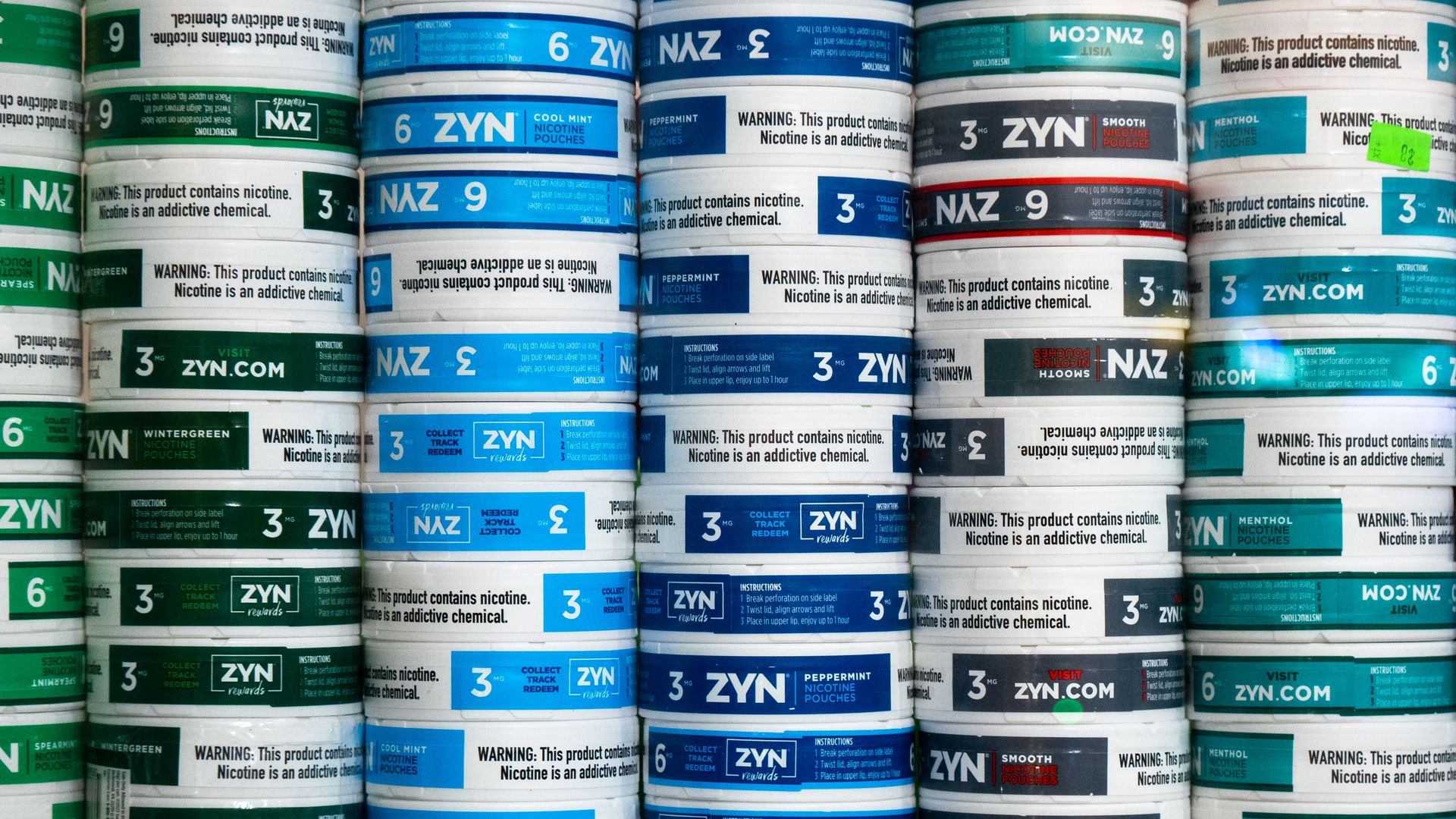
Zyn smokeless nicotine pouch containers for sale in New York City on Feb. 6. Photo: Shelby Knowles/Bloomberg via Getty Images
"Zynfluencers" are touting the benefits of smokeless and tobacco-free pouches that have become a fast-growing segment of the tobacco industry.
Why it matters: The social media chatter about Zyn — and subsequent government attention — is reminiscent of the teen vaping boom in the late 2010s.
- Users promote the buzz they get from Zyn, which is also popular on college campuses, with some saying the pouches allow for a temporary boost in focus. Podcasters like Joe Rogan and TV personalities like Tucker Carlson have also given the brand a signal boost.
- Zyn's website says its products — which come in flavors like cool mint, citrus and cinnamon — are meant for "current nicotine users" older than 21.
- Philip Morris International, a tobacco company and parent of Zyn, projected it would ship about 520 million nicotine pouch cans in the U.S. in 2024 — a 35% increase from last year.
State of play: Zyn was released in the U.S. in 2014, but its TikTok-fueled popularity has gotten attention from Congress and regulators. Senate Minority Leader Chuck Schumer (D-N.Y.) earlier this year called for the Food and Drug Administration to investigate the brand.
- In June, Zyn halted nationwide online sales following a D.C. subpoena over compliance with the district's ban on the sale of flavored tobacco — leaving customers frustrated over a subsequent shortage.
- The FDA said it received reports about kids potentially using nicotine pouches in increased amounts and has sent warning letters and filed civil money penalties over retailers allegedly selling Zyn to underage consumers, according to a notice issued this spring. The director of the FDA's Center for Tobacco Products has said it doesn't have data on youth use of nicotine pouches.
- Zyn provides "legal-age smokers with a better alternative than continued smoking, which is the most harmful form of nicotine use," spokesperson Travis Parman told Axios. The influencers boosting the product are not associated with Swedish Match, which manufactures Zyn.
The big picture: Big Tobacco has "a powerful incentive to go after youth and young adults," Thomas Carr, national policy director for the American Lung Association, told Axios.
- Adult smokers who started smoking regularly between 18 and 20 years old were more likely to experience high levels of nicotine dependance compared with those who started at 21 and up, per the CDC.
- The FDA does not list pouches as one of its recommended nicotine replacement products.
How it works: Zyn pouches are designed to be placed between the gum and upper lip for the user to absorb nicotine without swallowing.
- The pouches are discrete and don't produce smoke or smells like cigarettes and e-cigarettes.
- Zyn don't contain tobacco leaf, but the FDA considers it to be part of the tobacco industry.
Zoom out: Regulators aren't exactly stopping the tide of nicotine access and visibility.
- The FDA in June rescinded a marketing ban on Juul e-cigarettes following a review of new case law and additional review of the products. Juul has faced scrutiny over the perception it marketed to teens, and settled a lawsuit in 2022 over its advertising.
- The FDA separately authorized the sale of the first menthol e-cigarettes for adults.
Reality check: Youth e-cigarette usage has dropped from 2022 to 2023, per the CDC and FDA.
- From 2022 to 2023, 1.5% of middle and high school students reported using nicotine pouches.
Between the lines: Products meant to help smokers ween off cigarettes can end up attracting youth users when they're freely on the market, experts told Axios.
- "The problem with these products, including pouches, is they allow you to use the product constantly," said Suchitra Krishnan-Sarin, a psychiatry professor at Yale who has researched adolescent tobacco use.
- More than a million teens started vaping from 2017 to 2019, per a Pediatrics study, reversing decades of declines in tobacco use. The increase was attributed, in large part, to the popularity of Juul e-cigarettes.
Go deeper: FDA OKs first menthol e-cigarettes
- Axios Instagram comic, "The Rise of Zyn."
Editor's note: This story has been updated with additional details.
