Exclusive: Top Treasury official will defend Biden-era China tariffs

Add Axios as your preferred source to
see more of our stories on Google.
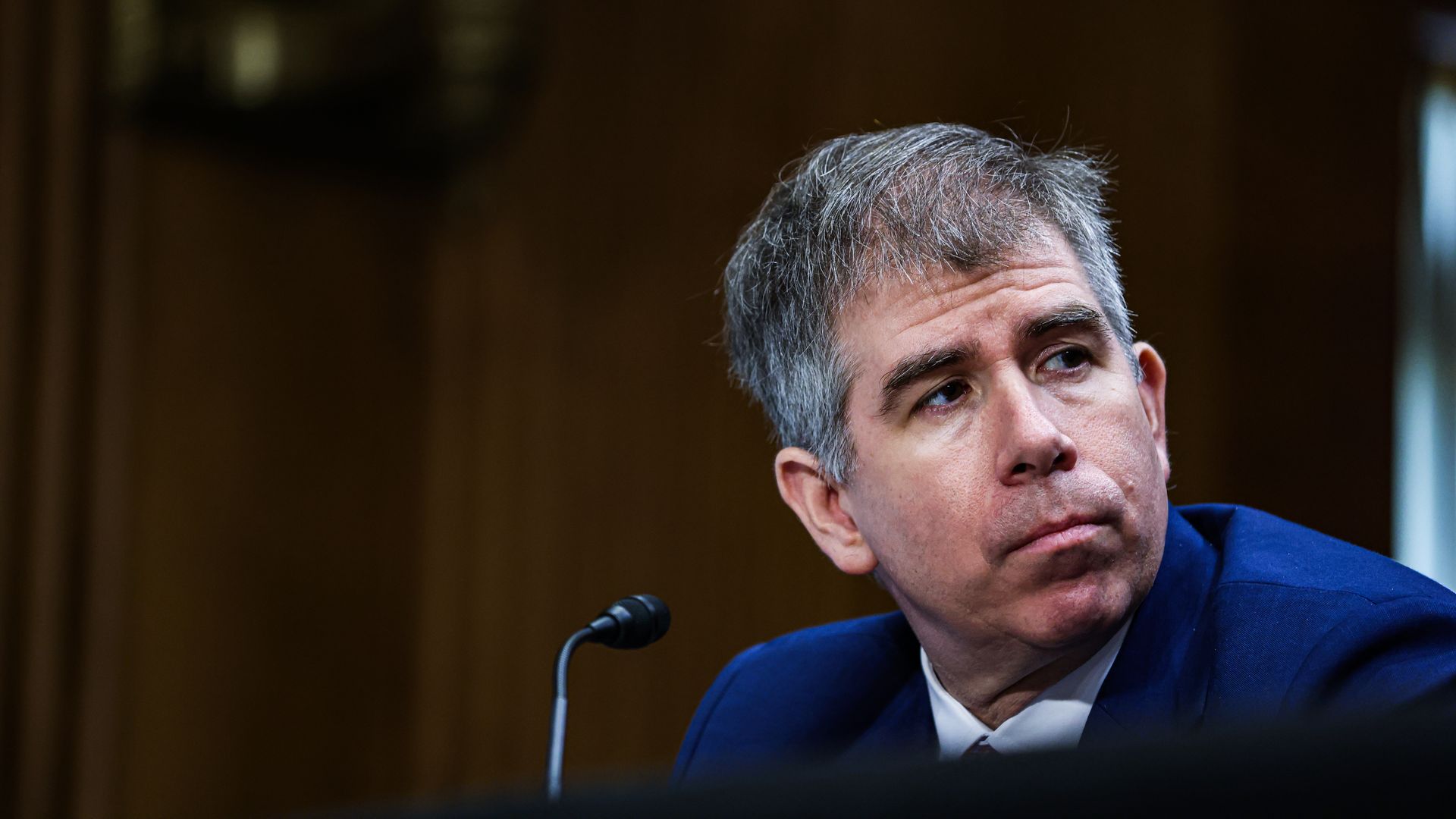
Treasury under secretary for international affairs Jay Shambaugh testifies before a Congressional hearing last year. Photo: Valerie Plesch/Bloomberg via Getty Images
The Biden administration will give the most full-throated defense yet of its tariffs on Chinese imports in a speech Wednesday afternoon by a top Treasury Department official.
Why it matters: Biden-era tariffs were intended to head off what officials see as a threat to the global economy: China producing more clean-energy goods than the world can absorb, distorting global prices.
- The tariffs have drawn comparisons to former President Trump's trade strategy.
What's new: A speech by Jay Shambaugh, Treasury under secretary for international affairs, offers the most detailed explanation to date about the overcapacity issue that has emerged as one of the top economic tensions between the U.S. and China.
- "Earlier rounds of overcapacity led to job losses in the United States and shuttered American firms," Shambaugh will say at the Council on Foreign Relations, according to prepared text seen by Axios.
- "Given China's size today, spillovers from its economy will be even more consequential."
By the numbers: Shambaugh will acknowledge there is no "single test or condition that indicates overcapacity." But the Biden administration points to signs that it says demonstrate the overcapacity issue is real:
- China plans to produce 70 million electric vehicles in 2030, while global sales are projected to be 44 million that year, per figures cited in the speech.
- Industrial firms in China are losing money, but few are going out of business — a sign that government support is propping these companies up and adding to supply.
- The percentage of firms losing money in the auto sector was 28% in China, above the 20% average across all sectors in China in 2022, Shambaugh will say, citing China's data.
State of play: China's government support allows its firms to sell products overseas at cheaper prices than competitors, Shambaugh will point out.
- For example: Two huge solar firms in China reported massive losses this year, citing price drops for solar panels, Bloomberg reported Tuesday.
The bottom line: The speech suggests the Biden administration is willing to do more to constrain China, though Shambaugh does not specify what that might look like.
- "We will take defensive action if needed, but we would prefer for China to take action itself to address the macroeconomic and structural forces that are generating the potential for a second 'China shock' for its major trading partners," he will say.
- For its part, China officials have said publicly that there is no such thing as overcapacity.
