Why Puerto Ricans have more political sway in U.S. than ever before

Add Axios as your preferred source to
see more of our stories on Google.
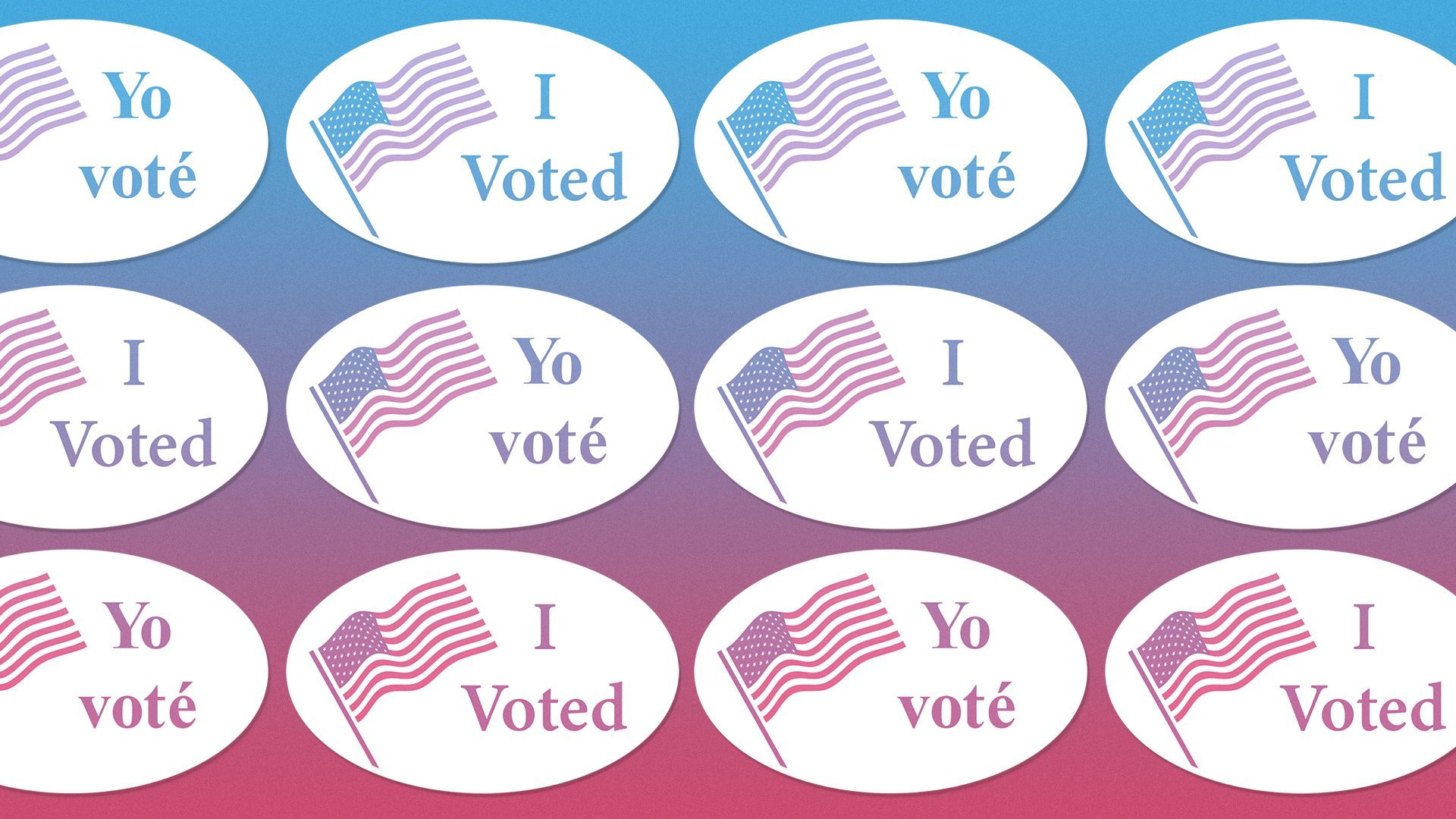
Illustration: Shoshana Gordon/Axios
The number of Puerto Ricans living in the continental U.S. has grown since Hurricane Maria in 2017, and they could have an impact in the outcome of certain federal, state and local elections, analysts say.
Why it matters: Puerto Ricans are an important part of the growing Latino electorate, and parties and candidates would be remiss to take that for granted, experts say.
The big picture: Since 2017, there's been an exodus of Puerto Ricans from the island, and they've moved to states like North Carolina, Georgia, Pennsylvania and Florida, where they are the second largest Latino subgroup after Cuban Americans. Many are young, averaging 30 years old, per estimates.
- Stateside, Puerto Ricans are eligible to vote for president (which they can't do on the island, as it isn't part of the electoral college).
- Historically, Puerto Rican voters in the mainland have voted for the Democratic Party — about 68% of those living in Florida supported President Biden in 2020, per exit polls.
What they're saying: "Given their rapid growth and that they can more easily cast a vote, they could tilt the scales one way or another" for federal, local or state elections, Jorge Duany, professor of anthropology at Florida International University, says.
- "Their geographic diversification, partly in swing states, should certainly make political campaigns pay attention," Duany adds.
Yes, but: Election turnout has been inconsistent. Academics have said that's partly because recent arrivals to the mainland are less civically engaged since they grew up without participating directly in federal elections.
State of play: Recently, new groups like La Brega y Fuerza Fund have popped up to mobilize Puerto Ricans.
- The group seeks to "build connections and create a pipeline of power" that links voters and issues from the island and the diaspora, founder Camille Rivera tells Axios Latino.
- The hope is to bring greater attention to matters on the island, including the disparity in access to programs like SNAP food benefits, longstanding infrastructure problems worsened by climate change that lead to recurrent blackouts on the island, and displacement as short-term rentals have bloomed.
- "We want to lift the voices of Puerto Rican voters and issues that matter to them, so they get to the forefront … and elected officials and others really understand their importance," Rivera says.
Zoom in: A poll from La Brega y Fuerza of likely voters shows Puerto Ricans on and off the island share concerns about the health care system and public safety.
- The poll surveyed 675 Puerto Ricans in the continental U.S. and 362 on the island in late March.
- It also found strong support regardless of location for a $15 minimum wage threshold and to holding a binding referendum on the island's political status.
The bottom line: Although Puerto Rican advocates have made some inroads in Congress with pushes to improve food assistance benefits, their causes have not made it past committee.
- "There are certainly signs that these increasingly numerous Puerto Rican communities are making a larger push in political power, but those efforts haven't yet meant concrete legislative advances," Duany says.
Subscribe to Axios Latino to get vital news about Latinos and Latin America, delivered to your inbox on Tuesdays and Thursdays.
