Exclusive: American Airlines, ZeroAvia step up hydrogen partnership

Add Axios as your preferred source to
see more of our stories on Google.
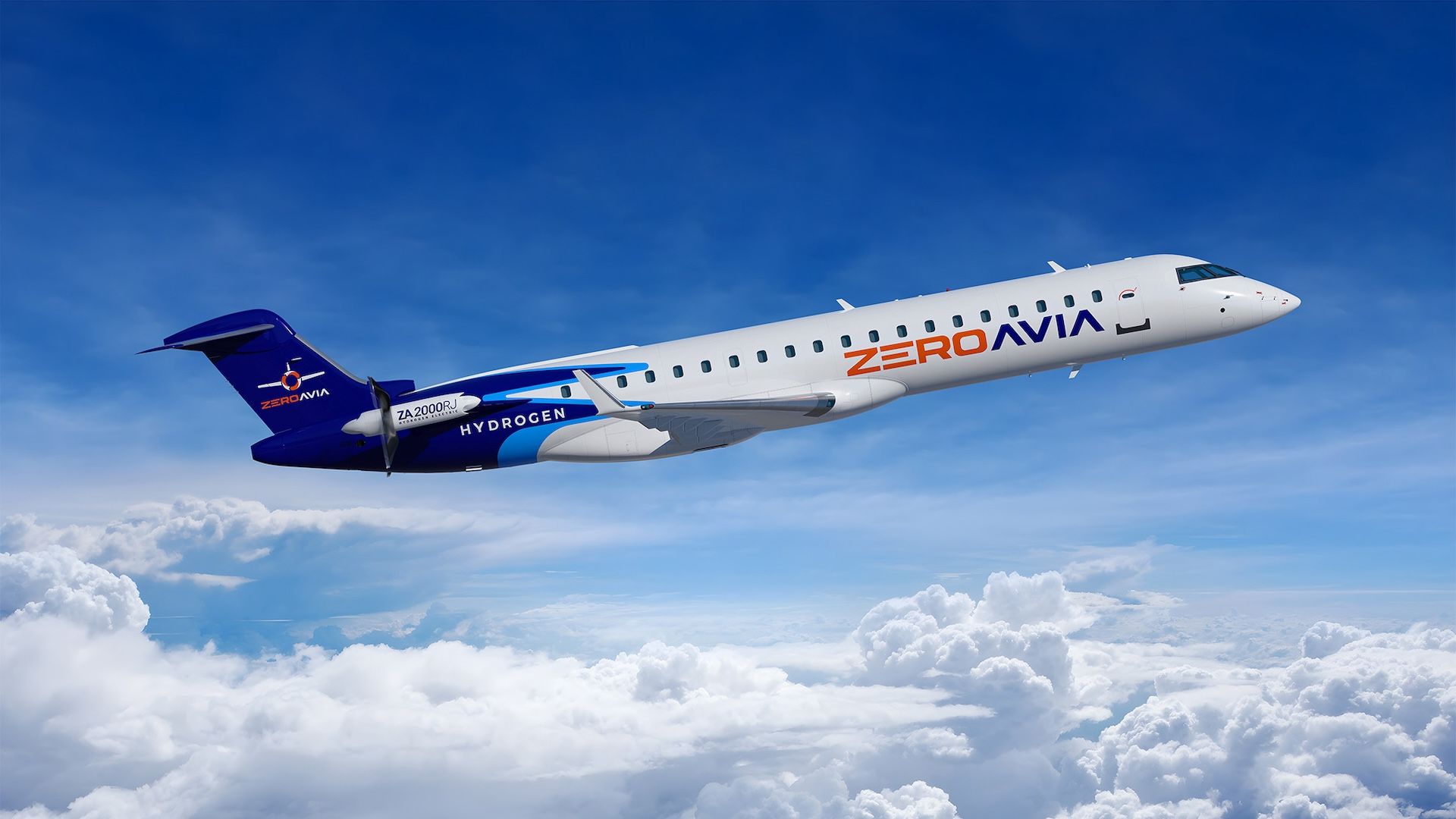
Artistic rendering of a Bombardier CRJ700 regional jet. Image: ZeroAvia
American Airlines has entered into a conditional purchase agreement with hydrogen fuel cell aviation upstart ZeroAvia for 100 hydrogen-electric engines intended to power regional jets with zero in-flight emissions.
Why it matters: American sees ZeroAvia's engines as a potential game-changer for powering its regional flights.
- Aviation is a growing source of greenhouse gases, with limited options for cutting emissions.
Driving the news: This is American's first engine order from ZeroAvia, in which it has been investing since 2022.
- The Dallas-based airline is also investing an undisclosed additional sum in the company, according to details shared exclusively with Axios.
Zoom in: ZeroAvia is developing hydrogen-electric, or fuel cell-powered, engines for commercial aircraft that it says can reduce in-flight emissions to close to zero, other than water vapor.
- Such engines use hydrogen in fuel cells to generate electricity, which then is used to power motors on an aircraft's engines.
- The emissions from such engines are meant to just be water vapor, rather than the pollution from traditional jet engines, which emit a range of planet-warming greenhouse gases.
- American is looking to ZeroAvia to provide cleaner propulsion systems for its Bombardier CRJ700 regional jet fleet.
Between the lines: So far, ZeroAvia has been testing its next-generation engines on propeller aircraft, including a De Havilland Dash 8 and Dornier 228.
- It is developing a hydrogen fuel cell-powered engine for a Dash 8 Q400 aircraft in Everett, Washington in conjunction with Alaska Airlines.
- That facility will also be the hub of development activity for the CRJ700 propulsion system.
- Its agreement with American, though, would have ZeroAvia produce hydrogen electric propulsion systems to replace turbofan jet engines, which no one has yet done. However, ZeroAvia points to a technical study conducted with the regional jet's engine manufacturer, MHI RJ Industries, which pointed toward its feasibility.
- As of last year, American operated 140 CRJ700 aircraft with 65 seats each.
The intrigue: American has a goal of reaching net zero emissions by 2050. That would heavily depend on a dramatic scale-up of "sustainable" aviation fuels, or SAFs, along with the use of cleaner-powered aircraft such as those that use hydrogen electric or all-electric power.
- The Biden climate law incentivizes SAF production, and ZeroAvia, based in Hollister, Calif., with facilities in Washington state and the U.K., is counting on it to give the company's technologies a boost as well.
- The airline has also touts its investments in new and more efficient aircraft across its fleet.
- Hydrogen-electric engines are envisioned to be used for mainly short-haul flights, such as Los Angeles to Flagstaff, Ariz., which is why American is looking to swap the engines on its CRJ700 fleet.
Yes, but: ZeroAvia's website has a 2029 timeline for developing the engines that would power regional jets such as the CRJ700.
What they're saying: "Advancing the transition of commercial aviation to a low-carbon future requires investments in promising technologies, including alternate forms of propulsion," American's CEO Robert Isom said in a statement.
- "This announcement will help accelerate the development of technologies needed to power our industry and uphold our commitment to make American a sustainable airline so we can continue to deliver for customers for decades to come."
- "The solutions that can serve the largest airlines are within reach, and the clean future of flight is coming," said ZeroAvia Founder and CEO Val Miftakhov in a statement.
