Supreme Court allows emergency abortions in Idaho — for now

Add Axios as your preferred source to
see more of our stories on Google.
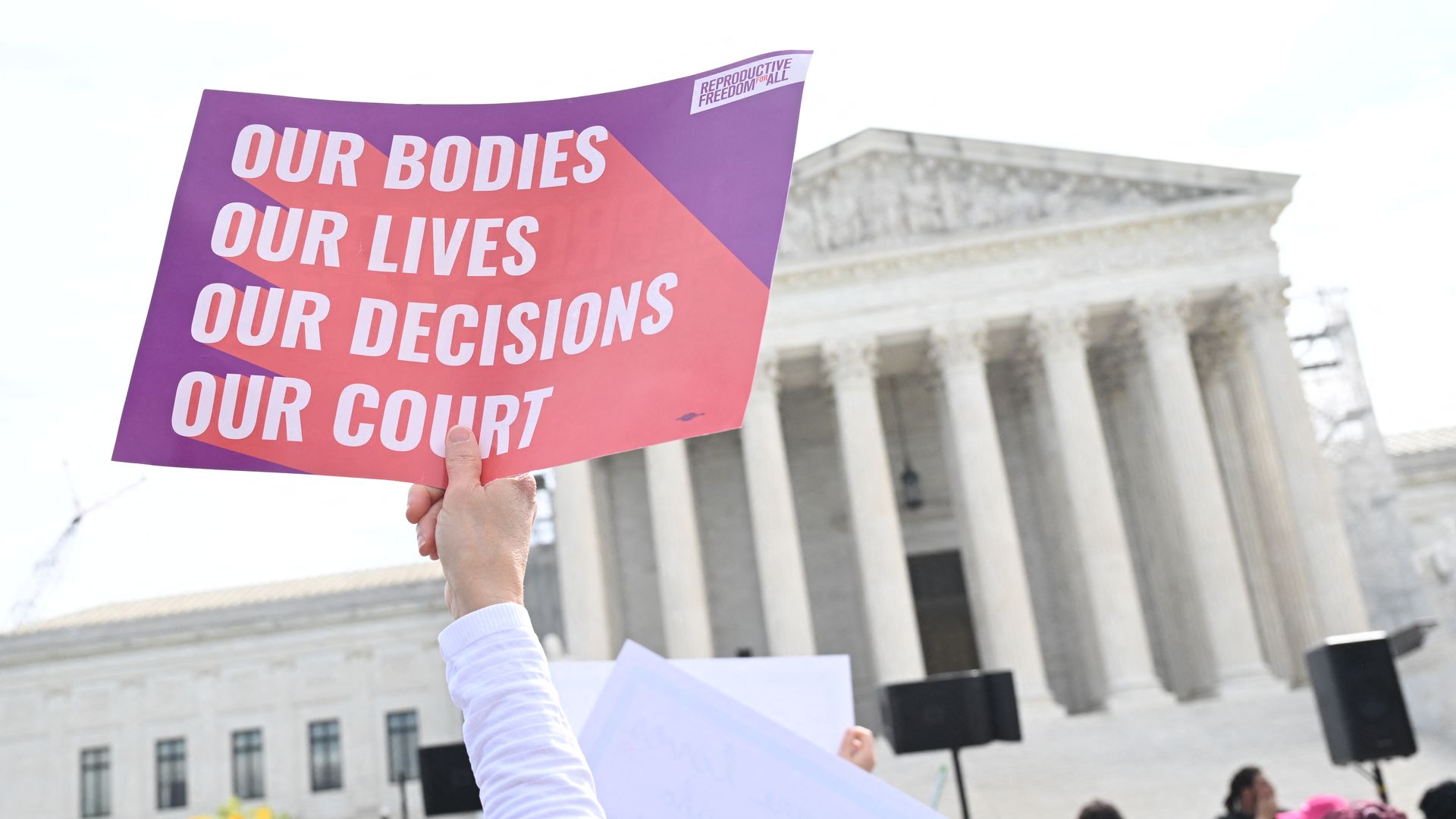
Reproductive rights activists rally outside of the Supreme Court on April 24 during arguments in the EMTALA case. Photo: Saul Loeb/Getty Images
The Supreme Court on Thursday dismissed a closely watched abortion case — a temporary victory for abortion-rights supporters that allows doctors to perform emergency abortions in Idaho.
The big picture: The court did not resolve the case's central questions about how state abortion bans and federal directives on emergency health care mesh.
How it works: The case concerned Idaho's near-total ban on abortion, which allows emergency abortions in order to save a pregnant person's life, but not to spare them from severe health issues.
- The Biden administration argued that abortions must be allowed in those circumstances, citing a federal law that requires emergency rooms to perform necessary care for anyone who comes through the door.
- But the Supreme Court dismissed the case rather than ruling on the merits of that conflict between state and federal law.
- Lower courts will continue to wrestle with those legal questions — and emergency abortions in the state can continue while that process plays out.
The latest: Thursday's ruling would allow abortions as emergency care in Idaho, but doesn't have bearing in other states with bans.
- "Today's decision is not a victory for pregnant patients in Idaho," Justice Ketanji Brown Jackson wrote. "It is delay." She said the issue will return to the court.
- Justices Samuel Alito, Clarence Thomas and Neil Gorsuch dissented from the court's decision to dismiss the case.
Catch up quick: EMTALA was passed to prevent hospitals from refusing emergency care to patients who couldn't pay.
- The court vacated its previous stay of a lower court's ruling, allowing Idaho to enforce its abortion ban even when terminating a pregnancy was necessary to prevent harm.
- Idaho's largest emergency services provider airlifted pregnant women out of the state roughly every other week compared to once the previous year, Justice Elena Kagan wrote.
Between the lines: Earlier this month, the Supreme Court preserved access to mifepristone, an abortion pill, by ruling that the case lacked legal standing.
- In this decision, again, the high court skirted making a ruling on the merits of the case.
What we're watching: Texas' abortion ban has also come up against EMTALA.
Zoom out: The Supreme Court stripped federal protection for abortion rights in 2022 when it overturned Roe v. Wade in the Dobbs decision, putting abortion law at the state level.
- As of April, 16 states had laws outlawing abortion beyond six weeks of pregnancy. Nine states have banned the procedure between 12 and 22 weeks.
Go deeper: SCOTUS weighs strict abortion ban in case with potential major implications
Editor's note: This story has been updated with additional details throughout.
