Scoop: Israel re-establishes working groups on Iran nuclear program

Add Axios as your preferred source to
see more of our stories on Google.
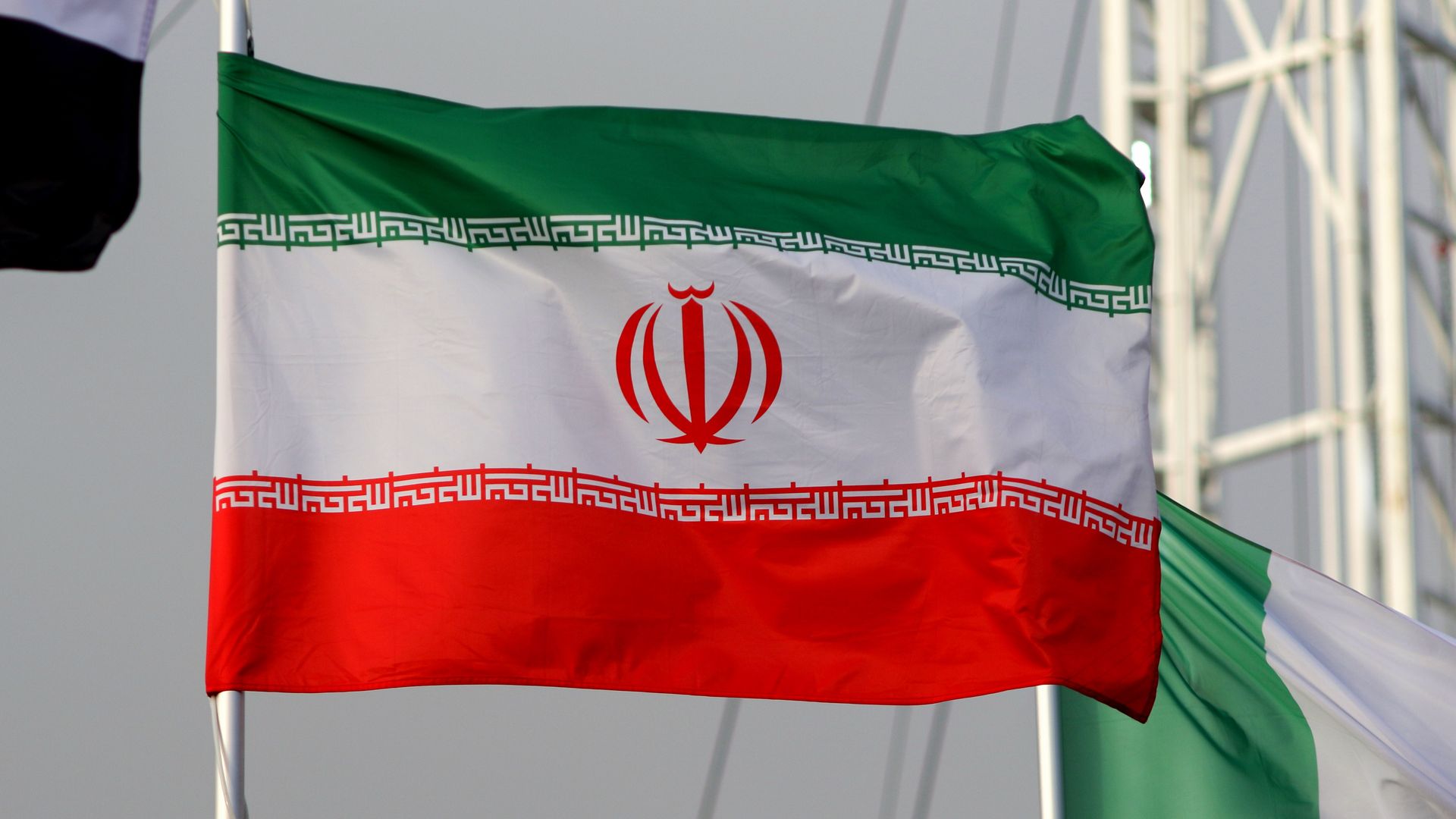
The national flag of the Islamic Republic of Iran. Photo: Maksim Konstantinov/SOPA Images/LightRocket via Getty Images
Israeli Prime Minister Benjamin Netanyahu two weeks ago re-established working groups made up of members of Israel's defense establishment, the Ministry of Foreign Affairs and the intelligence community to focus on Iran's nuclear program, three senior Israeli officials told Axios.
Why it matters: Israel and the U.S. are concerned Iran will try to advance its nuclear technology, including weaponization efforts, in the weeks leading to the U.S. presidential elections, according to two Israeli and two U.S. officials.
- Israeli and U.S. officials said U.S. leaders' attention might be divided between the campaign and the continued crisis in Gaza, and the U.S. could struggle to respond quickly to any Iranian nuclear advances during this period.
- The officials also said there is concern Iranian leaders might try to use the post-election transition period in the U.S. to "break" towards a nuclear weapon.
One U.S. official said the U.S. intelligence community still thinks Iran is not actively pursuing a nuclear weapon but it has taken provocative nuclear steps "that will not go unchallenged."
- Iran has repeatedly said it does not want to develop nuclear weapons.
Driving the news: In recent months, the Israeli and U.S. intelligence communities have been looking into new information that raised concerns Iran is carrying out activities related to the development of nuclear weapons, Axios reported last week.
- Israel is concerned that computer modeling and other scientific experiments by Iranian scientists could be used for nuclear weaponization and will allow Iran to "shorten the timetable" if Supreme Leader Ali Khamenei orders a push towards a nuclear bomb, senior Israeli officials said.
- Iran's nuclear program was discussed during Israeli Minister of Defense Yoav Gallant's meetings in Washington this week with White House national security adviser Jake Sullivan, Secretary of State Antony Blinken and Secretary of Defense Lloyd Austin, Israeli officials and a senior U.S. official said.
- "We are on it 24\7 and are consulting with Israel on this issue all the time," the U.S. official said.
- "Iran will never get a nuclear weapon," the official said. The Biden administration "will make sure this is the case."
What they're saying: Netanyahu's former national security adviser, Yaakov Nagel, who is now a senior fellow at the Foundation for the Defense of Democracies and is still very close to Netanyahu, claimed several dozen Iranian scientists have been working in recent months on technical processes necessary for the building of a atomic bomb.
- He told Axios this activity is taking place "under an academic umbrella" and is "pushing the envelope" of experiments that can have civilian uses.
- Nagel claimed the Israeli and U.S. intelligence agencies think Khamenei has not explicitly and officially approved the activity in order to leave him room for deniability.
Behind the scenes: Senior Israeli officials said Netanyahu's directive to national security adviser Tzachi Hanegbi to re-establish the teams came after a period of about a year and a half during which the working groups were frozen.
- There was almost no coordination on concerns about Iran's nuclear program under the National Security Council in the Prime Minister's Office as was customary under previous governments.
The intrigue: Two former Israeli officials briefed on the situation said the Iranian nuclear issue hasn't been not dealt with seriously by Netanyahu since he return to office in December 2022.
- At first, it was due to his preoccupation with the judicial overhaul he was pushing and later because of the war in Gaza.
- In recent months, when new intelligence about Iran's nuclear activity emerged, some former senior officials in the Israeli defense establishment who are close to Netanyahu expressed concern to the prime minister and his team that the issue was being neglected, the former senior officials said.
- "Recently, the penny finally dropped and they started addressing the issue seriously — and it's a good thing," one of the Israeli sources said.
State of play: Following Netanyahu's directive, six working groups have been established, with the National Security Council responsible for managing the process and making sure it is carried out.
- One team led by the Mossad deals with the issue of the Iranian nuclear program and in particular the issue of possible weaponization activities.
- Another team led by the Shin Bet is responsible for Iranian influence operations within the Israeli society, which have been increasing over the last year, an Israeli official said.
- Other teams deal with intelligence and cyber coordination and with Iranian activity in the region with Hezbollah, the Houthis in Yemen and the militias in Iraq and Syria.
- The Prime Minister's Office declined to comment.
What to watch: In mid-July, a high-level Israeli delegation led by Hanegbi is expected to travel to Washington for talks at the White House on Iran as part of the U.S.-Israel Strategic Consultative Group.
