Overheating bearing blamed for Norfolk Southern derailment in Ohio

Add Axios as your preferred source to
see more of our stories on Google.
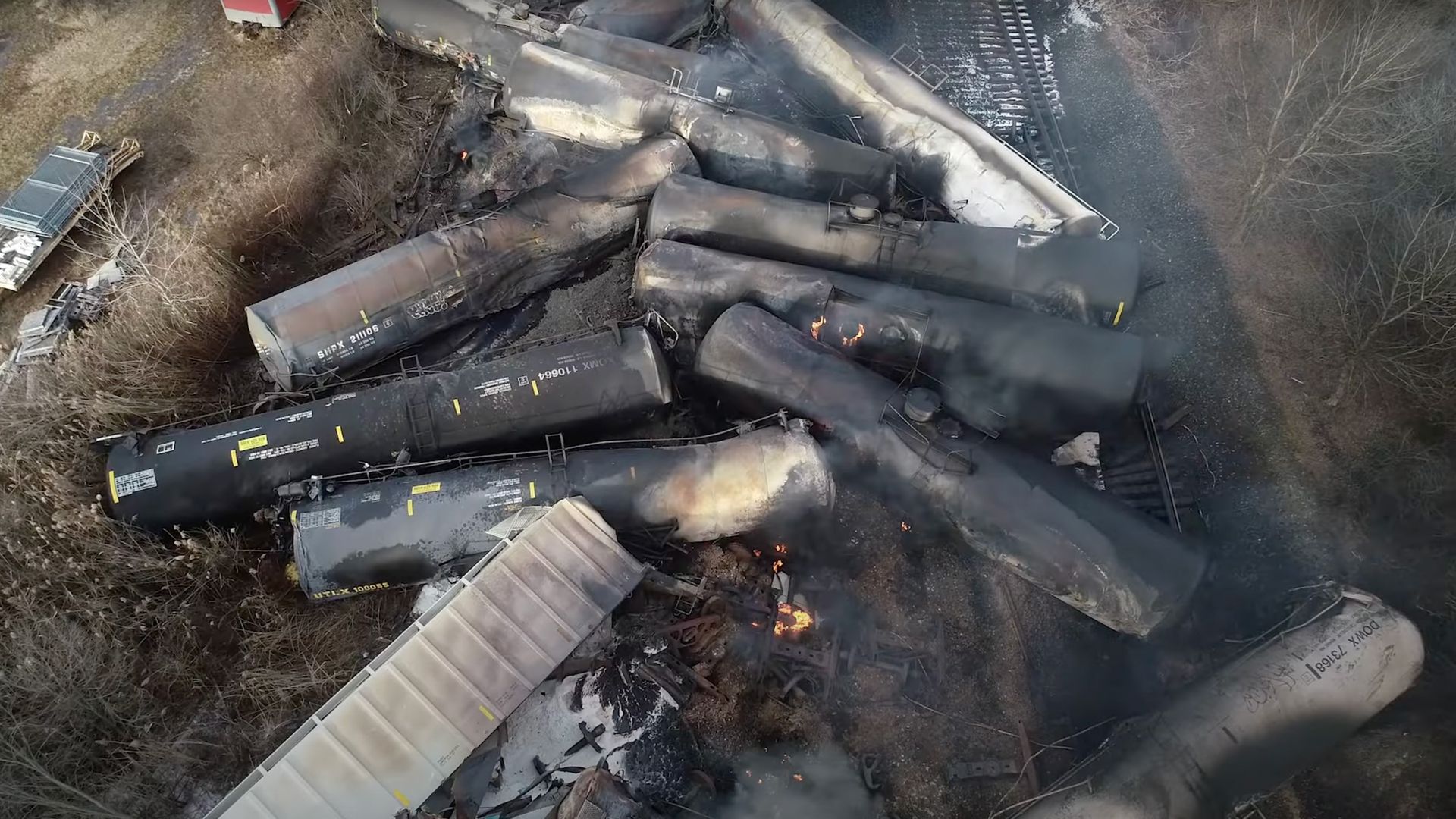
A derailed Norfolk Southern freight train in East Palestine, Ohio, in February 2023. Photo: NTSB/Handout via Xinhua
An overheating wheel bearing caused the February 2023 Norfolk Southern freight train derailment in East Palestine, Ohio, the National Transportation Safety Board (NTSB) concluded on Tuesday.
Why it matters: The NTSB's conclusions came just a month after Norfolk Southern agreed to pay $310 million for damages from the derailment. The massive, ongoing effort to clean up the derailment is expected to cost Norfolk Southern over $1 billion in total.
- Federal authorities reiterated Tuesday that Norfolk Southern's decision to release and burn the toxic vinyl chloride in the tank cars after the crash was unnecessary.
- The release of vinyl chloride and other chemicals during the crash and its aftermath ignited concerns within East Palestine about potential long-term health ramifications for residents and environmental impacts.
What they're saying: The derailment, which forced thousands of East Palestine residents to evacuate the town, could have been avoided if wayside defect detectors used by Norfolk Southern had accurately detected the overheating wheel bearing, federal authorities said in a hearing in East Palestine.
- Jennifer Homendy, chair of the NTSB, opened the hearing by apologizing to East Palestine residents, saying entities outside of the NTSB have attempted to minimize the severity of the crash by pointing out that no one was killed in the accident.
- "The absence of a fatality or injury does not mean the presence of safety," Homendy said.
Context: Thirty-eight railcars were involved in the Feb. 3, 2023, derailment, including 11 tank cars carrying hazardous materials that ignited after the wreck and damaged an additional 12 cars that hadn't derailed.
- In addition to vinyl chloride, butyl acrylate and 2-ethylhexyl acrylate were released during the crash.
Zoom in: The NTSB only investigates accidents and makes regulatory suggestions to prevent similar accidents in the future.
- It is not a regulatory agency, and its recommendations can only be acted upon by Congress, other agencies, manufacturers, companies or state and local jurisdictions.
Zoom out: Officials with the NTSB said Norfolk Southern and its contractors withheld information from the company that had produced the vinyl chloride while making the decision to release and burn the chemical.
- Among the information not transmitted to Oxy Vinyls, the chemical company was the fact that the tank cars were cooling after the crash, which meant that the risk of a sudden explosion was decreasing.
- Burning the vinyl chloride created a massive smoke plume over the town for several hours and generated large amounts of hydrogen chloride and phosgene, a highly poisonous gas.
Norfolk Southern did not immediately respond to Axios' request for comment.
Go deeper: Better trains are coming. Will America get aboard?
