How 2024 pollsters are trying to avoid their 2020 mistakes

Add Axios as your preferred source to
see more of our stories on Google.
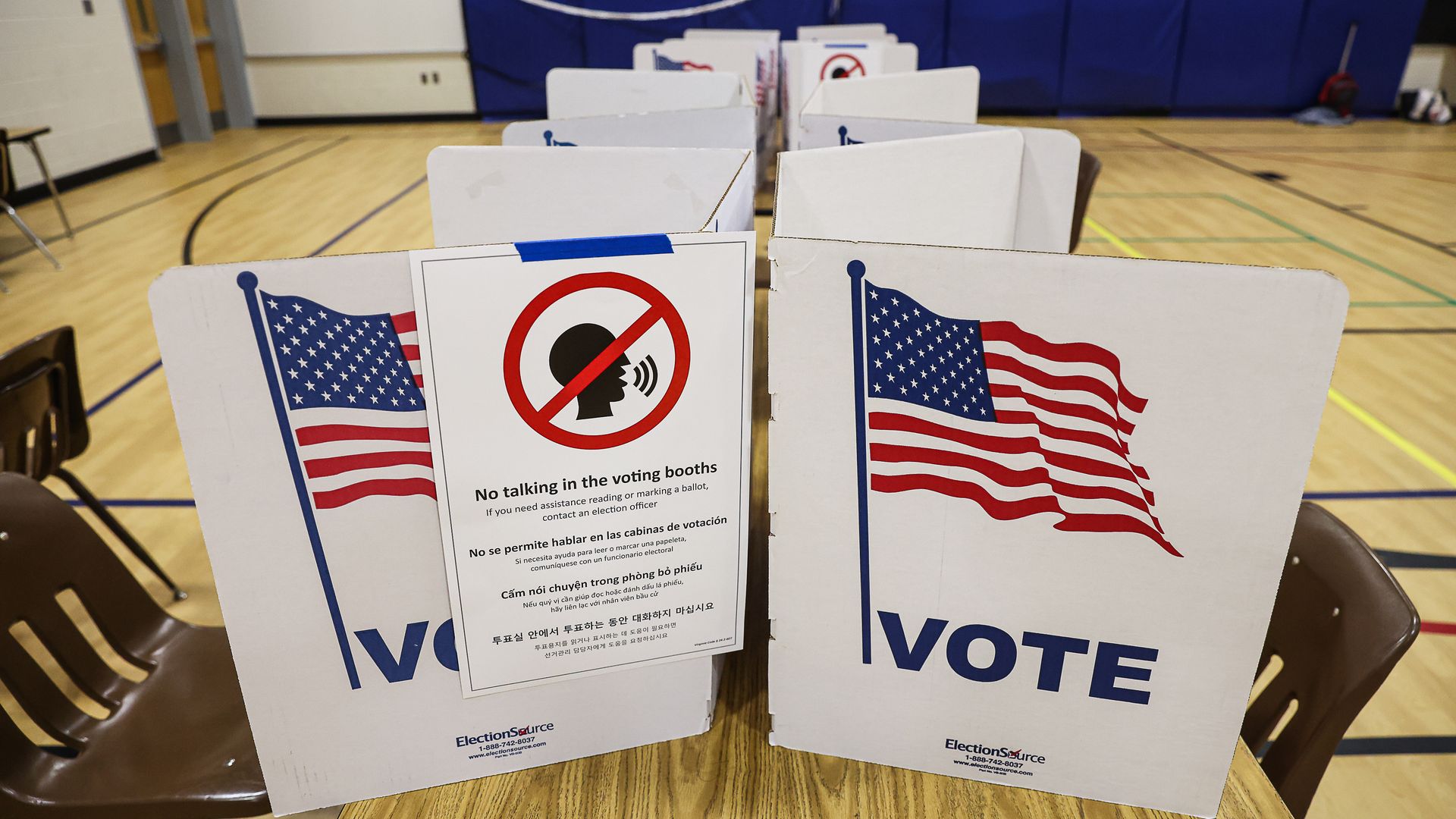
Voting booths at a polling station in Herndon, Virginia, on March 5. Photo: Valerie Plesch/Bloomberg via Getty Images
Candidates and voters alike are wondering whether they can trust the polls ahead of November's elections.
Why it matters: The 2016 and 2020 elections rocked public confidence in polling after many underestimated the amount of support for former President Trump. Meanwhile, pollsters are having to adapt their methods, with fewer respondents answering the phone.
- It's "pretty apparent" that polling has some "entrenched problems," Benjamin Toff, a University of Minnesota professor who researches public trust in polls and news coverage.
Flashback: In 2016, some Trump supporters decided their votes last minute, according to the American Association for Public Opinion Research.
- Others were shy about admitting their support for Trump given the controversies surrounding him.
Many polls also sampled too many college graduates, who tend to lean more Democratic, Courtney Kennedy, the vice president of methods and innovation at Pew Research Center, told Axios.
- This problem has been "diagnosed and largely fixed," she noted.
- Yet in 2020, national polls saw their highest margin of error in 40 years, per AAPOR. And during the 2022 midterms, the much-anticipated "red wave" failed to materialize.
Zoom in: In 2022, 17% of national pollsters used at least three sampling methods — sometimes within the same survey — compared to only 2% who did the same in 2016, according to the Pew Research Center.
- Changing technology and the decline of landline use have made polling more difficult, Mitchell Brown, a political science professor at Auburn University, told Axios. Pollsters now often create random samples by contacting people via mail using U.S. Postal Service address lists.
- Pollsters can also use online surveys, though those respondents "tend to be younger and a little bit more male," Brown said.
Between the lines: The decline of landline use has increased the costs associated with polling. The reluctance of young people in particular to answer their phones has made polling by phone more difficult, Toff said.
- Online surveys are cheaper but they're vulnerable to bots and it's harder to assess whether the online sample is truly representative, he added.
Reality check: The state of polling has improved since 2016, Brown contends.
- Many big pollsters are increasingly "using multiple methods of polling and multiple groups of people," he said.
- The new methods allow pollsters "to triangulate their findings, so they can ensure that the results they're getting are really the results."
The big picture: The fact that Trump is polling better than he was in 2016 and 2020 may suggest that some failures to account for Trump voters in pre-election polling in those races have been fixed, Kennedy said.
- Kennedy said she still remains nervous about this year's results.
- In his past two races, Trump has proven effective in turning out infrequent voters whose participation is harder to predict and who rarely respond to polls, she noted.
State of play: Trump is currently leading Biden in five key swing states, though some evidence suggests the race has narrowed following Trump's conviction in his New York hush money trial.
- Biden and his advisers reportedly don't believe his bad poll numbers, though Brown suggested this could just be savvy political messaging.
The bottom line: People should understand the true purpose of polls, David Dutwin, senior vice president of strategic initiatives at NORC, told Axios.
- They're "not trying to predict the future" and are only meant to measure what the public feels at a particular moment, he said.
Go deeper: 2024 polls: Biden gains a hair after Trump conviction
