Biden's ghostwriter deleted recordings, special counsel's transcript confirms


Add Axios as your preferred source to
see more of our stories on Google.
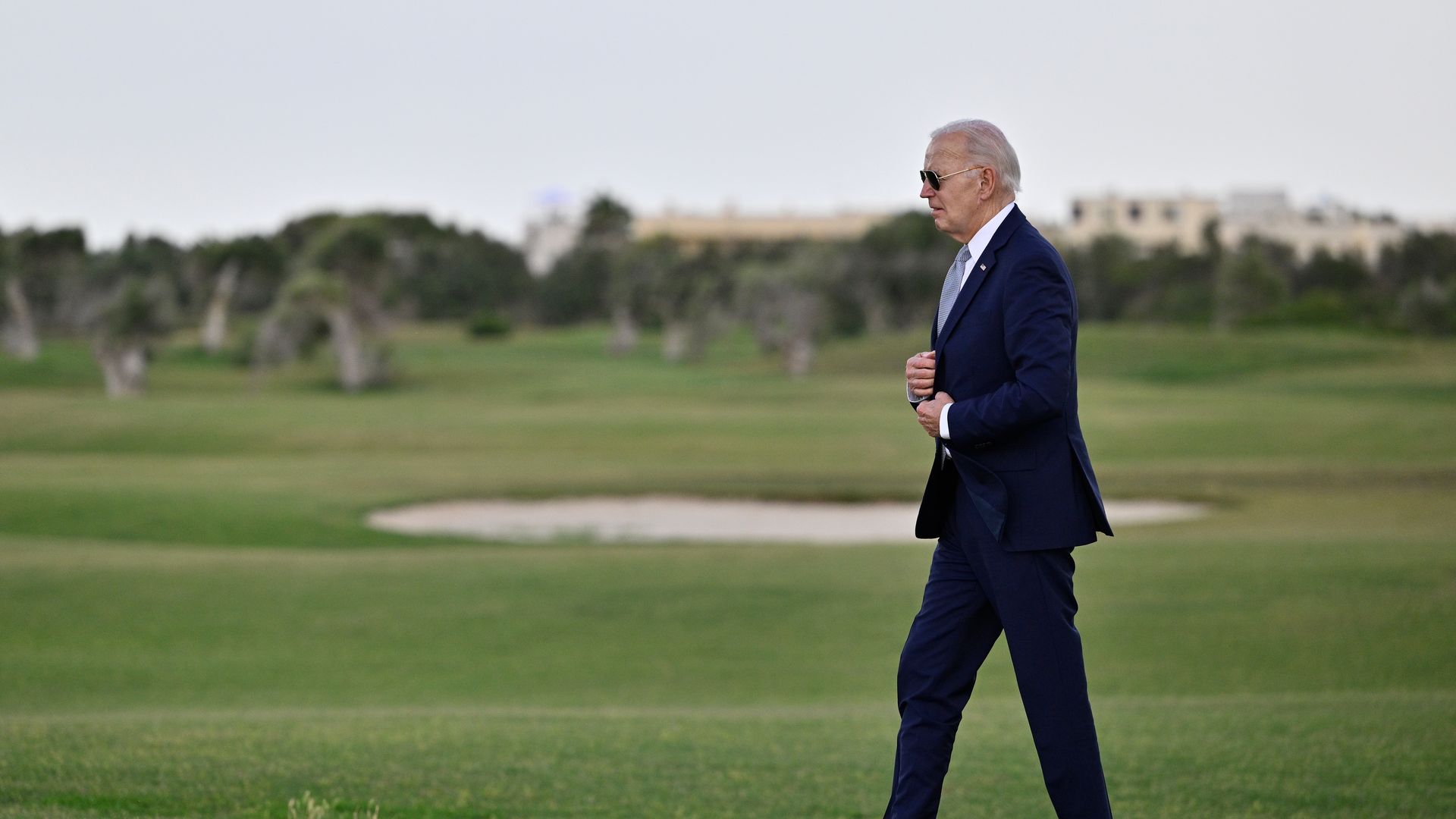
President Biden at the G7 summit in Fasano, Italy, on Thursday. Photo: Antonio Masiello/Getty Images
The ghostwriter of President Biden's memoir told federal investigators he deleted many recordings of his conversations with Biden after a special counsel was appointed to investigate the president, according to a partial transcript of the interview obtained by Axios.
- Writer Mark Zwonitzer said he erased the recordings because he was afraid of being hacked, the transcript says.
Why it matters: Biden's transcribed conversations with Zwonitzer were among the most damaging evidence in special counsel Robert Hur's investigation into Biden's handling of classified documents.
- In his final report, Hur highlighted Biden telling Zwonitzer in February 2017 — just after he left office as vice president — that he "just found all the classified stuff downstairs."
- Hur wrote that "evidence supports...[Biden] was referring to the same marked classified documents about Afghanistan that FBI agents found in 2022 in his Delaware garage."
Driving the news: In a July 2023 interview, Zwonitzer told investigators that he had tried to delete the audio of all his conversations with Biden months earlier, according to the transcript which Bloomberg News first reported.
- Zwonitzer said he erased files in the weeks after Hur was appointed in early January 2023.
He told investigators he didn't expect to be involved in the special counsel's investigation, and that his motivation was fear of the recordings being stolen.
- "I was very concerned about the possibility of being hacked. I was very concerned about the possibility of this audio spread all over the place," he said, noting that he had just finished an unrelated project on the spyware Pegasus.
- "I saved all the transcripts and getting rid of the audio is something...I do as a...rule anyway," he added.
- Zwonitzer did not respond to a request for comment.
Zoom in: Hur's investigators appeared skeptical of Zwonitzer's explanation in their two interviews of the writer.
- "Look, the outside observer is going to look at this and say Mark Zwonitzer...learned of the special counsel's investigation, saw this happening and then deleted all these audio recordings," an unidentified investigator told Zwonitzer.
- They added: "And I assume — and it's okay, I just need the truth on this one, but there's some truth in that, that was what was going on. That was part of your motivation, at least something you were aware of when you did this?"
- Zwonitzer replied: "I'm not going to say how much of the percentage it was of my motivation. I was aware that there was an investigation."
Zwonitzer also said no one from the president's team had reached out to him.
- "I don't think anybody in his camp is aware that I am a part of this," he said in the July 2023 interview.
Reality check: In his final report, Hur ultimately recommended not charging Zwonitzer because he "offered plausible, innocent reasons for why he deleted the recordings."
- Hur added that "Zwonitzer willingly provided significant cooperation to the investigation without seeking or receiving any protections or assurances. He was forthright in describing his conduct and working with investigators to obtain all relevant evidence in his possession."
- Hur also cited that Zwonitzer — in his second interview with investigators in January 2024 — also said he preserved audio recordings he unwittingly still had after he was subpoenaed.
- "I made sure to preserve that for this investigation," he said.
Zoom out: Last summer, Hur met with Attorney General Merrick Garland and read him the transcript of Biden saying he had found the "classified stuff downstairs," the Wall Street Journal recently reported.
- The Journal added: "the group sat stunned at the prospect that the president knew he had classified information and was on tape discussing it with someone not authorized to receive it."
- Ultimately, Hur recommended against charging the president but his final report was politically damaging in his description of Biden's as a "well-meaning elderly man with a poor memory."
- Hur added: "It would be difficult to convince a jury that they should convict him — by then a former president well into his eighties — of a serious felony that requires a mental state of willfulness."
The intrigue: In one of the more light-hearted moments of the lengthy transcript, Zwonitzer explains why he thinks Biden hand-wrote a 40-page memo to President Barack Obama in 2009 about Afghanistan.
- "Let me tell you something, I don't think Joe Biden types. I've never seen him type," Zwonitzer said.
- Investigators also opined on Biden's penmanship, telling Zwonitzer they could "sympathize with trying to read the president's handwriting. It's not always easy."
