Robots that cook, clean and more

Add Axios as your preferred source to
see more of our stories on Google.
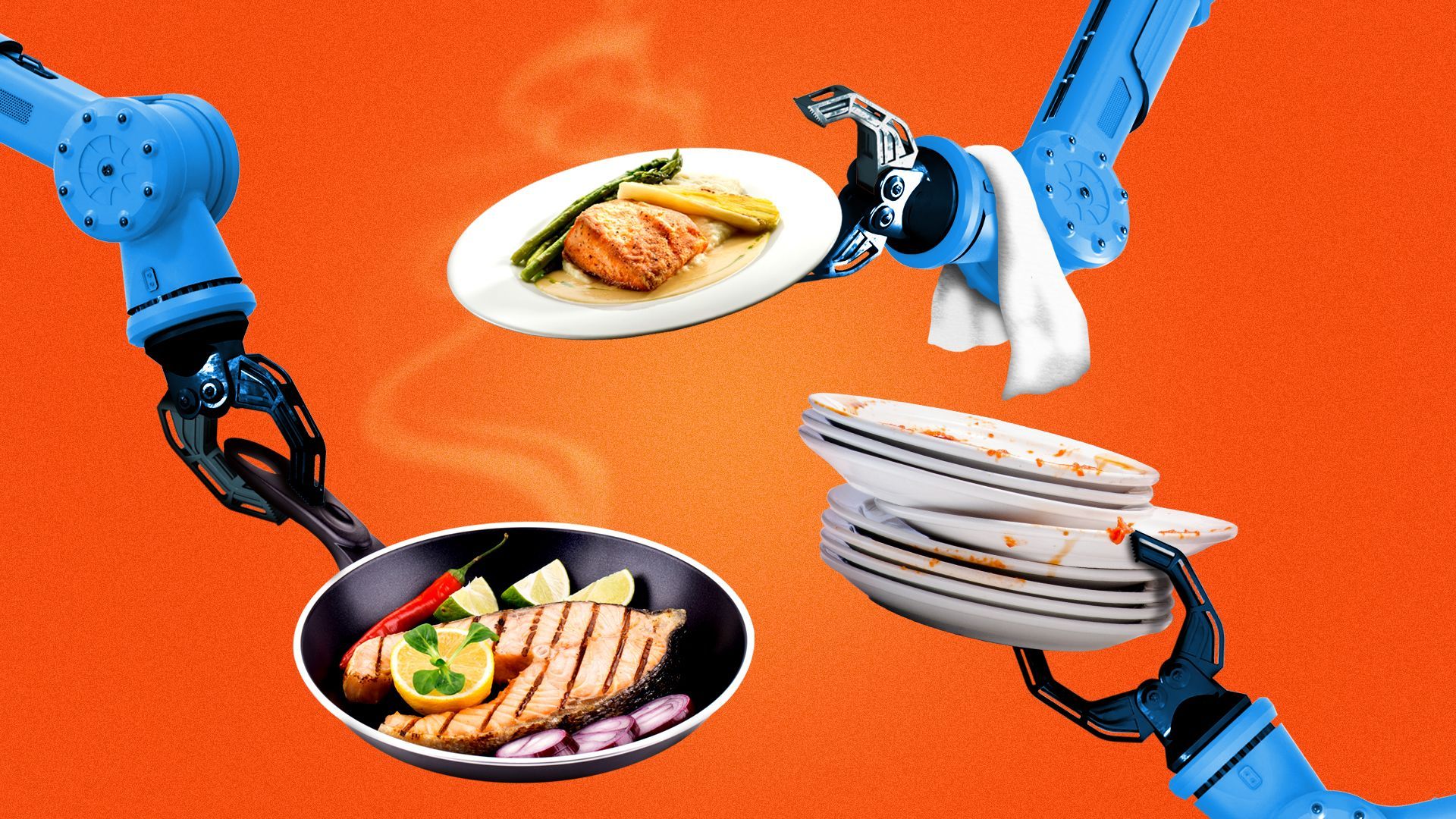
Restaurants are placing big, experimental bets on robots that stir-fry, flip burgers, mix drinks, cook ramen, bake pizza, deliver meals to diners and whisk away the dirty dishes.
Why it matters: Worker shortages and inflation continue to bedevil the restaurant industry — even as it enjoys record sales.
- Robots, tech and AI are seen as potential saviors, boosting efficiency and revenue.
Driving the news: At the National Restaurant Association's recent big annual show in Chicago, tech companies showed up in force selling labor-saving robotics.
- Among the winners of the association's kitchen innovation awards: the "PizzaBot," which boasts that it can "accurately dispense your most expensive and labor-intensive toppings."
- Another was I-Robo2, a robotic stir-fry machine that can prepare 30 meals an hour.
- And then there's the Alpha Grill, which can cook 200 hamburger patties an hour — and then clean itself.
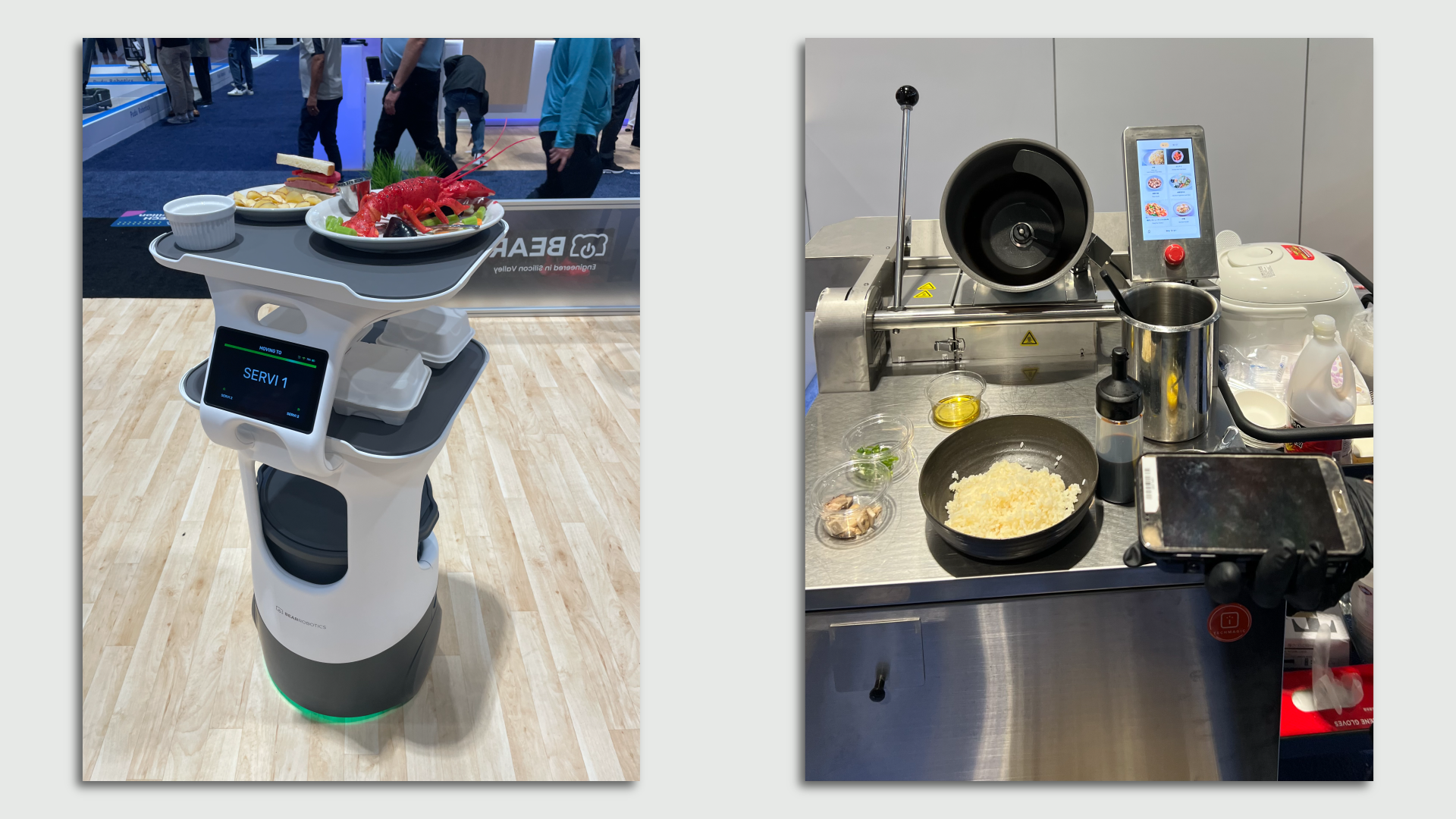
Also on display were a ramen vending machine and an AI robot that can automatically season and package french fries, tater tots and chicken fingers.
- And then there was Voglebot, which bills itself as an all-in-one automated fry cook that can simultaneously make fries, chicken fingers, etc.
Droids that trundle into the dining room to serve food — or take dirty plates back to the kitchen — were also on ample display.
- Examples include the 4-foot-tall Dinerbot from Keenon, which has three serving trays and can carry up to 88 pounds, and the Servi from Bear Robotics, which can carry two trays and a tub for used dishes.
How it works: The I-Robo stir-fry robot is being used in Japan, where one of the country's largest Chinese food chains has two or three in each of its kitchens, says manufacturer TechMagic.
- A touchscreen next to the stir-fry bowl pulls up a menu of recipes for a human cook to follow, such as fried rice or chicken with vegetables.
- It prompts the human to place the ingredients — oil, rice, vegetables, etc., some of them pre-measured — into the heated bowl.
- The bowl spins and rotates, mixing and heating the ingredients, creating a meal in 2-3 minutes.
- When finished, the unit cleans itself.
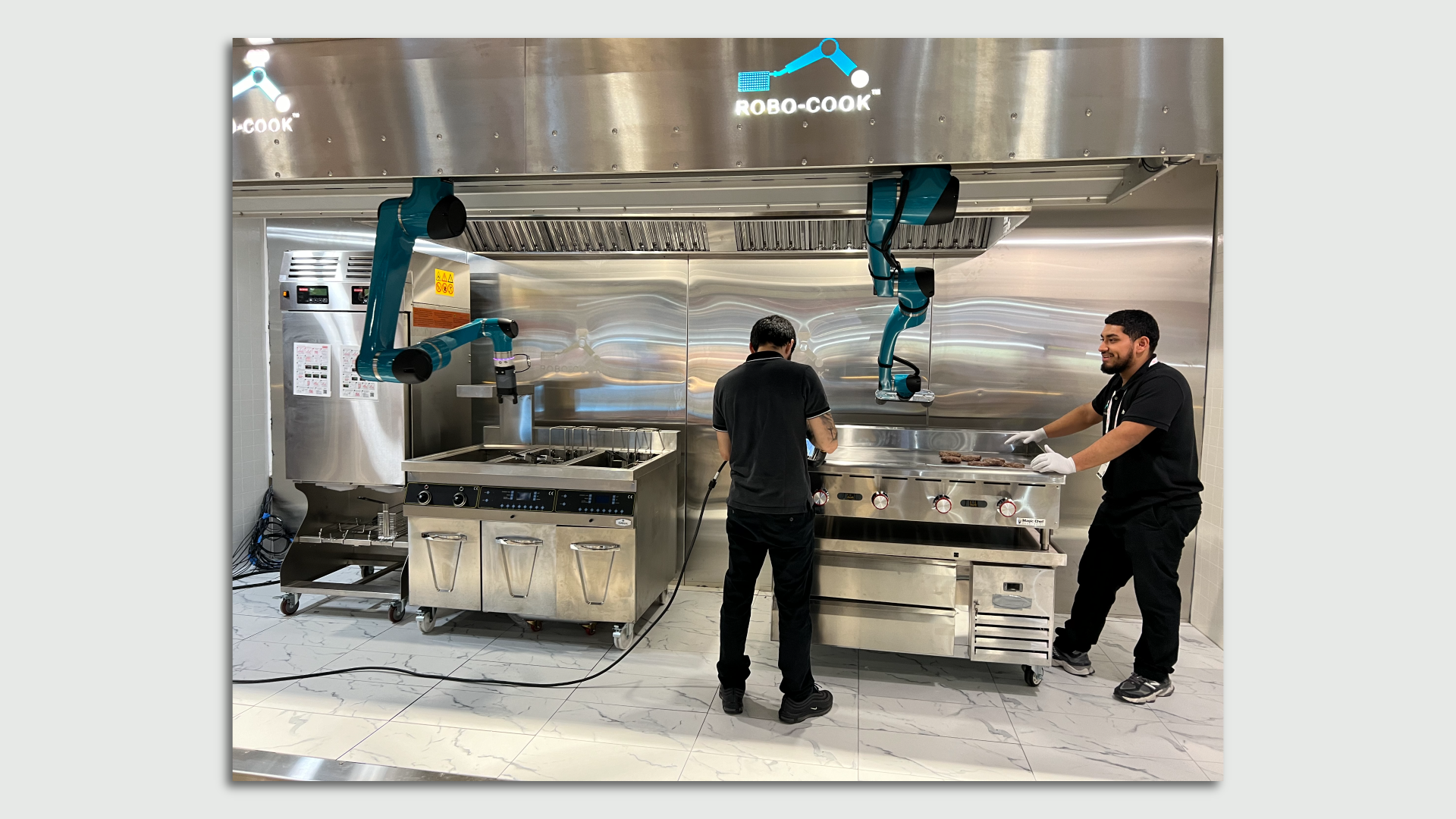
Yes, but: These first-generation machines are cool and futuristic, but some are prone to malfunction and other problems.
- They're often not as efficient or effective as the human hands and brains they replace.
What they're saying: "There's no doubt the future looks like more robotics in the kitchen," Michelle Korsmo, CEO of the National Restaurant Association, tells Axios.
- "It's a question of whether robotics are in the dining room itself," she said. "It depends a lot on the particular restaurant and what experience they're trying to bring."
- Restaurateurs, she said, "are excited about what technology can bring in learning more about their customers and making their businesses more efficient."
- And "the rise of technology in the dining experience is becoming increasingly a part of daily life for all customers."
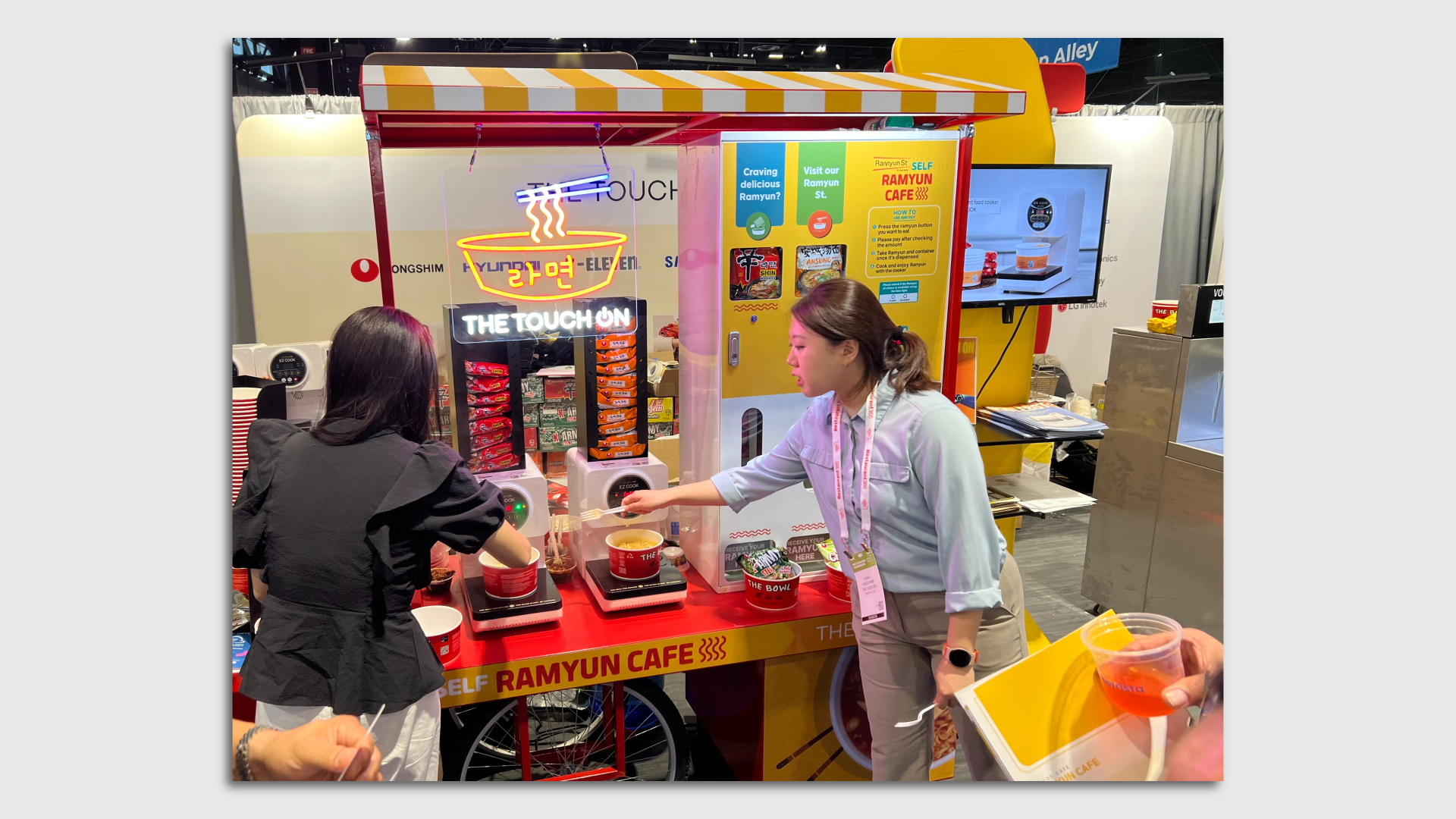
Between the lines: Robot cooks and servers are showy baubles that may mask where restaurant technology is making the biggest impact: in back-end systems.
- New systems use AI to improve order-taking, inventory management, staff scheduling and home delivery.
- AI-driven marketing and social media systems are helping restaurants reel in customers — and bring back regulars — with targeted promotional offers for people's favorite dishes and other specials.
The bottom line: Interacting with people — a helpful server, or charming maitre d' — is part of the fun of eating out.
- "There's no doubt that technology can only go so far," Korsmo said. "What makes a restaurant great and what attracts people to come to restaurants is that 'high touch' aspect."
