Look ma, no pilot

Add Axios as your preferred source to
see more of our stories on Google.
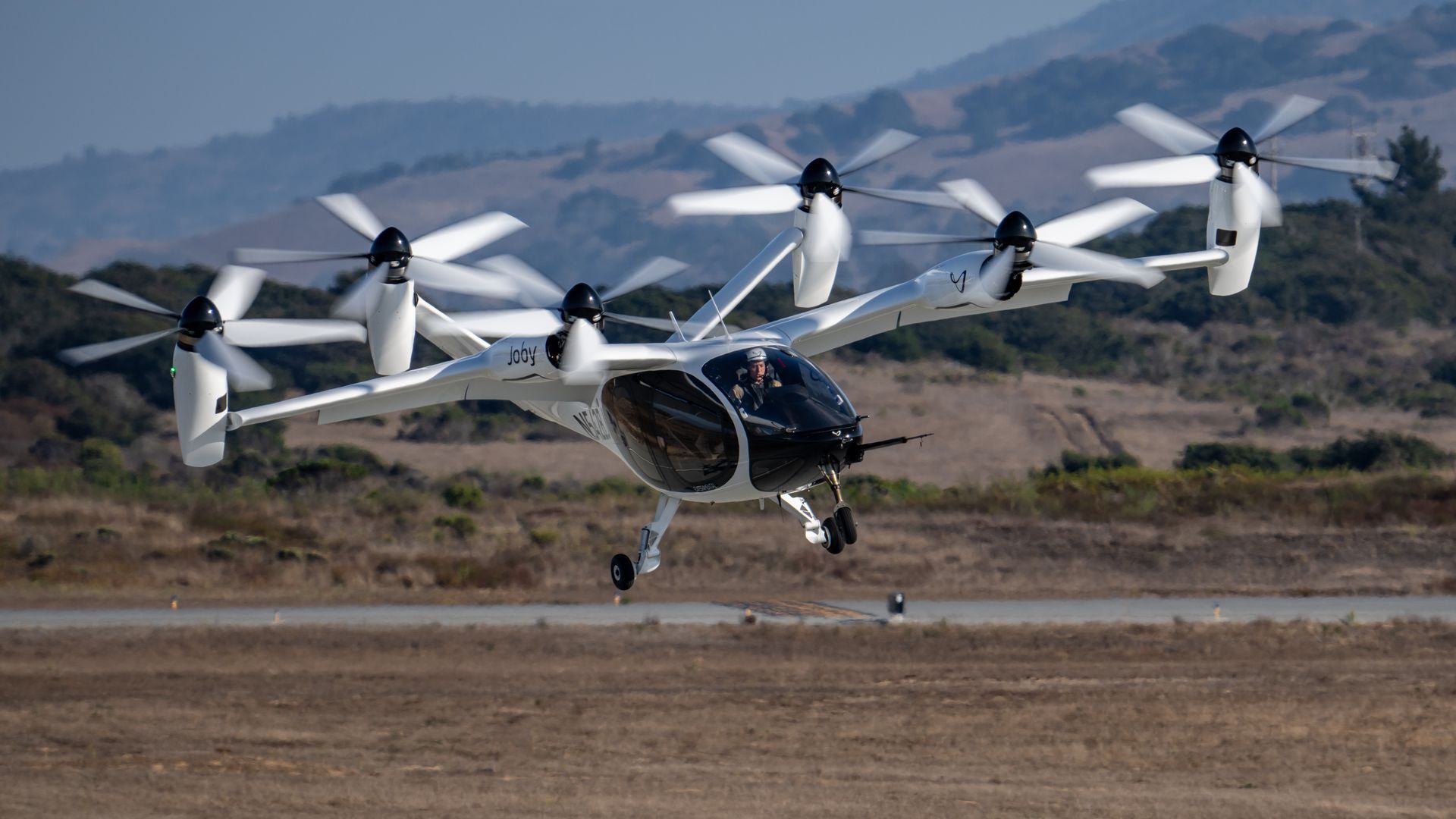
Joby Aviation's electric air taxi service is still a couple of years from launch, but a deal announced today shows the company is already preparing for the next phase of aviation: autonomous flights.
Why it matters: Self-flying electric vertical takeoff and landing air taxis (eVTOLs) could make transportation cleaner, quieter, safer and more affordable, proponents say.
Driving the news: Joby is buying the autonomy division of Xwing, an aviation startup that's been developing autonomous flying technology since 2016.
- The terms of the deal, which involved an undisclosed amount of Joby stock, were not released.
Between the lines: Xwing's expertise in perception technology, system integration and certification could help Joby with both its near-term piloted operations, as well as its long-term plans for autonomous air taxis.
- Plus, it could help Joby expand business with its largest customer: the U.S. Defense Department, which is eyeing eVTOLs and autonomy for more efficient logistics and safer missions.
Case in point: Xwing, which has been flying autonomously since 2020, recently demonstrated its Superpilot software during a U.S. Air Force exercise.
- A Superpilot-equipped Cessna completed several daily flights, covering around 2,800 miles and landing at eight public and military airports.
The big picture: Several leading eVTOL startups, including Joby, Archer Aviation, Beta Technologies and Lilium, plan to launch air taxi service within a couple of years.
- Most will begin operating with pilots in the cockpit, but they plan to eventually fly autonomously (with remote supervision).
Reality check: eVTOLs are essentially cleaner, quieter helicopters — but they'll remain a toy for rich business moguls and sports stars unless the industry can mass produce them affordably.
- That's why many eVTOL startups are partnering with experienced automakers to help scale up manufacturing.
- But even if eVTOL makers crank up production, there aren't enough pilots to fly the aircraft, which is why the industry favors automation.
The intrigue: Self-flying air taxis could also be much safer, says Jon Lovegren, chief of autonomy and airspace integration at another eVTOL company, Wisk Aero.
- Commercial airlines have exceptional safety records — a few recent incidents notwithstanding — in part thanks to onboard automation.
- Automating small planes and air taxis will bring that same level of safety to short-hop trips, Lovegren says.
Zoom in: Wisk Aero, a unit of Boeing, has been developing self-flying air taxis from the start.
- Wisk is likely a few years behind its rivals in terms of regulatory approval because its strategy is more ambitious, Lovegren acknowledges.
- Still, the company says it expects to begin autonomous operations by the end of the decade.
- Wisk recently partnered with the city of Sugar Land, Texas, to begin planning how to commercialize an air taxi service to serve the greater Houston area.
The bottom line: Joby has a similar vision, founder and CEO JoeBen Bevirt said in a statement.
- "The aircraft we are certifying will have a fully qualified pilot on board, but we recognize that a future generation of autonomous aircraft will play an important part in unlocking our vision of making clean and affordable aerial mobility as accessible as possible."
