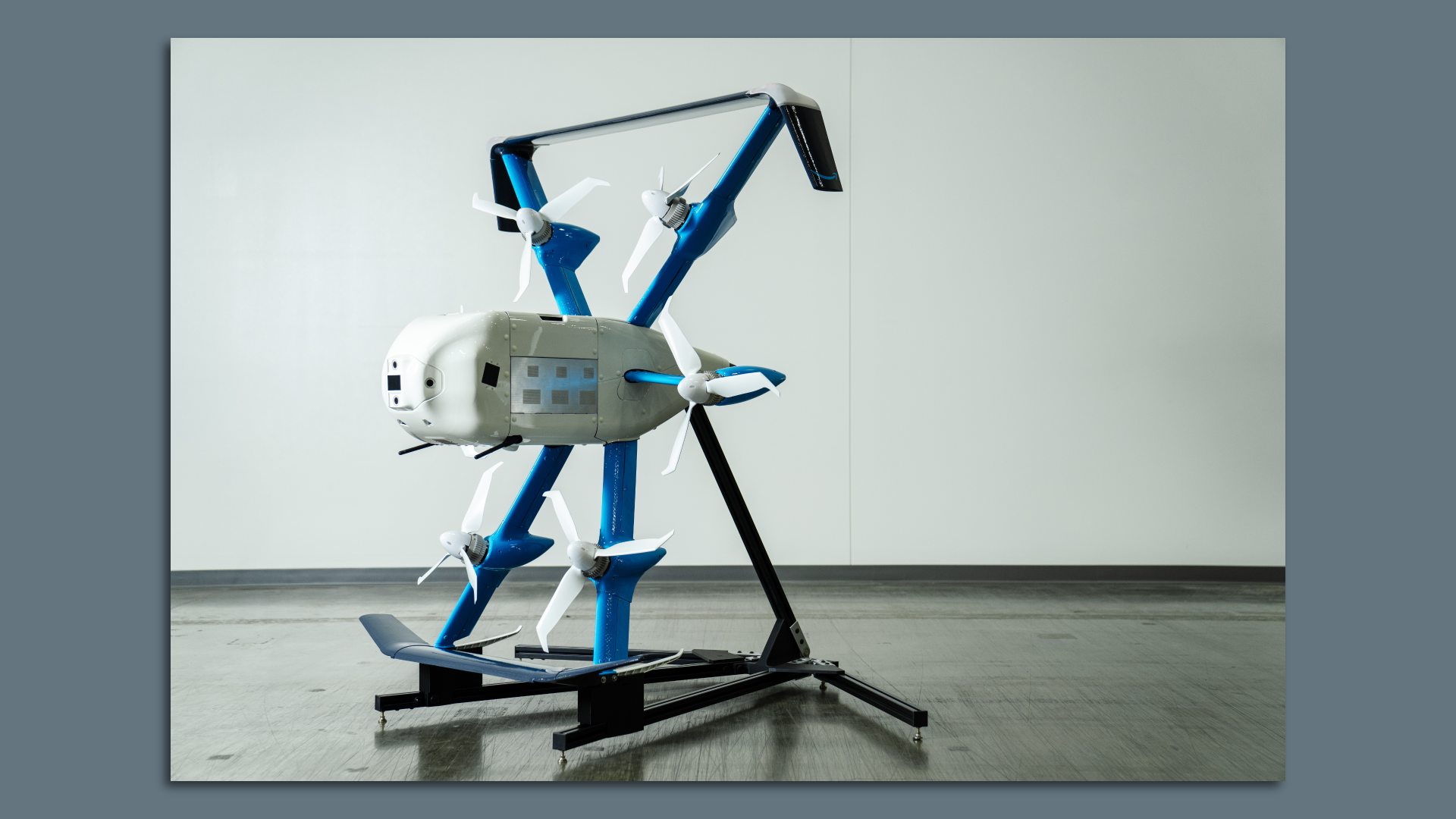
Amazon Prime Air's next-generation delivery drone, the MK30, will debut in Phoenix later this year. Photo courtesy of Amazon
Amazon's delivery drones have received aviation regulators' approval to fly longer distances without visual spotters, a key hurdle that will allow the retailer to expand its fledgling Prime Air service, Joann writes.
Why it matters: Amazon's goal is to deliver 500 million packages a year by drone by 2029. But first, it had to satisfy government regulators that it could fly safely in increasingly crowded skies.
Zoom in: The company said it spent years developing proprietary "detect-and-avoid" technology.
The drones' computer vision system includes a series of cameras that scan the skies while in flight, and then check the ground during deliveries to avoid people, animals and other obstacles.
Amazon successfully validated the system in the presence of Federal Aviation Administration inspectors to show that its drones can safely navigate away from planes, helicopters and even hot air balloons.
What's next: Now that it has FAA approval to fly "beyond visual line of sight (BVLOS)," Amazon says it will begin scaling drone delivery service to more customers.
First, it will start delivering to more densely populated areas of College Station, Texas (one of its initial test markets).
Later this year, Amazon will begin drone deliveries in Phoenix — using a faster, lighter next-generation drone that will be integrated alongside trucks and vans into an existing fulfillment center.
It expects to rapidly roll out the service worldwide over the next few years.
The big picture: 2024 is shaping up to be a breakout year for delivery drones, with players like Zipline and Wing also expanding their U.S. operations and a Walmart-backed company, DroneUp, introducing a new automated landing pad and storage locker.