Unilever saying goodbye to ice cream


Add Axios as your preferred source to
see more of our stories on Google.
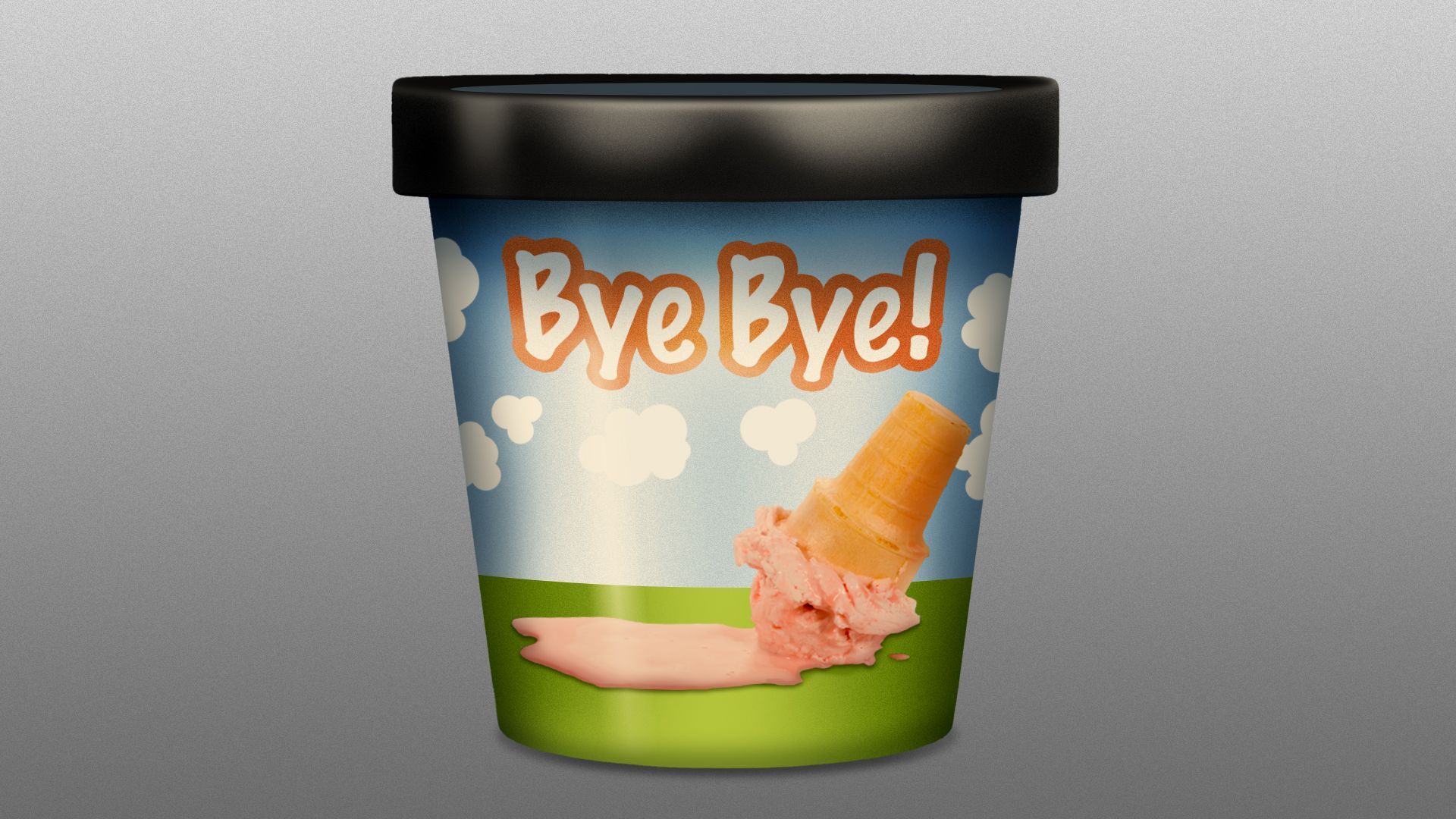
Unilever today said it intends to spin off its ice cream unit, including Ben & Jerry's, along with top-selling global brands like Wall's and Magnum, Axios' Pete Gannon writes.
Why it matters: Known as much for social activism as its wonky flavors, the Vermont-based ice-cream maker will headline the newly separated $8.5 billion business.
- Alongside a spinoff, Unilever will consider other options, which could include a partial or whole sale, Richard Collings writes for Axios Pro: Retail Deals.
Between the lines: Over a 20-plus year history, Ben & Jerry's relationship with its parent hasn't always been smooth.
- Ben & Jerry's, which operates within Unilever under an independent board, is unapologetic about being a "values-led company" and has taken several high-profile social activist stances over the years.
Those impulses created a firestorm in 2021 when the company announced it would stop selling its ice cream in the occupied West Bank and East Jerusalem.
- A handful of U.S. pension funds divested from Unilever, leading to a shareholder lawsuit. Later, after months of legal and diplomatic pressure, and a lawsuit from Ben & Jerry's, Unilever sold the ice-cream maker's business interests in Israel to a local licensee.
The reason for the separation, according to Unilever, is that both sides — the ice cream unit and what remains of Unilever — will fare better on their own.
- The ice cream business can more directly deal with its distinct supply chain, channel landscape, seasonality factors and greater capital intensity, Unilever said.
- What remains of Unilever will become a "simpler, more focused company."
The intrigue: In its last annual report, Unilever noted that its corporate responsibility committee — charged with overseeing the company's "conduct as a responsible global business" — had spent time on matters ranging from the war in Ukraine, safety on tea plantations, and activism by Ben & Jerry's.
The bottom line: It will not be causing a brain freeze for parent Unilever anymore.
