Ben & Jerry's headlines proposed ice cream spinoff for Unilever

Add Axios as your preferred source to
see more of our stories on Google.
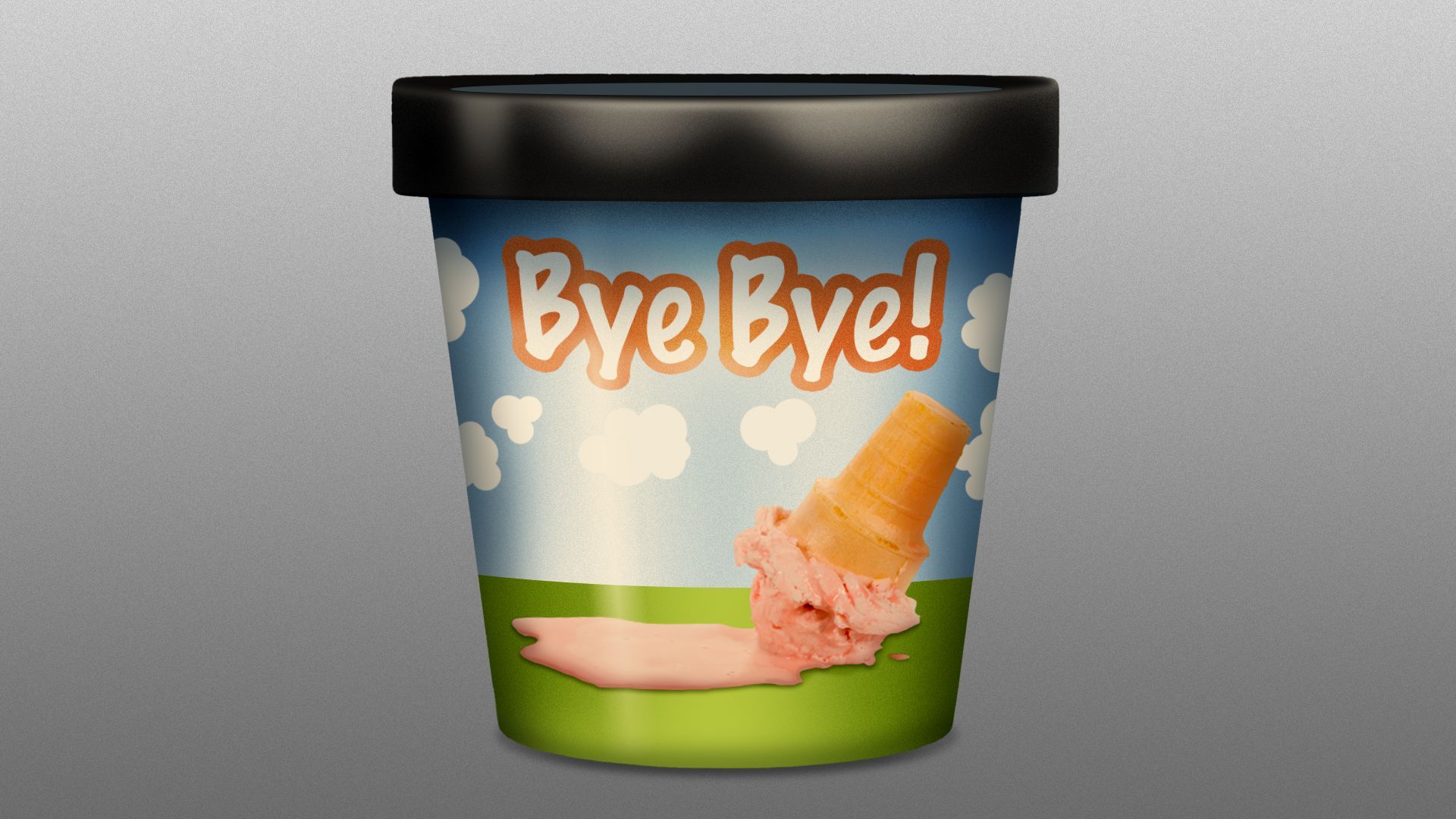
Illustration: Sarah Grillo/Axios
Unilever said Tuesday it intends to spin off its ice cream unit, including Ben & Jerry's, along with top-selling global brands like Wall's and Magnum.
Why it matters: Known as much for social activism as its wonky flavors, the Vermont-based company will headline the newly separated $8.5 billion ice cream business.
- Alongside a spinoff, Unilever will consider other options, which could include a partial or whole sale, Richard Collings writes for Axios Pro: Retail Deals.
- It also said it intends to cut 7,500 "predominantly office-based" jobs as part of a new productivity program expected to save €800 million over the next three years.
Between the lines: Over a 20-plus year history, Ben & Jerry's relationship with its parent hasn't always been smooth.
- The company, which operates within Unilever under an independent board, is unapologetic about being a "values-led company" and has taken several high-profile social activist stances over the years.
Those impulses created a firestorm in 2021 when Ben & Jerry's announced it would stop selling its ice cream in the occupied West Bank and East Jerusalem.
- A handful of U.S. pension funds divested from Unilever, leading to a shareholder lawsuit. Later, after months of legal and diplomatic pressure, Unilever sold the ice-cream maker's business interests in Israel to a local licensee. Meanwhile, Ben & Jerry's had sued its parent to try to stop it.
The reason for the separation, according to Unilever Tuesday, is that both sides — the ice cream unit and what remains of Unilever — will fare better on their own.
- The ice cream business can more directly deal with its distinct supply chain, channel landscape, seasonality factors and greater capital intensity, Unilever said.
- What remains of Unilever will become a "simpler, more focused company."
The intrigue: In its last annual report, Unilever noted that its corporate responsibility committee — charged with overseeing the company's "conduct as a responsible global business" — had spent time on matters ranging from the war in Ukraine, safety on tea plantations, and activism by Ben & Jerry's.
The bottom line: It will not be causing a brain freeze for parent Unilever anymore.
