Communications blackout cuts off Gaza from world as Israel intensifies bombardment

Add Axios as your preferred source to
see more of our stories on Google.
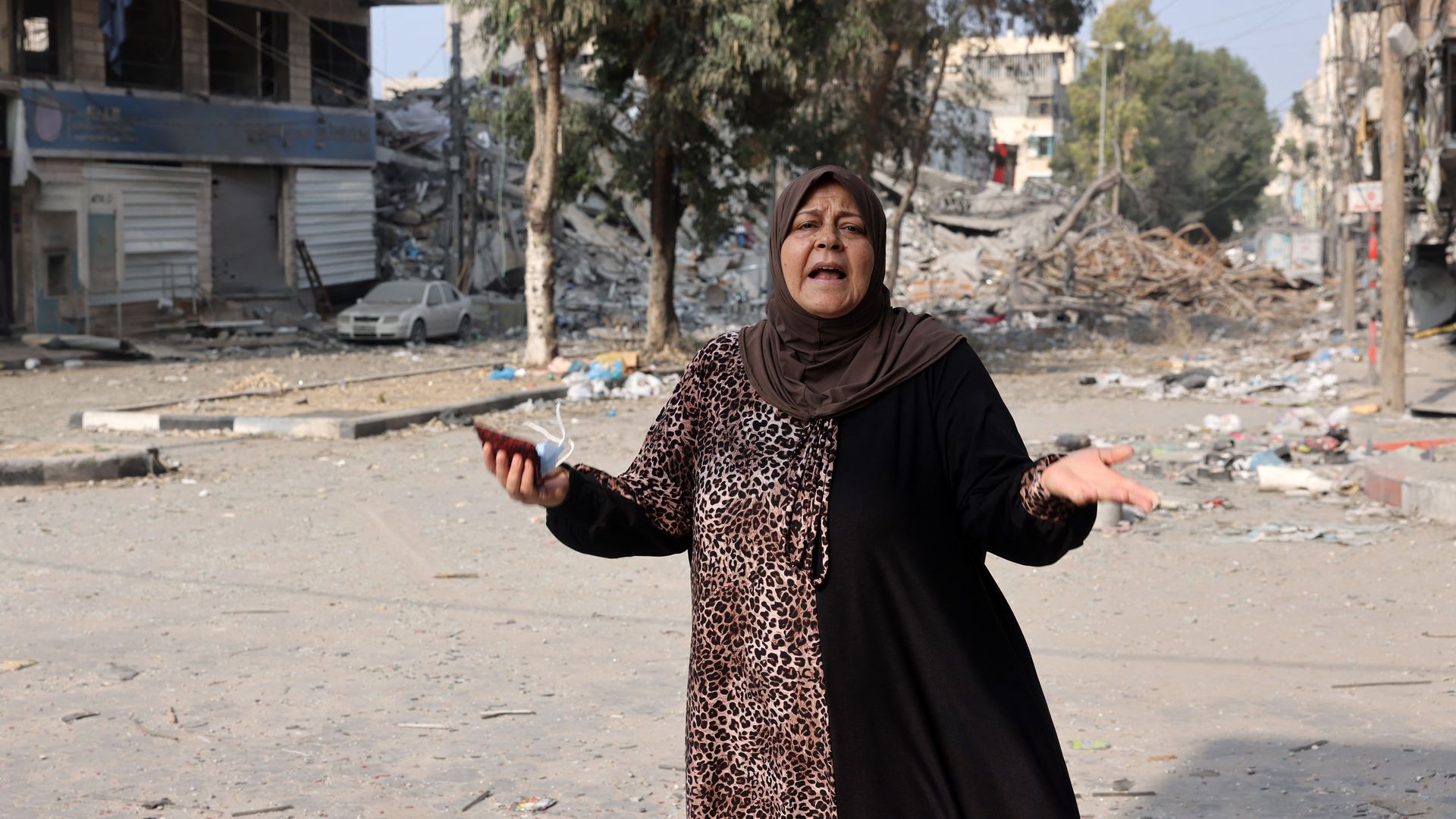
A woman reacts as she stands in front of buildings damaged in Israeli strikes in Gaza City. Photo: Mohammed Abed/AFP via Getty Images
Palestinians in Gaza are unable to communicate with family members inside and outside the Strip after most communications went down late Friday as Israel intensified its bombardment.
The big picture: While some reporters in Gaza have been able to give intermittent updates via satellite connections, the blackout makes it hard for anyone outside the Strip to gain a full picture of the toll Israel's airstrikes and incursion is having on the enclave's 2.2 million people.
- "If we all got killed in Gaza ... no one will know," Palestinian journalist Plestia Alaqad said in a post she was able to upload to Instagram while she had a limited internet connection.
- A "communications blackout is a news blackout," the Committee to Protect Journalists said in a statement on Friday.
- "This can lead to serious consequences with an independent, factual information vacuum that can be filled with deadly propaganda, dis- and misinformation," it added.
- The health and emergency response system has been "totally paralyzed" by the blackout, a spokesperson for the Health Ministry in Hamas-run Gaza said on Saturday, per AP.
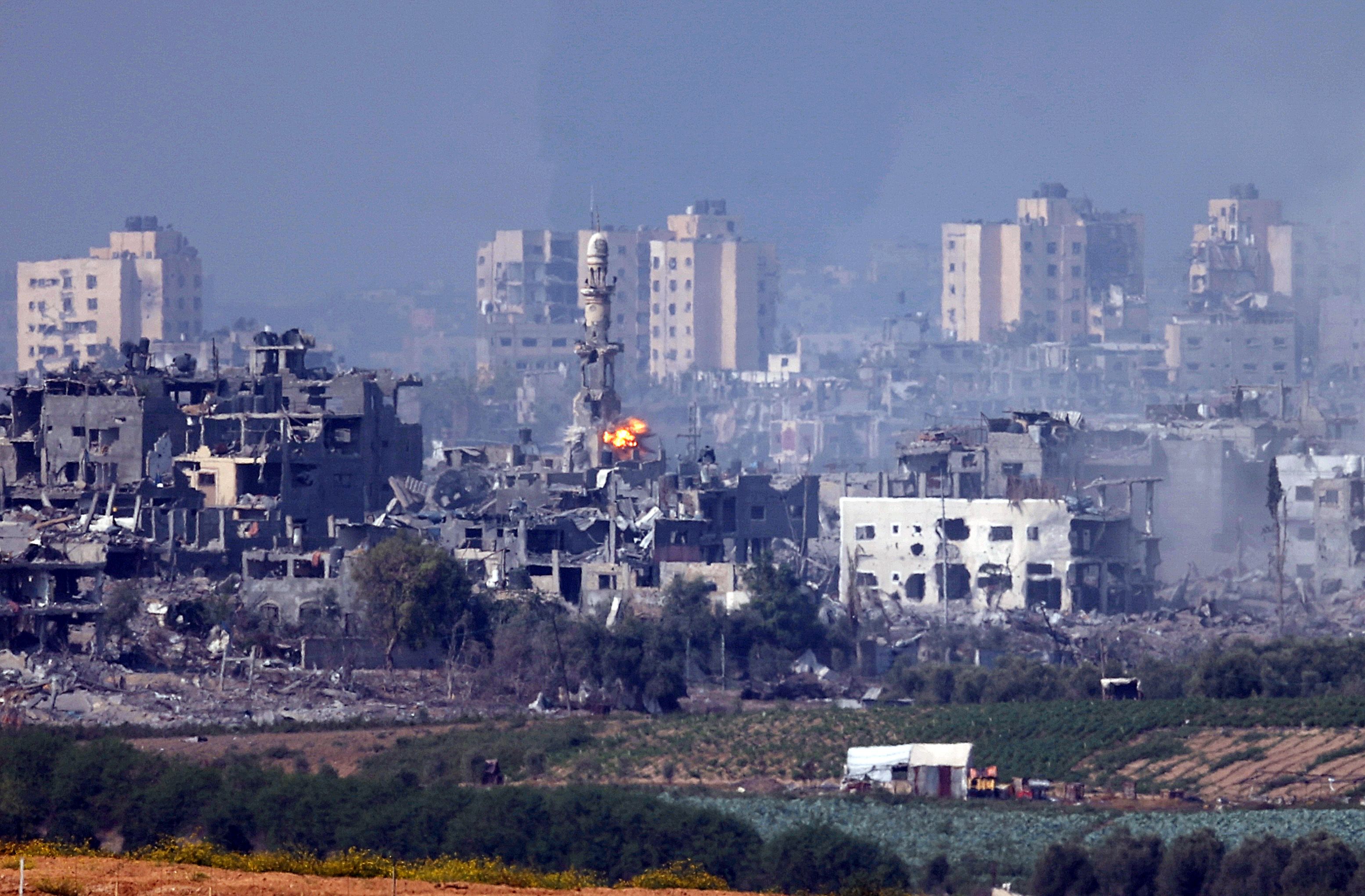
What's happening: Israel expanded its ground operations and intensified its air raids and artillery strikes on Gaza late Friday local time, entering what the Israeli defense minister called on Saturday a "new phase" of the war, which began after the Hamas terrorist attack three weeks ago.
- More than 7,700 Palestinians have been killed in Gaza, including at least 3,190 children, according to the Ministry of Health.
- Israel on Saturday again urged Palestinians in northern Gaza to move south, saying the northern areas were a war zone and not safe. But it's not clear if there were safe ways for Palestinians to leave the area as the bombing continued, including in the south.
- Israel has vowed to destroy Hamas and its infrastructure after the group killed more than 1,400 people in Israel and took at least 222 people hostage on Oct. 7. Hamas said on Saturday it was responding to Israel's offensive with "full force."
What they're saying: The few journalists who were able to post on social media or speak to media outlets during the blackout described a sense of fear and sheer panic in Gaza.
- "It's a pretty difficult situation, there is a sense of shattered security among Palestinians," Al Jazeera correspondent Hani Mahmoud told the news organization from the southern Gaza city of Khan Younis.
- "What's really scary is that these bombs are unpredictable ... No place is safe in Gaza, it is a reality we have to face," Mahmoud said.
Palestinian journalist Hind al-Khudary said on social media that she doesn't if her family is okay.
- "I can't reach anyone. My heart is [shattered] into pieces," she said.
Where it stands: Aid groups, including the World Health Organization, the UN Palestinian refugee agency (UNRWA), the Palestine Red Crescent Society, Doctors Without Borders (MSF), and others have said they've lost some or all contact with their staff in Gaza due to the communications blackout.
- Elon Musk said Starlink would support connectivity for "internationally recognized aid organizations." It's unclear, however, if access to Starlink would even be possible in Gaza. It is not known if there are any terminals required to connect to Starlink in the Strip.
- "It is not clear who has authority for ground links in Gaza, but we do know that no terminal has requested a connection in that area," Musk said on X.
- The Israeli Communications Minister Shlomo Karhi said Israel would use "all means at its disposal" to fight Gaza getting access to Starlink, claiming Hamas would use it. He also threatened to cut ties with the company.
Zoom out: Human Rights Watch warned the "information blackout risks providing cover for mass atrocities and contributing to impunity for human rights violations."
- The blackout has also increased concerns about aid groups' efforts to respond to the already dire humanitarian crisis in Gaza, which has been under Israel's "complete siege" since Oct. 7, as well as a 16-year land, sea and air blockade by Israel, with the support of Egypt.
- Some trucks carrying assistance have been allowed into the enclave, but aid groups say it's only a fraction of what is needed. It also hasn't included fuel, which humanitarian groups and others say is needed to keep generators going after Israel cut off electricity.
- UN Secretary-General António Guterres on social media on Saturday reiterated his call for an immediate humanitarian ceasefire, saying "humanitarian catastrophe is unfolding in front of our eyes."
- It was a call he made just hours before Gaza was cut off from the world on Friday. "This is a moment of truth. History is judging us all," he said.
Go deeper... Palestinians in Gaza: "Survival feels uncertain"
