Scoop: Biden agency head works mostly from Missouri, not D.C.

Add Axios as your preferred source to
see more of our stories on Google.
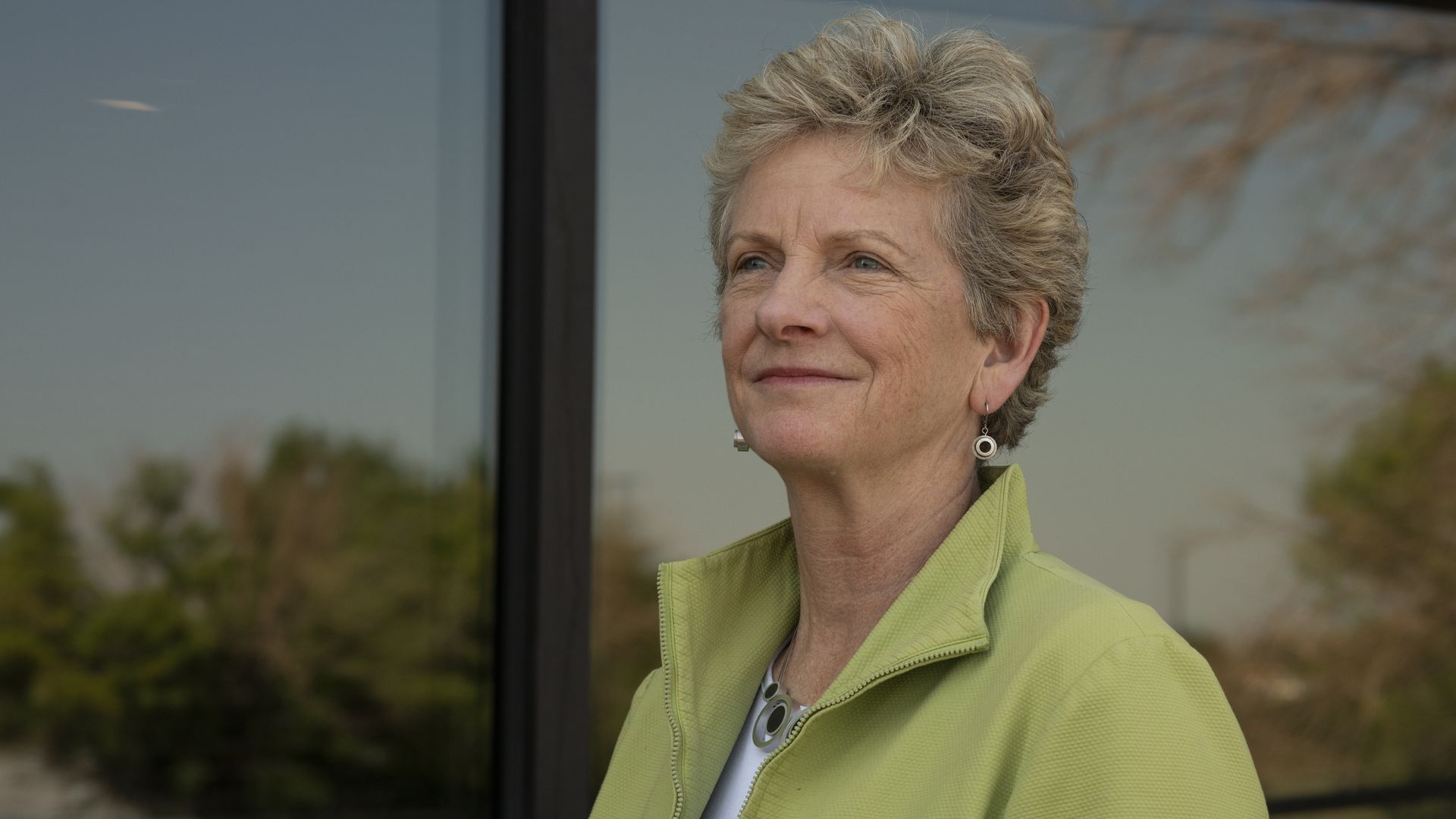
General Services Administration (GSA) Administrator Robin Carnahan. Photo: Rachel Woolf for The Washington Post via Getty Images
The leader of the D.C.-based General Services Administration worked remotely from Missouri most of the time in the year after the agency's "full re-entry" plan called employees back to their offices, according to a GSA letter to Congress obtained by Axios.
Why it matters: The calendar records of GSA Administrator Robin Carnahan, cited in the letter, are the latest example of how remote work has continued after the pandemic for many federal workers — even at top levels of the Biden administration — despite the president's 17-month push for more in-office work.
- Carnahan, whose agency manages about 1,500 federally owned buildings, is scheduled to testify to the House Oversight Committee soon; a hearing on Thursday was postponed.
The intrigue: Oversight chair James Comer (R-Ky.) began investigating Carnahan's remote work arrangement in January. In a letter to her then, Comer said his panel had "received whistleblower reports you have spent most of your time working in a location other than Washington, D.C., during your tenure as GSA administrator."
By the numbers: From March 2022 to March 2023, Carnahan worked 121 weekdays in Missouri and 64 weekdays at her office in Washington, GSA Associate Administrator Gianelle E. Rivera wrote to Comer on March 31.
- Carnahan also spent 34 weekdays on official travel, Rivera wrote.
- Carnahan is a co-chair of the Safer Federal Workforce Task Force, which President Biden created to provide ongoing guidance to federal agencies on workplace measures related to Covid-19 — including hybrid models of remote work.
- The GSA, which is essentially the federal government's property manager, had some of the emptiest workplaces among federal agencies with just 9% of its office space being used, according to a Government Accountability Office (GAO) report in July.
- The GAO also concluded that "17 of the 24 federal agencies used, on average, an estimated 25% or less of the capacity of their headquarters buildings."
What they're saying: A GSA spokesperson told Axios that Carnahan "supports workforce flexibility, which has helped GSA reduce its footprint by 43% and save taxpayers more than $300 million in real estate costs while enhancing mission delivery."
- Carnahan "has modeled that flexibility in her own schedule," the spokesperson continued, "spending roughly half her time in calendar year 2023 working from GSA headquarters in D.C. and visiting job sites and federal facilities that the agency oversees nationwide, with the rest of her time teleworking."
- Comer’s spokesperson declined to comment.
Flashback: In his March 2022 State of the Union address, Biden announced a return to pre-pandemic routines: "The vast majority of federal workers will once again work in person."
- Comer and other Republicans argue that the Biden administration has been lax in enforcing a return to in-person work.
Between the lines: Bringing people back to the office has been a focus of White House Chief of Staff Jeff Zients this fall, after Biden pushed again for more in-office work.
- "We are returning to in-person work because it is critical," Zients emailed Biden's Cabinet in August.
Zoom in: The continued remote-work era also is having a dramatic effect on the local economy in Washington, as many downtown offices remain empty.
- There has been an uptick in office work since the height of the pandemic, but at the end of last year more than a quarter of D.C.-area employees were working remotely — well above the national average of about 15%.
- D.C. Mayor Muriel Bowser said in January at her inauguration: "We need decisive action by the White House to either get most federal workers back to the office most of the time — or to realign their vast property holdings for use by the local government, by nonprofits, by businesses and by any user willing to revitalize it."
- Bowser told Bloomberg this month that things have improved but said, "I look out of my office at [the Department of] Treasury every single day and I can see the level of activity or inactivity at work.…What do you do with a building like that?"
