Ancient footprints alter timeline of humans' arrival in North America

Add Axios as your preferred source to
see more of our stories on Google.
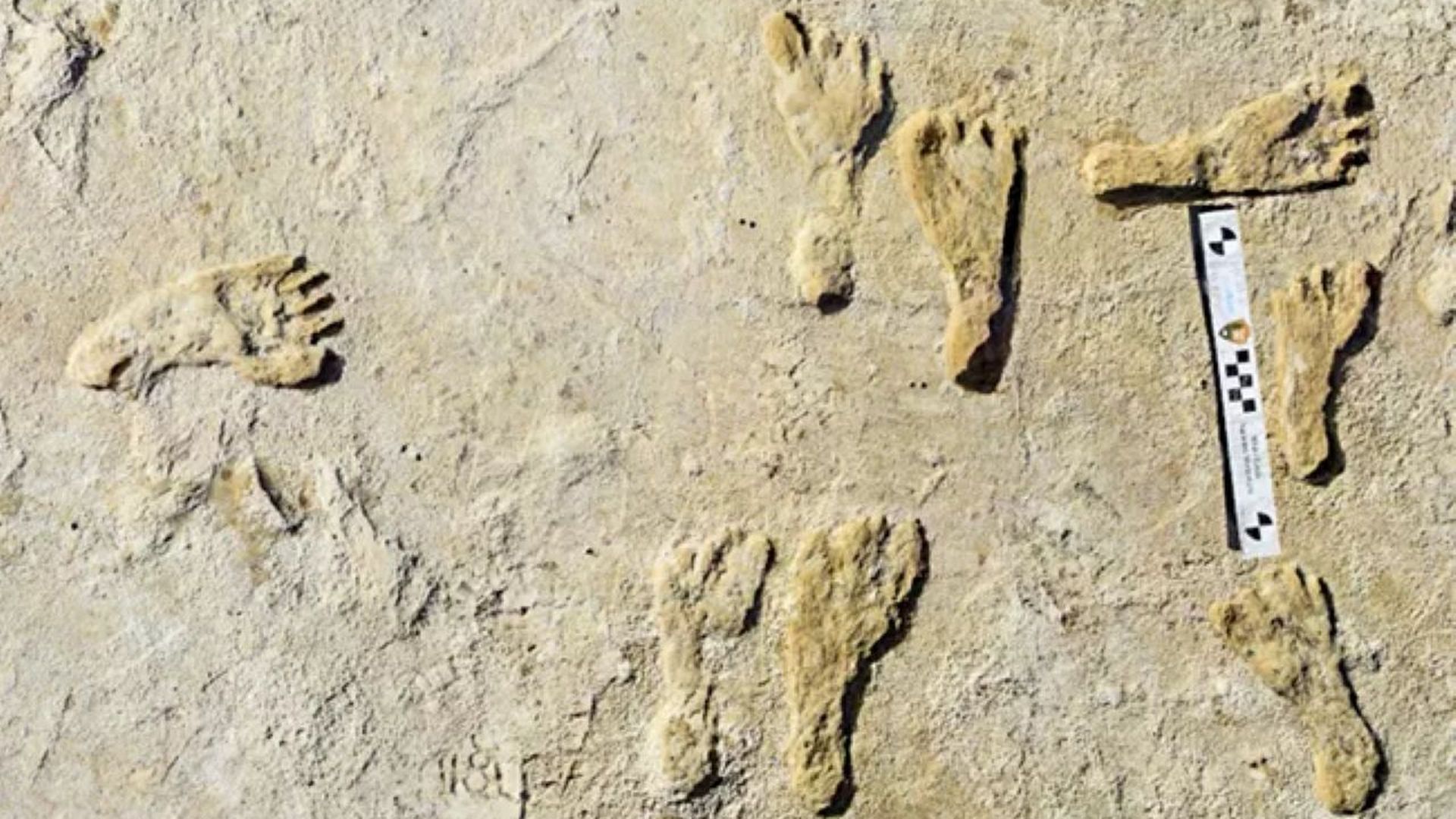
Human footprints at study site. Photo: National Park Service
Humans migrated to the Western Hemisphere thousands of years earlier than once thought, according to new analysis published in the journal Science.
Why it matters: The study confirms previous ground-breaking — and controversial — research that dated ancient footprints in New Mexico's White Sands National Park to about 23,000 years ago, making them the oldest marks of humanity in the Americas.
- The findings, published Thursday, offer additional evidence that our ancestors were present in the New World during the height of the last ice age, when glaciers may have covered approximately a quarter of the planet's land area.
Catch up quickly: Previously, it was widely believed that the earliest human populations in the Americas arrived toward the end of the ice age by crossing the Bering Land Bridge, which connected modern-day Siberia to Alaska.
- Early humans may have crossed the land bridge, but the new study adds to a body of evidence indicating that they likely were not the first ones to arrive in the Western Hemisphere.
- The White Sands footprints were first discovered in 2009 along the shore of a prehistoric lake.
- As of Nov. 2021, a total of 61 human prints were found, as well as prints from mammoths, ground sloths, dire wolves and American lions.
How it works: The earlier 2021 study on the human tracks estimated they were from between 23,000 and 21,000 years ago based on radiocarbon dating aquatic plant seeds that were intermingled in the prints.
- The finding set off widespread debate on the accuracy of the dating. Skeptics said the aquatic seeds could have taken up old carbon from groundwater or they could have been embedded in sediment and exhumed by earlier humans.
- The research published on Thursday confirmed the age of the seeds by radiocarbon dating conifer pollen that was also mixed in with the footprints and luminescence dating quartz grains within the sediments.
- The scientists found that the pollen's age was statistically identical to the age of the seed and the quartz samples had a minimum age of 21,500 years ago.
What they're saying: David Wahl, a U.S. Geological Survey geographer and a co-author of the new study, said in a statement that the pollen samples helped contextualize the environment at the time the footprints were left.
- "The pollen in the samples came from plants typically found in cold and wet glacial conditions, in stark contrast with pollen from the modern playa which reflects the desert vegetation found there today," Wahl said.
Radiocarbon dating pollen is an intricate process and is sensitive to contamination, according to Bente Philippsen, an associate professor at Norway University's National Laboratory for Age Determination.
- The date of the quartz grains could have been slightly off if they covered by other materials, such as gypsum, said Philippsen, who was not involved in the new study.
- However, it's "highly unlikely" these limitations introduced substantial errors into the new study's findings, she wrote, which "strongly indicate" humanity's presence in the Americas during the harshest period of the last ice age.
Zoom in: Since the footprints were discovered, scientists have been able to infer certain aspects of the lives of the humans who made them.
- Most of the prints were from teenagers and children. Scientists hypothesized that the teens may have left more prints because they were fetching items for adults working at the lake's edge.
- Footprints believed to be from a female that stretched for almost a mile also indicated she had given birth in recent years, as a toddler's footprints would occasionally show up beside hers.
Go deeper: Clusters of lab-grown cells show role of key genes in brain disorders
