Messi drives big boost for Apple's MLS streaming service

Add Axios as your preferred source to
see more of our stories on Google.
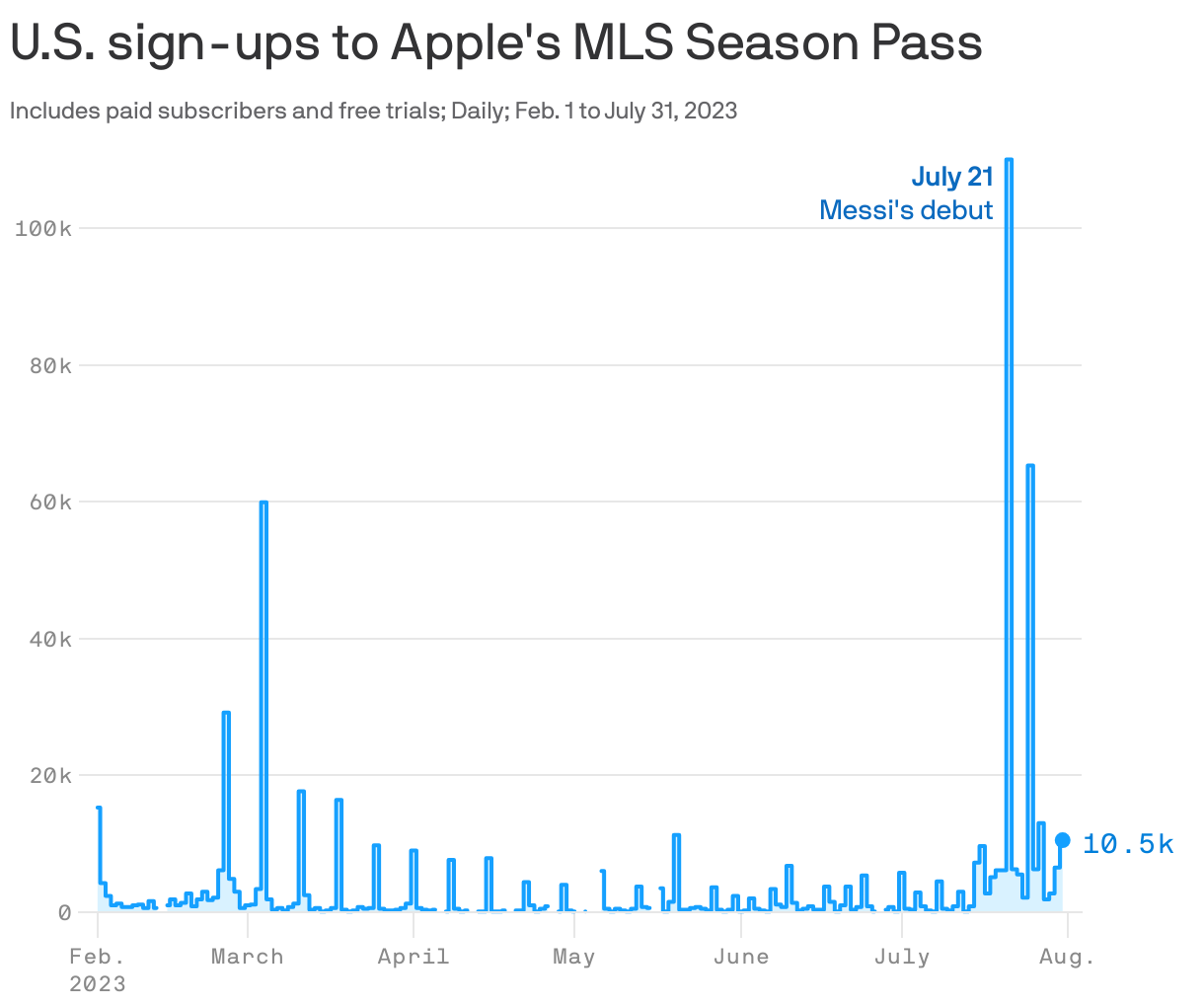
Lionel Messi's debut for Inter Miami sparked the biggest single-day subscription increase ever for Apple TV's MLS streaming service, according to new data.
Why it matters: Live sports rights — especially when they involve a superstar athlete — can help lure subscribers to streaming services that have so far mostly invested in on-demand entertainment.
- Apple, which holds exclusive rights to air MLS games in the U.S., is getting a big boost from Messi's decision to join an MLS team.
Details: Data from Antenna, a streaming measurement company, shows that Apple added 110,075 sign-ups for MLS Season Pass on July 21. That's up from the roughly 5,400 sign-ups it saw on average per day for the week prior.
- The tech giant added another 65,000 sign-ups days later on July 25, when Messi played his second game with the team and scored two goals in the first 22 minutes.
- The numbers were first reported by the Wall Street Journal.
Catch up quick: Apple inked a 10-year, $2.5 billion deal with MLS to offer the league's streaming service.
- MLS Season Pass is separate from the tech giant's main streaming service, though Apple TV+ gets a small discount.
The big picture: Subscription streamers are exploring ways to add more live sports to their services, as more TV viewers ditch their expensive cable packages for cheaper streaming alternatives.
- Warner Bros. Discovery plans to simulcast live MLB games on its cable networks and on its service Max in October, CNBC reported last month.
- Netflix plans to debut its first live sporting event, a live celebrity golf tournament, this November.
What to watch: For now, most major entertainment streaming services, aside from Netflix, aren't profitable.
- Investments in live sports could help boost subscriptions, but live programming rights are getting pricier as competition from Big Tech firms intensifies.
- For entertainment companies looking to invest more in streaming sports while also making a profit, striking the right balance between airing games digitally versus traditional television will continue to be tricky.
