Harvard updates application after affirmative action ruling

Add Axios as your preferred source to
see more of our stories on Google.
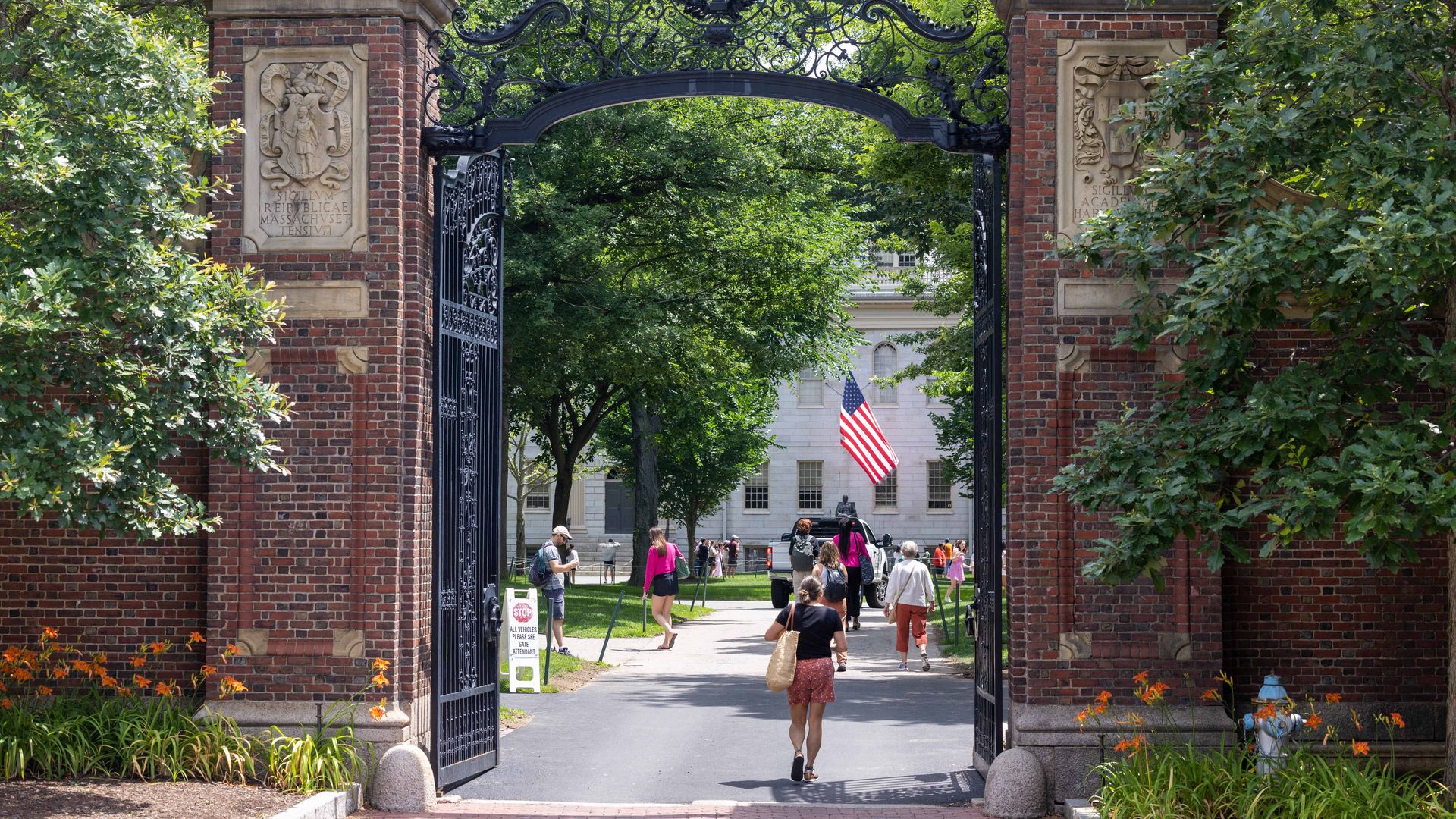
Photo: Scott Eisen/Getty Images
Harvard College has updated its application process after the Supreme Court ruled in June that its use of affirmative action in admissions was unconstitutional.
Driving the news: Rather than explicitly factoring race into admission decisions, Harvard's supplemental application now requires answers to a series of questions about students' life experiences, extracurricular activities or family responsibilities and goals.
- The first reads: "Harvard has long recognized the importance of enrolling a diverse student body. How will the life experiences that shape who you are today enable you to contribute to Harvard?"
- The 2022 version included similar questions but made the essay optional.
Flashback: The changes come after an internal Harvard email in June noted that the ruling lets colleges consider "an applicant's discussion of how race affected his or her life, be it through discrimination, inspiration, or otherwise."
- The school vowed it would "determine how to preserve, consistent with the Court's new precedent, our essential values."
Yes, but: While the essay can still serve as a means for students to write about their racial background, the court explicitly said the essay can't become a substitute for race-conscious admissions, Axios April Rubin reported.
- "Universities may not simply establish through application essays or other means the regime we hold unlawful today," Chief Justice John Roberts wrote in the majority opinion.
Zoom out: Harvard is hardly alone in changing its application. Macalester College told Axios Twin Cities they also planned to use essays to achieve diversity.
- Tufts University's application now asks students to write about "a way that you have contributed to building a collaborative or inclusive community," the Globe reported.
- The University of Massachusetts Amherst, Babson College and others have also added new questions about students' personal experiences, per the Globe.
