Crypto founder on the industry's unacceptable tradeoffs

Add Axios as your preferred source to
see more of our stories on Google.
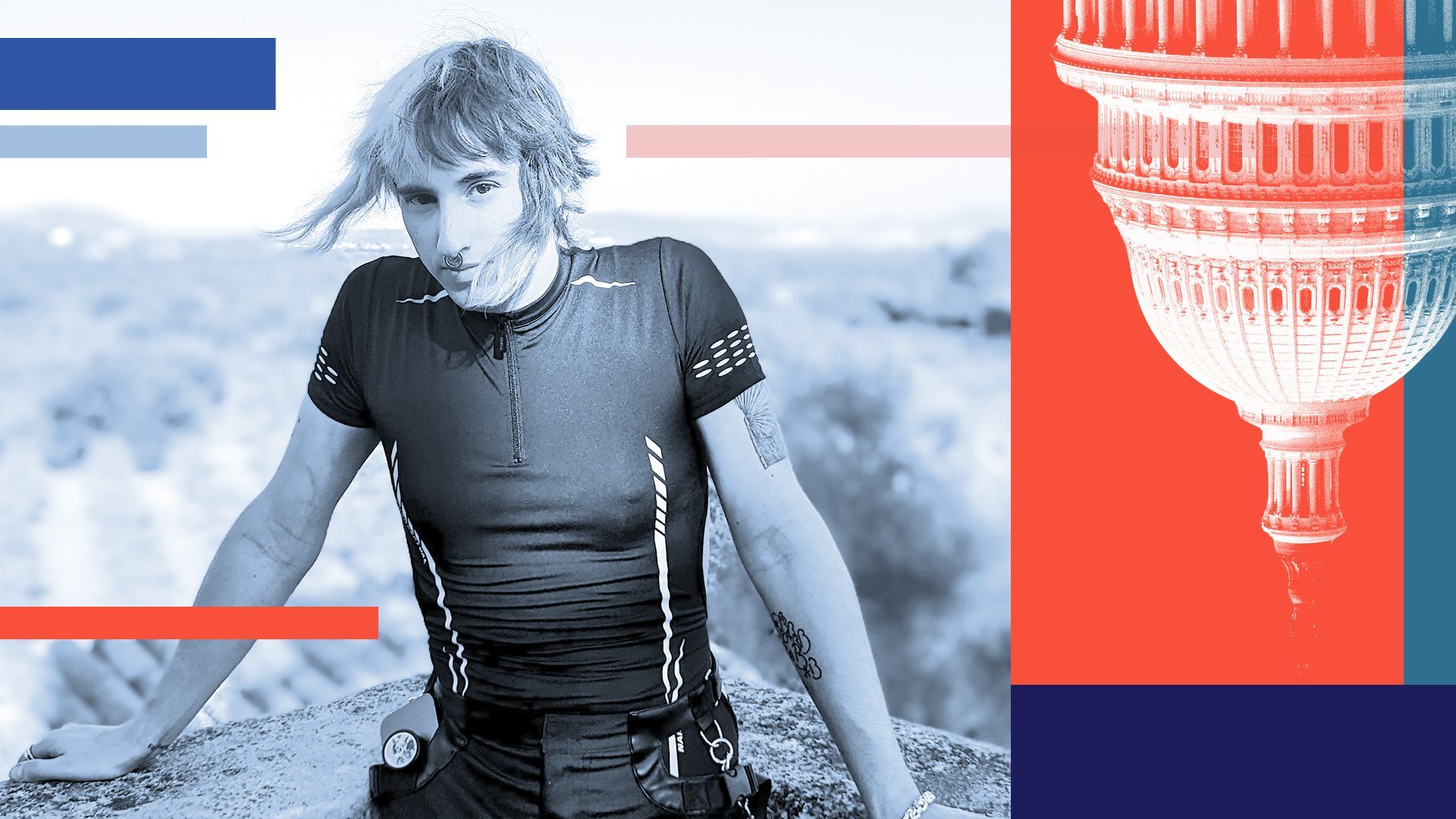
Tux Pacific. Photo illustration: Shoshana Gordon/Axios. Photo: Will Pankowicz
Tux Pacific is among the few founders in cryptocurrency taking issue with the popular trade of the moment.
Driving the news: With crypto world trying to climb out of the doldrums and the Securities and Exchange Commission filing lawsuits against virtually everyone in sight, a lot of attention (and lobbying dollars) has been centered on Capitol Hill, where efforts to provide a regulatory framework around crypto are still very much in flux.
- Politics often makes for strange bedfellows, a reality the industry seems to accept. Pacific, however, is having none of it.
What they're saying: "When you lobby Republicans or right-wing candidates who are pro-crypto and who have poor human rights stances, you're making a big tradeoff," they tell Axios, sipping an iced flat white sitting in a makeshift shed in front of a coffee shop in Brooklyn.
- "While we're improving crypto, we're losing human rights, losing LGBTQIA rights, and that bothers me."
Pacific is part of digital currency's "I-don't-kn0w-how-many-crypto-group-chats-I'm-in" set — they "eat, sleep and breathe crypto."
- The 27-year-old trans founder explains that "we're on the verge of a political movement, discovering something really big to change the world for the better."
What others say: "People go, 'That's so utopian' and I'm like, it's not — this isn't just a tool to make some hedge fund some money, it's also a tool to evade oppression."
- Lately, folks seem more excited about bitcoin-in-a-box than the tech and the ideals underlying the advent of the world's largest digital asset, Pacific suggested.
Zoom out: Pacific founded entropy.xyz, decentralized infrastructure for threshold signing protocols helpful in decentralized finance and crypto wallet security.
- Entropy is backed by a16z, Coinbase Ventures, Robot Ventures and Dragonfly Capital.
In the weeds: Threshold signatures are a solution that allows people to compute cryptographic signatures between a number of different computers or parties.
- In a custody use case, a person might be able to split their private key into end pieces that would protect them from getting their funds stolen; if a hacker steals their phone, the person could turn off signing.
- That's one of the products in development at entropy, Pacific says.
Context: "I'm an anarchist. Generally I avoid both parties like the plague because they do more harm to my community than they do any good, really."
- Pacific is what is called an "anti-capitalist free market anarchist." (Think Center for a Stateless Society.)
Case in point: The argument has come up a lot lately, as SEC strong-arming and a lack of coherent regulation lead the industry to debate whether a "chokehold" is strangling crypto. In theory, that may benefit other economies.
- "The free market solution to a poor regulatory environment in the U.S. is to simply move overseas. That's happening," Pacific tells Axios.
- "It is natural, normal and good for companies to leave for better, more favorable jurisdictions." (Pacific nods at a parallel: Some families are leaving their home states in the U.S. for others that support gender-affirming care.)
- "When people say things like 'If we had open borders, people in developing countries would flood to the United States and wherever,' [anarchists] say, 'That's the point.'"
Flashback: Pacific was first drawn into the cryptopunk world via Internet Relay Chat (IRC) as a Mormon teen with an interest in hacking.
- A series of decisions led Pacific to where they are now. They dropped out of a Utah community college, moved to Berlin, lost a job, found another, taught themself cryptography and befriended a group of friends now at top crypto firms (or "the mafia," as Pacific lovingly refers to them).
The big picture: Cryptography puts power in the individual's hands. "The power asymmetry between the state and the person is naturally interesting and that's how I got into it," Pacific said.
