First look: Sinema targeted with $1 million ad buy


Add Axios as your preferred source to
see more of our stories on Google.
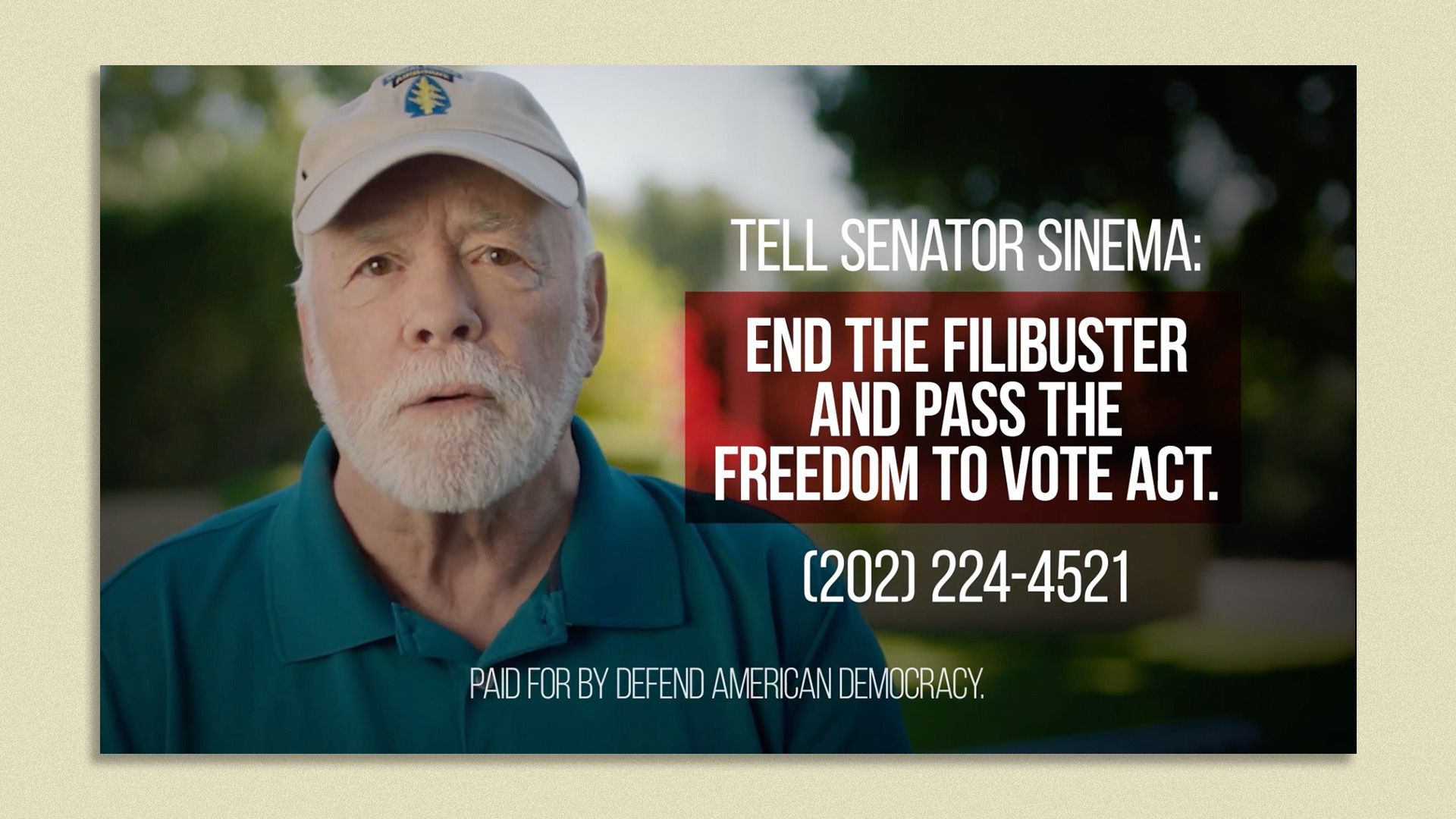
Ad screenshot. Courtesy: Defending American Democracy
The bipartisan group Defending American Democracy is spending $1 million on a TV ad targeting Sen. Kyrsten Sinema (D-Ariz.), Axios has learned.
Why it matters: Sinema, along with Sen. Joe Manchin (D-W.Va), has rejected proposals to lower the filibuster threshold to pass election reform legislation with only Democratic votes — while voting rights is front and center for the Democratic Party.
What we're watching: The ad focuses on Sinema’s resistance to changing Senate rules to advance the Freedom to Vote Act and the John Lewis Voting Rights Advancement Act over unified GOP opposition.
- The ad, which airs nationally and locally in Arizona starting Thursday, features a former Green Beret who recently served on one of her advisory councils.
- The veteran says to viewers, "Sen. Sinema took an oath, too, but refusing to protect the right to vote undermines everything she swore to do."
- "Sen. Sinema: Do your duty. Protect our democracy."
The big picture: Senate Democrats plan to vote on broader election reforms by Jan. 17 — Martin Luther King Jr. Day — and Majority Leader Chuck Schumer has promised to hold a vote to change the Senate rules if Minority Leader Mitch McConnell leads another GOP filibuster.
- But doing so in a 50-50 chamber would require Sinema and Manchin's agreement to pass the legislation on a party-line vote.
- So far, neither has been open to getting rid of the 60-vote threshold, making them targets of progressive activists on the national level and in their home states.
Both senators are open, however, to reforming the Electoral Count Act of 1887 — an idea some Republicans are getting behind, as Axios reported Tuesday.
- They're also among a bipartisan group of eight senators that met Wednesday to discuss a range of election issues.
- They include the option to update the outdated bill to clarify the role the vice president and Congress play in certifying presidential elections.
