Axios 2028

April 26, 2026


🙏 We begin with a word of thanks to law enforcement and everyone else who helped ensure the safety of those of us at the White House Correspondents' Association dinner last night. For the latest news on the incident and the suspect, go to axios.com.
🌸 Now on to our weekly newsletter guiding you through the next presidential election, starting with Democrats. 1,852 words, 7 minutes.
1 big thing: 🫣 AOC's hide-and-seek strategy
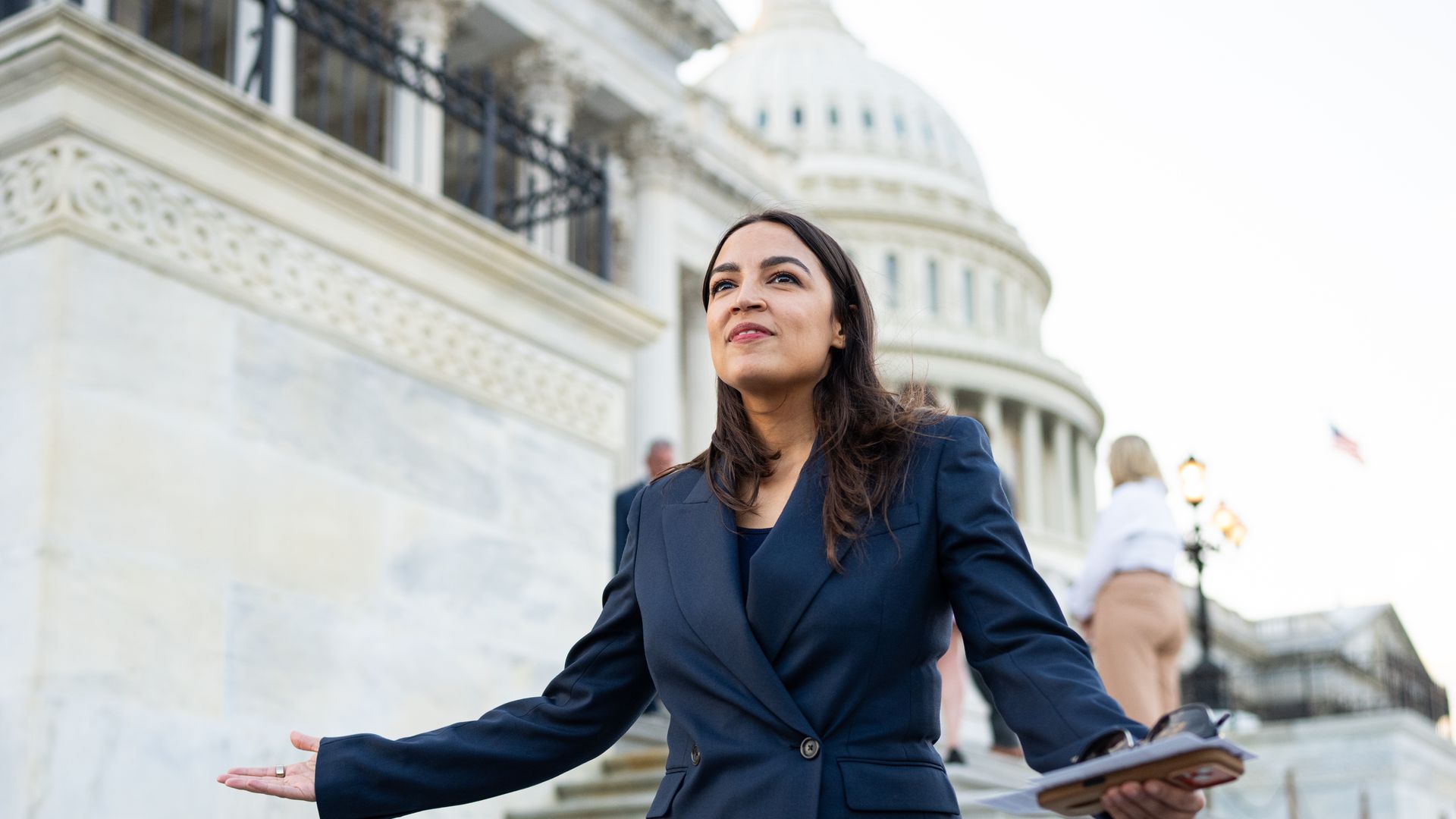
✋ New York Rep. Alexandria Ocasio-Cortez doesn't want to meet the press.
- The progressive lawmaker has sat for just three interviews with national media this year — a fraction of what other potential candidates for president have done.
- 🎙️ When she is interviewed it's usually with an ideologically sympathetic outlet or reporter, or focused on a topic that's politically safe.
Why it matters: Her approach to the media suggests three things about how Ocasio-Cortez and her team are thinking as she weighs a 2028 run for the White House:
- She doesn't believe she needs to do interviews the way other potential candidates do to get attention, given the frequent coverage of her and her enormous social media following (9.6 million on Instagram alone).
- She's naturally cautious as she navigates the national stage, as people who've worked with her have told Axios.
- 👎 AOC and her team share at least some of the disdain for mainstream — or "corporate" — media that's been building for years on the left, a response to what they see as unfair coverage of Bernie Sanders' presidential campaigns, the war in Gaza and other issues.
- Democrats who've worked with Ocasio-Cortez's team say they were surprised by some of her aides' private hostility toward national media.
Ocasio-Cortez's three interviews this year have included:
- 1 podcast interview — roughly 20 minutes with former CNN anchor Don Lemon.
- 1 print interview with the New York Times' Kellen Browning, to clean up some of AOC's halting answers on foreign policy at the Munich Security Conference in February.
- 1 TV news interview with CNN's Jake Tapper, after a U.S. citizen was killed in Minneapolis by Trump administration immigration agents.
Ocasio-Cortez sat for several interviews in early 2025 — with NPR and Jon Stewart's "The Weekly Show," among others — then largely stopped for the rest of the year.
- She still engages in quick hallway Q&A's with Capitol Hill reporters, but even then often gravitates toward progressive journalists such as Pablo Manríquez of MeidasTouch.
- Ocasio-Cortez's team has been telling people since last fall that The Atlantic's Mark Leibovich has had access to her for a long profile that's to be published. Asked about the potential profile, Leibovich replied with a 🤷.
Ocasio-Cortez declined to be interviewed.
- Her chief of staff, Mike Casca, told Axios: "She takes questions multiple times a day from the press. And anyone with a press credential is able to find her in the Capitol and ask her questions."
- "It's bizarre to me how much disdain national political reporters have for their colleagues in the Capitol Hill press corps."
🤔 The intrigue: Some Democratic operatives believe Ocasio-Cortez's media game plan has short-term benefits, but could be a mistake in the long run even if she opts to run for Senate in 2028 rather than president.
- The less a candidate engages with the media, the less prepared they are for the scrutiny of a sit-down interview, they argue.
- They pointed to Ocasio Cortez's unsure answers in Munich as an example of the potential downside of avoiding unpredictable questions.
Between the lines: AOC's strategy is at odds with the post-2024 conventional wisdom of many Democrats, who thought Kamala Harris and Joe Biden were too guarded with traditional press and newer media such as long-form podcasts.
- Most potential 2028 Democrats have spent the past 16 months with a "do everything" approach, talking with podcasters, late-night show hosts, mainstream reporters and social media influencers.
- Some, such as California Gov. Gavin Newsom and former Transportation Secretary Pete Buttigieg, have made a point of sitting down with conservative commentators or those with nontraditional positions.
— Alex Thompson, Holly Otterbein
2. 🏦 Moore dodges questions about Citi work
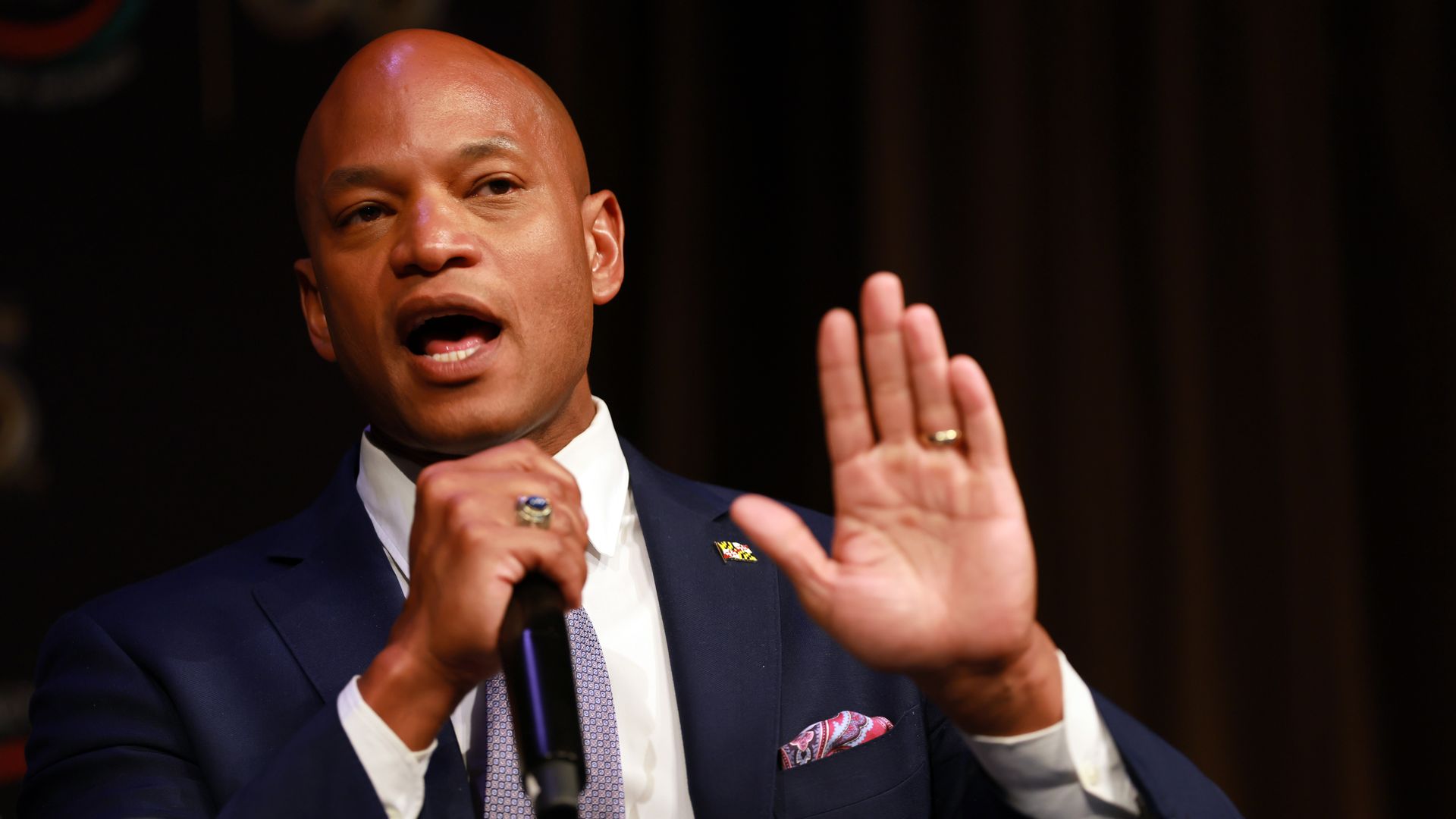
🙋♂️ Maryland Gov. Wes Moore is ducking questions about his work at Citigroup during the Great Recession, including whether he got a bonus after the bank received a massive government bailout in the 2008 financial crisis.
🥊 Why it matters: Wall Street has divided the centrist and liberal factions of the Democratic Party since the financial meltdown, and some operatives see Moore's time in banking as a vulnerability in a potential 2028 White House run.
- "It was a long time ago, but it will be a headwind for him on a national stage," said Dan Geldon, a top aide on Elizabeth Warren's 2020 presidential campaign.
- "Especially in a general election against JD Vance if [Moore] won't disclose whether he received bonuses, or if it comes out that he did receive them."
🎓 Moore, a first-term governor, was a political outsider who first ran for office in 2022 with a compelling story: He was a bestselling author, Rhodes Scholar, White House fellow, Afghanistan veteran, and CEO of the Robin Hood Foundation, an anti-poverty group.
- His campaign made his biography central to his candidacy, but largely shied away from mentioning his tenure at Citigroup, where he started in 2007 as an investment banker in the technology division and became a vice president. He left the company in 2012.
- 💵 We asked Moore if he received a bonus after the federal bailout of Citigroup, and who his clients were. A spokesperson declined to say.
We also asked whether Moore thinks the government was right to bail out Citigroup — and if he has any regrets about working there. The company eventually paid what was then the largest civil fraud penalty in history, $7 billion, for misleading investors in the run-up to the financial crisis.
- A Moore spokesperson didn't directly respond.
Moore has previously faced criticism for his work at Citigroup.
- 🗳️ In Maryland's 2022 gubernatorial primary, opponent Tom Perez took a shot at Moore, saying, "Citibank was one of many banks that were very bad actors in the foreclosure crisis."
What they're saying: "This is exactly the kind of stale, D.C.-based nonsense that makes people hate politics," a Moore spokesperson said.
- "He has always put his country and Maryland first. Being a mid-level banker at Citi was simply a job, and characterizing it as something other than that is absurd."
- The spokesperson pointed to a book tour stop in 2011 in which Moore said Wall Street "helped foster and compound" the financial crisis "without consequence."
— Holly Otterbein, Alex Thompson
3. 👀 Gallego's past drinking gets new scrutiny
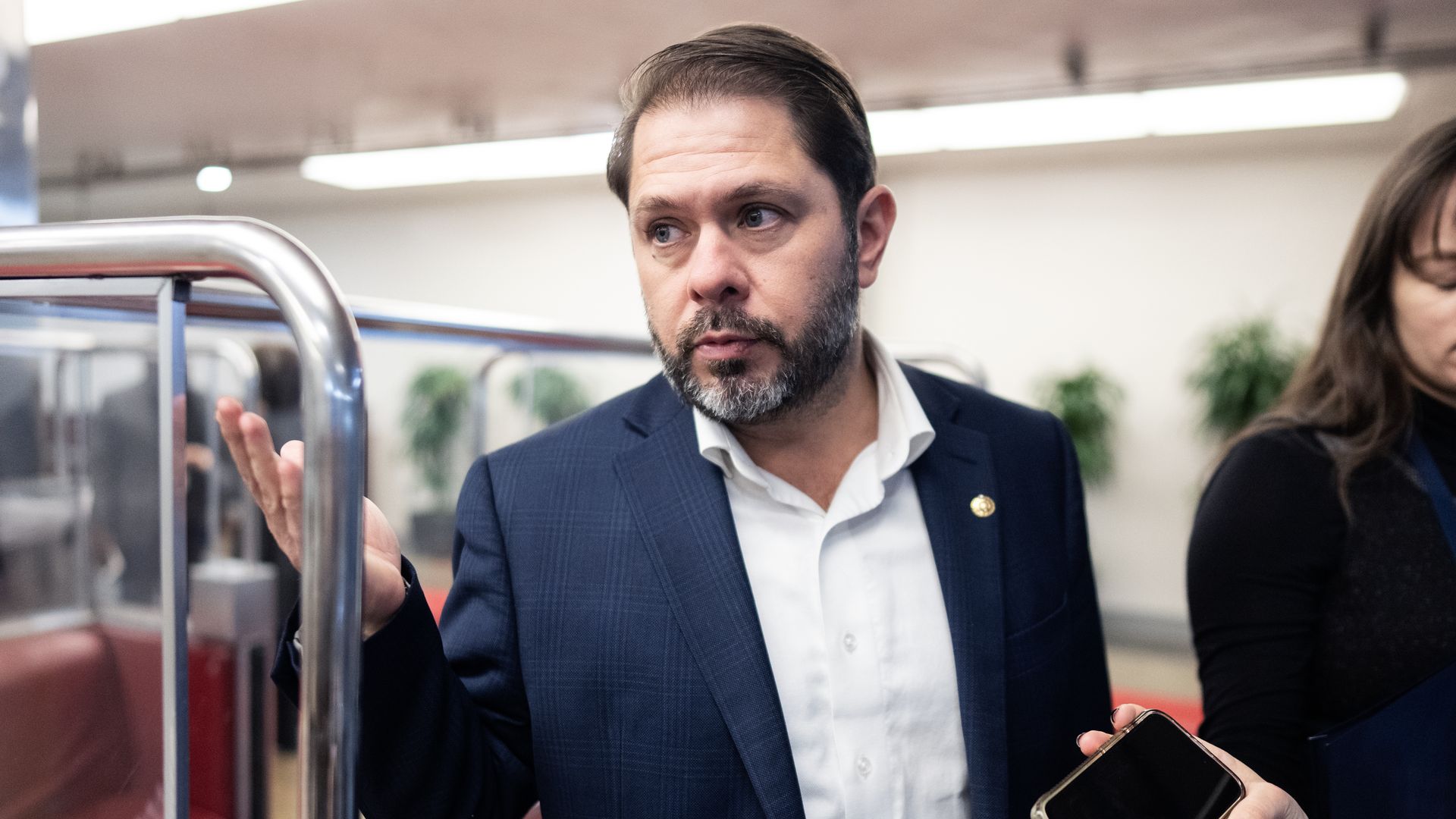
📖 Arizona Sen. Ruben Gallego wrote in a 2021 book about "drinking a lot" and "taking nonprescription painkillers like candy" as he coped with post-traumatic stress disorder and injuries after serving in combat in the Iraq war.
Why it matters: The passages shed light on Gallego's history of heavy drinking and partying — a rough-and-tumble past that top Democrats now think could be a liability as he moves toward a 2028 presidential bid.
- 🔬 Democratic operatives are giving Gallego's past a second look because of his longtime friendship with California Rep. Eric Swalwell, who resigned from Congress after being accused of sexual harassment and heavy alcohol use. Swalwell denies doing anything illegal.
- Gallego has been scrambling to distance himself from Swalwell. He's said he never saw Swalwell behave inappropriately with women while acknowledging that "we socialized, we went out."
Zoom in: GOP operatives have long believed that Gallego's memoir, "They Called Us 'Lucky,'" includes passages that could be turned against him. But efforts to do so were unsuccessful in Gallego's 2024 Senate race.
- 🪖 In the book, written with Jim DeFelice, Gallego opened up about the tough realities of serving in Iraq.
- He wrote about his best friend dying, serving in a unit that had some of the heaviest casualties in the war, and suffering from PTSD afterward.
- "Moving to Arizona gave me a fresh start," Gallego wrote, "… but I still drank more than I should have, a lot of times. I smoked like crazy. And ultimately, I didn't escape the effects of war, or PTSD."
What they're saying: Gallego's spokesperson declined to make the senator available for an interview.
- "Sen. Gallego has always been candid and transparent about the toll the Iraq war had on him," the spokesperson said. "His PTSD leading into drinking is not something he hides from, and he has been clear about his journey."
- "He has truly grown, and has put in the hours of effort to be judged on the person he is today: a happily married father of three."
⚡️ A NOTUS report this week fueled questions about Gallego, however. It said he partied late into the night while on an official trip to Bogotá, Colombia, in 2025, despite warnings from embassy staff about a credible threat to his life. A Gallego spokesperson said the senator "followed all security guidance."
— Holly Otterbein, Alex Thompson
4. 🫏 The week in the 2028 pre-campaign

A look at what potential 2028 Democratic presidential contenders are up to:
- 👍 Newsom has shied away from endorsing in California's race for governor, but he's backing Josh Fryday for lieutenant governor. Newsom headlined a Democratic Governors Association fundraiser in Los Angeles with eight other Democratic governors, including Moore and Kentucky's Andy Beshear, per the New York Times' Teddy Schleifer.
- Newsom also traveled to D.C. to mix and mingle ahead of the White House Correspondents' Association dinner last night.
- 😬 California's Democratic candidates for governor squirmed during a debate this week when asked to grade Newsom's job on homelessness in the state.
- Asked by HBO's Bill Maher if he agreed with Newsom's argument that Democrats need to be "more culturally normal," Moore said: "Democrats don't have a messaging problem. We have a results problem."
- 🚀 Pennsylvania Gov. Josh Shapiro told Jewish Insider he believes the U.S. should continue funding Israel's Iron Dome defense systems, as a growing number of Democrats are turning against such support. "I think that is in America's national security interest," he said.
- The Environmental Defense Fund criticized Shapiro for seeking court approval to keep two coal plants open in Pennsylvania.
- Several potential 2028 Democratic candidates are calling up Lina Khan, the former trust-busting chair of the Federal Trade Commission, CNN's Edward-Isaac Dovere reports.
- 🚫 Georgia Sen. Jon Ossoff told MS Now's Jen Psaki he has "zero interest in running for president in 2028."
- 🤺 Ocasio-Cortez cheered on House Democratic Leader Hakeem Jeffries for his fight against Florida's potential redistricting effort. She also endorsed progressive Chris Rabb for Congress in the crowded Democratic primary for Philadelphia's deep-blue 3rd District.
- Mark Cuban, a former surrogate for Harris, told Politico's Alex Burns he doesn't want her to run for president again.
- In a speech last night to Democrats in Arkansas, Harris said that Democrats "never bought into trickle down. That was Ronald Reagan's doing. But plenty of Democrats did buy into many of those flawed assumptions behind it."
- 🎤 California Rep. Ro Khanna will be the South Carolina Democrats' convention speaker on May 30.
- Buttigieg got "Pete! Pete! Pete!" cheers during an appearance on Stephen Colbert's show.
- 💸 Connecticut Sen. Chris Murphy is traveling to Oakland County, Mich., on Thursday to headline a fundraiser for Senate candidate Mallory McMorrow.
Thanks to David Lindsey, Axios managing editor for politics, for orchestrating. Copy edited by Brad Bonhall.
📈 If you're a CEO or on a CEO's team: Request to join Axios CEO Jim VandeHei's new Axios C-Suite weekly newsletter. It's free!
📪 Invite your friends to get Axios 2028 here.
📆 See you next Sunday!
Sign up for Axios 2028