Moore dodges questions about work on Wall Street


Add Axios as your preferred source to
see more of our stories on Google.
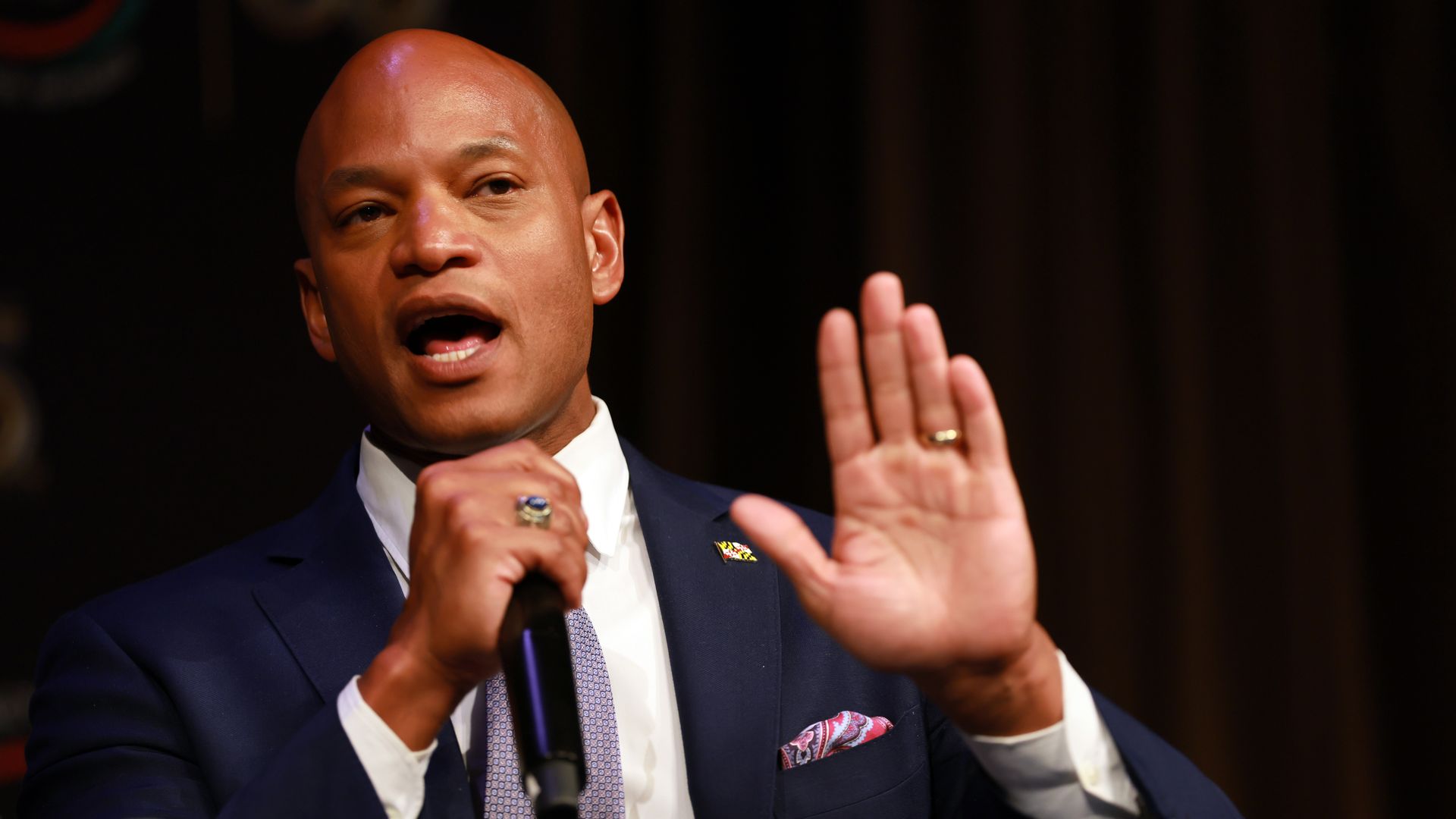
Maryland Gov. Wes Moore at a convention in New York this month. Photo: Spencer Platt / Getty Images
Maryland Gov. Wes Moore is ducking questions about his work at Citigroup during the Great Recession, including whether he got a bonus after the bank received a massive government bailout in the 2008 financial crisis.
Why it matters: Wall Street has divided the centrist and liberal factions of the Democratic Party since the financial meltdown, and some operatives see Moore's time in banking as a vulnerability in a potential 2028 White House run.
- "It was a long time ago, but it will be a headwind for him on a national stage," said Dan Geldon, a top aide on Elizabeth Warren's 2020 presidential campaign.
- "Especially in a general election against JD Vance if [Moore] won't disclose whether he received bonuses, or if it comes out that he did receive them."
Zoom in: Moore, a first-term governor, was a political outsider who first ran for office in 2022 with a compelling story: He was a bestselling author, Rhodes Scholar, White House fellow, Afghanistan veteran, and CEO of the Robin Hood Foundation, an anti-poverty group.
- His campaign made his biography central to his candidacy, but largely shied away from mentioning his tenure at Citigroup, where he started in 2007 as an investment banker in the technology division and became a vice president. He left the company in 2012.
- We asked Moore if he received a bonus after the federal bailout of Citigroup and who his clients were. A spokesperson declined to say.
- We also asked whether Moore thinks the government was right to bail out Citigroup — and if he has any regrets about working there, given that the company eventually paid what at the time was the largest civil fraud penalty in history, $7 billion, for misleading investors in the run-up to the financial crisis. A Moore spokesperson did not directly respond.
Moore has previously faced criticism for his work at Citigroup.
- In Maryland's 2022 gubernatorial primary, his opponent Tom Perez took a shot at Moore in a debate, saying, "Citibank was one of many banks that were very bad actors in the foreclosure crisis."
What they're saying: "This is exactly the kind of stale, D.C.-based nonsense that makes people hate politics," a Moore spokesperson said.
- "He has always put his country and Maryland first. Being a mid-level banker at Citi was simply a job, and characterizing it as something other than that is absurd."
- The Moore spokesperson also pointed to a book tour stop in 2011 in which Moore said Wall Street "helped foster and compound" the financial crisis "without consequence."
Flashback: Before Moore entered politics, he briefly wrote about his job at Citigroup in his 2015 book, "The Work: My Search for a Life That Matters."
- He said he joined the bank in part because his mentor, then-John Hopkins University President William Brody, had introduced him to Pam Flaherty, who led the Citi Foundation at the time.
- "The entrée into the firm she gave me was invaluable," Moore wrote, explaining that he "wasn't in love with banking" but it was "the easiest choice."
Moore also wrote empathetically about the people on Wall Street who lost their jobs during the subprime mortgage crisis, including a janitor he knew personally as well as colleagues who were finance professionals.
- "I know it's hard to feel sympathy for bankers, especially at a moment when the banking system has so distorted the world's economy," he said. "But when you're in close proximity to the people affected, you also see it as a series of specific, human tragedies."
Zoom out: Past presidential campaigns have targeted opponents for their ties to banks and other businesses, and Democratic operatives on rival 2028 teams similarly see Moore's time at Citigroup as a vulnerability.
- President Obama made Republican Mitt Romney's leadership of the private equity firm Bain Capital the centerpiece of his 2012 campaign against him.
- In 2016, Vermont Sen. Bernie Sanders attacked Hillary Clinton over her paid speeches to Goldman Sachs and other banks, and his campaign called on her to disclose transcripts from them.
Even after politicians work in junior roles at certain companies, it can haunt them.
- During Pete Buttigieg's 2020 presidential campaign, left-wingers bashed him over his work for the business consultant McKinsey & Co., calling him "Pete Romney."
- Buttigieg released a list of his clients at the company in response to the criticism.
