AOC's hide-and-seek strategy with the press


Add Axios as your preferred source to
see more of our stories on Google.
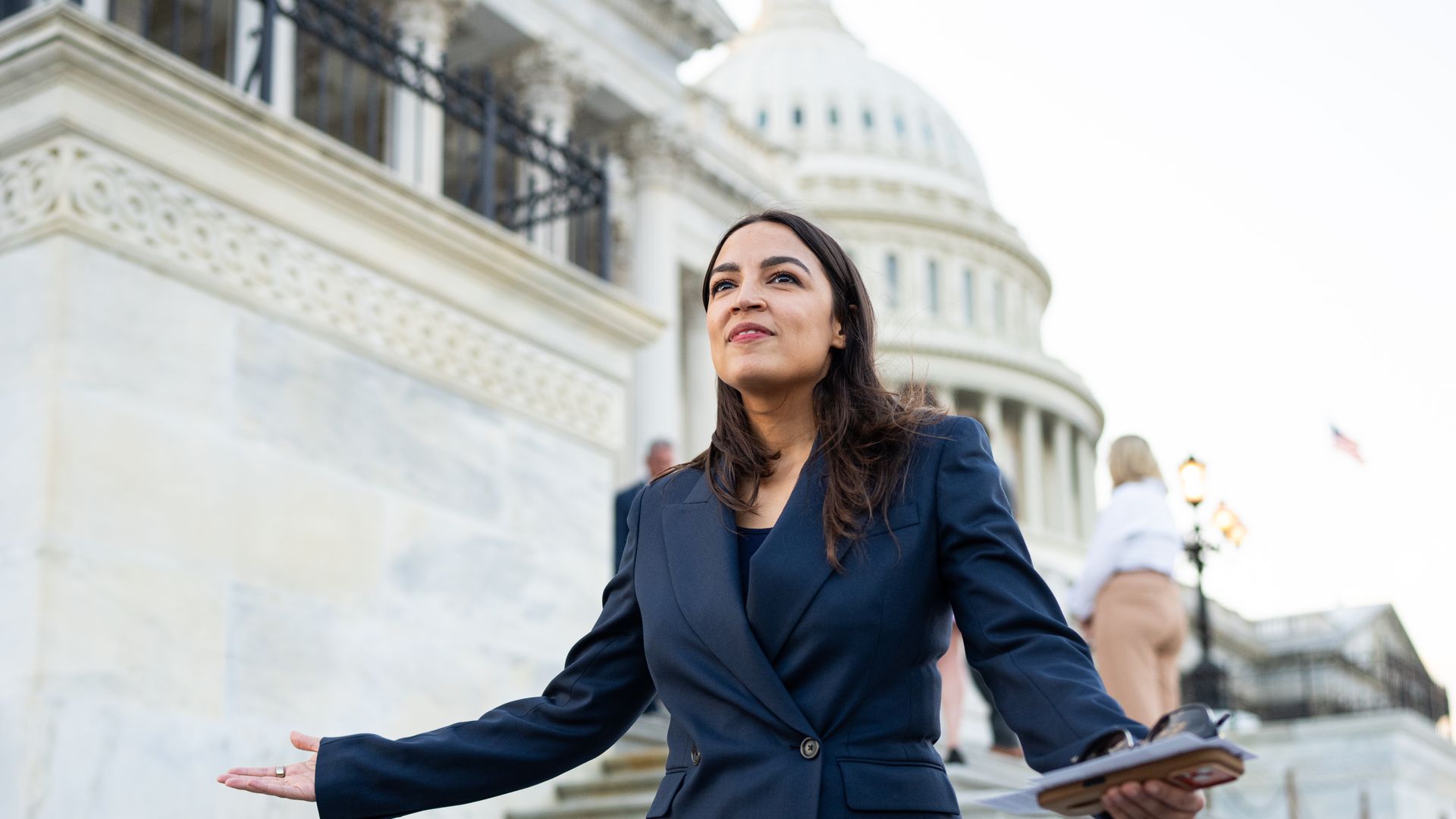
Photo: Bill Clark / CQ-Roll Call via Getty Images
New York Rep. Alexandria Ocasio-Cortez doesn't want to meet the press.
- The progressive lawmaker has sat for just three interviews with national media this year — a fraction of what other potential 2028 candidates for president have done.
- When she is interviewed it's usually with an ideologically sympathetic outlet or reporter, or is focused on a topic that's politically safe.
Why it matters: This distinct approach to the media suggests three things about Ocasio-Cortez and her team's approach as she weighs a run for the White House:
1. She doesn't believe she needs to do interviews the way other potential candidates do to get attention, given the frequent coverage of her and her enormous social media following (9.6 million on Instagram alone).
2. She's naturally cautious as she navigates the national stage, people who have worked with her told Axios.
3. AOC and her team share at least some of the disdain for mainstream — or "corporate" — media that's been building for years on the left, a response to what they see as unfair coverage of Bernie Sanders' presidential campaigns, the war in Gaza and other issues.
- Democrats who've worked with Ocasio-Cortez's team say they've been surprised by some of her aides' private hostility toward national media.
Ocasio-Cortez's three interviews this year have included:
- 1 podcast interview — roughly 20 minutes with former CNN anchor Don Lemon.
- 1 print interview with the New York Times' Kellen Browning, to clean up some of AOC's halting answers on foreign policy at the Munich Security Conference in February.
- 1 TV news interview with CNN's Jake Tapper, after a U.S. citizen was killed in Minneapolis by Trump administration immigration agents.
Ocasio-Cortez sat for several interviews in the first months of 2025 — with NPR and Jon Stewart's "The Weekly Show," among others — then largely stopped for the rest of the year.
- She still engages in quick hallway Q&A's with Capitol Hill reporters, but even there she often gravitates toward progressive journalists such as Pablo Manríquez of MeidasTouch.
- Ocasio-Cortez's team has been telling people since last fall that The Atlantic's Mark Leibovich has had access to her for a long profile that's yet to be published. Asked about the potential profile, Leibovich replied with a 🤷.
Ocasio-Cortez declined to be interviewed for this story.
- Her chief of staff, Mike Casca, told Axios: "She takes questions multiple times a day from the press. And anyone with a press credential is able to find her in the Capitol and ask her questions."
- "It's bizarre to me how much disdain national political reporters have for their colleagues in the Capitol Hill press corps."
The intrigue: Some Democratic operatives believe Ocasio-Cortez's media game plan has short-term benefits, but could be a mistake in the long run even if she opts to run for Senate in 2028 rather than president.
- The less a candidate engages with the media, they aren't as practiced and there is more scrutiny when they sit down for an interview, they argue.
- They pointed to Ocasio Cortez's unsure answers in Munich as an example of the potential downside of being avoiding unpredictable questions.
Between the lines: AOC's strategy is at odds with the post-2024 conventional wisdom of many Democrats, who thought Kamala Harris and Joe Biden were too guarded with traditional press and newer media such as long-form podcasts.
- Most potential 2028 Democrats have spent the past 16 months with a "do everything" approach as they've sat down with podcasters, late-night show hosts, mainstream reporters and social media influencers.
- Some, such as California Gov. Gavin Newsom and former Transportation Secretary Pete Buttigieg, have made a point of sitting down with conservative or commentators with nontraditional positions.
Ocasio-Cortez's strategy also contrasts with that of a mentor, Vermont Sen. Bernie Sanders (I), a longtime critic of what he often calls the "corporate media."
- Sanders routinely engaged with the press during his presidential campaigns, and still does.
- AOC's approach also differs from that of New York City Mayor Zohran Mamdani — a close ally who engages with the national media far more often.
Several operatives from Sanders' past campaigns are now working for Ocasio-Cortez, while others have joined California Rep. Ro Khanna, who's also trying to find a left-wing lane ahead of a potential White House run.
- Khanna has been among the most active possible contenders for 2028, crossing the nation for appearances on a wide range of media platforms in traditional and new media.
