White House envoy says Hamas' response to ceasefire proposal "unacceptable"

Add Axios as your preferred source to
see more of our stories on Google.
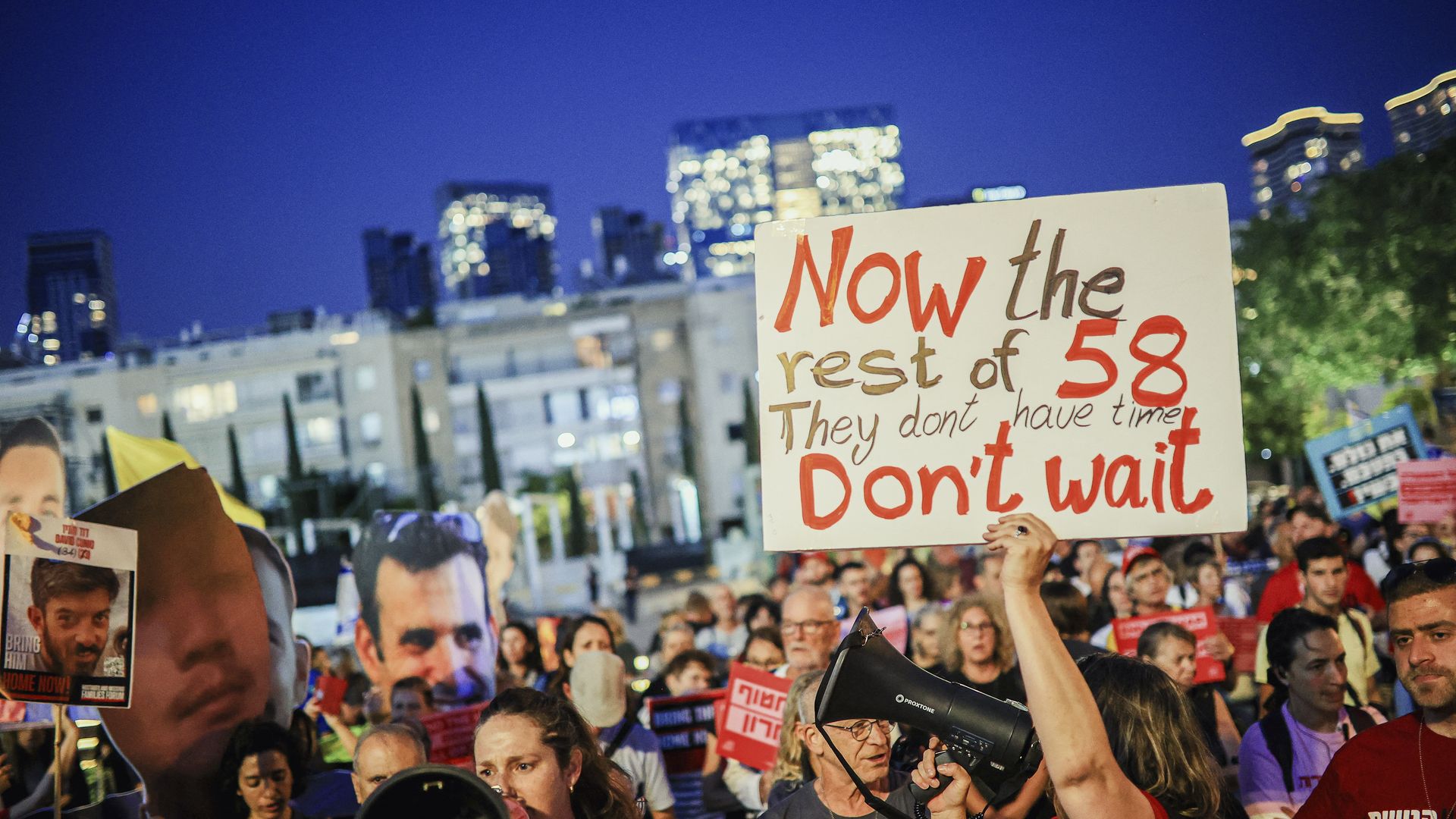
Israelis march to demand freedom for all hostages held in Gaza and call on U.S. officials, including President Trump, to intervene for their release near the U.S. embassy in Tel Aviv. Photo: Itai Ron/Middle East Images/AFP via Getty Images
White House envoy Steve Witkoff told Axios on Monday he is "disappointed" that Hamas has so far failed to accept his proposal for a new Gaza hostage and ceasefire deal.
Why it matters: Witkoff has been speaking directly with Israeli Prime Minister Benjamin Netanyahu and his top adviser, Ron Dermer, and with Hamas leadership through a backchannel facilitated by Palestinian American businessman Bishara Bahbah.
What they're saying: "What I have seen from Hamas is disappointing and completely unacceptable," Witkoff told Axios.
Driving the news: Negotiations have shown little progress. Meanwhile, the Israel Defense Forces are proceeding with an operation to displace all 2 million Palestinians in Gaza to a "humanitarian zone" and flatten most of the enclave.
- President Trump said Sunday he wants to end the war in Gaza "as quickly as possible," stating publicly what he's been saying privately since his trip to the Middle East this month.
Zoom out: Hamas officials briefed Arab media on Monday that the U.S. has presented a new proposal for a hostage and ceasefire deal.
- According to the reports, the proposal includes a 60-day ceasefire with the release of five live hostages on its first day and another five living hostages on its last day.
- Hamas officials described the proposal as one that includes a boost in humanitarian aid delivery to Gaza, and the withdrawal of IDF forces to the lines they were in last March before the war resumed.
- According to Hamas' claims, the U.S. proposal says that during the ceasefire negotiations, the U.S. has guaranteed that Israel will negotiate seriously and will not unilaterally resume the war like it did in the previous ceasefire.
- Hamas then said in a statement that it accepts the new U.S. proposal.
The alleged U.S. proposal Hamas identified Monday differs from Witkoff's latest proposal in the number of live and dead hostages that would be released during the ceasefire and the timing and sequence of their release.
- Witkoff's latest proposal includes the release of 10 live hostages and 19 dead hostages in return for 45 to 60 days of ceasefire and the release of Palestinian prisoners.
Behind the scenes: Witkoff said Monday that Hamas was given no new proposal, despite their claims.
- He added that Israel will agree to his latest proposal for a temporary ceasefire and hostage deal.
- Witkoff said the proposal Israel agreed to would "lead to substantive negotiations to find a path to a permanent ceasefire, which I agreed to preside over."
- "That deal is on the table. Hamas should take it," he said.
A senior Israeli official with direct knowledge of the issue said Bahbah has been in Doha in recent days and negotiated with Hamas leaders.
- The Israeli official said Bahbah negotiated according to a set of general guidelines he got from Witkoff and claimed that Bahbah potentially went further than he was instructed, or interpreted the guidelines more broadly than they were intended.
- Israel opposes Hamas' proposal, the official said, as they believe it would mean that only five hostages would be released since Hamas could violate the deal and refuse to release the remaining hostages.
- Bahbah also agreed with Hamas on language that can be interpreted as saying a permanent ceasefire will start right after the 60-day ceasefire and isn't subject to negotiations. Israel rejected that, the official said.
- "The deal Bahbah reached with Hamas was totally rejected by Israel, and it seems that when Witkoff realized that, he pulled the brakes on it," the Israeli official said.
The other side: The Israeli prime minister's office rejected the proposal Hamas described as "a U.S. proposal" and said "no responsible Israeli government could accept it."
- Netanyahu said later in a video he posted on social media that he hoped to have news on the hostage issue: "If we can't say something about it today, we will say something about it tomorrow," he added.
Editor's note: This story has been updated with additional information throughout.
