Russia's invasion pushed global food prices to record high

Add Axios as your preferred source to
see more of our stories on Google.
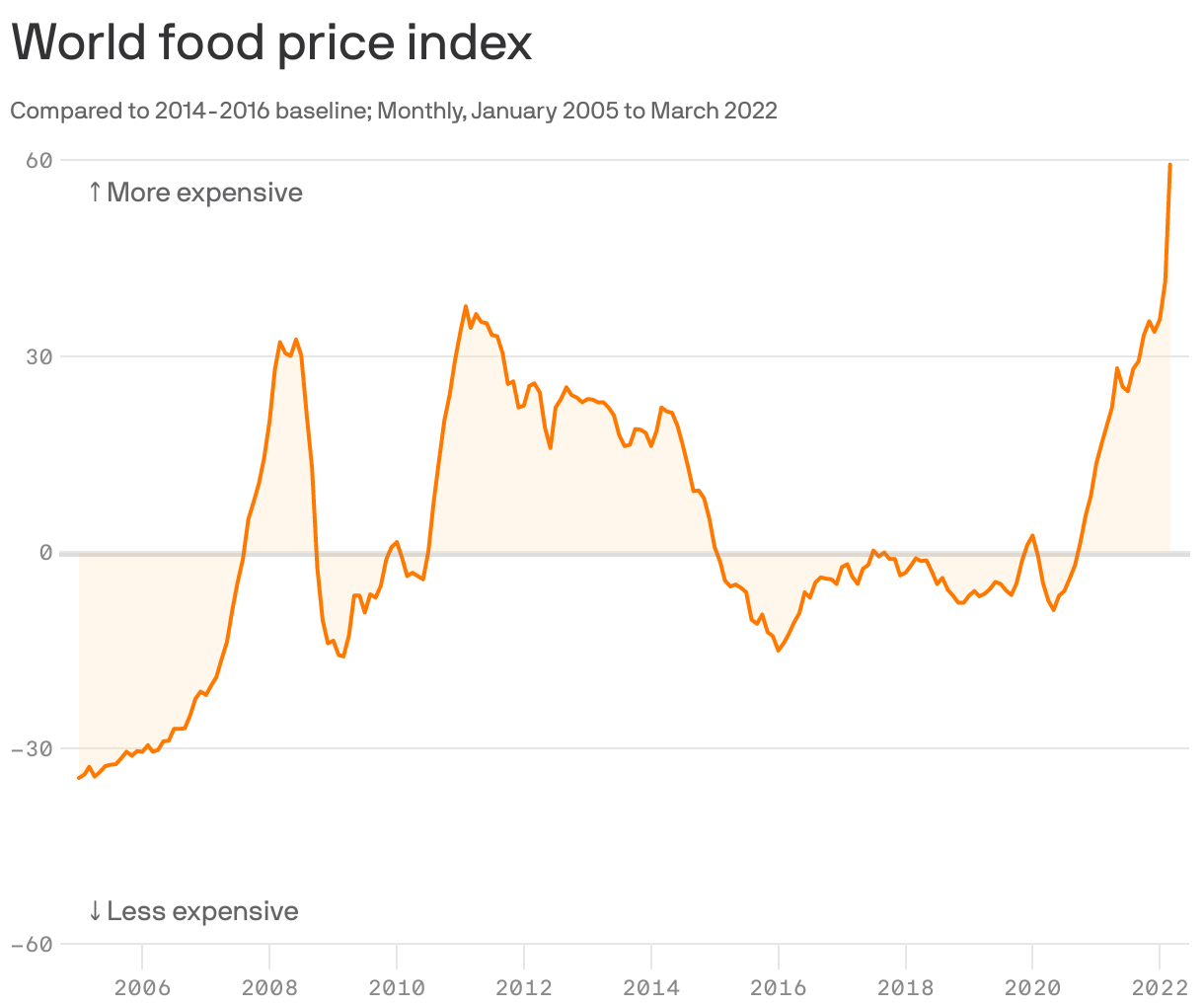
Food prices soared to record highs last month, as the war in Ukraine exacerbated what was already a global crisis.
Why it matters: In poorer countries where folks spend upward of 50% or more of their income on food, these numbers are devastating.
- In March, the food price index published by the United Nations Food and Agriculture Organization surged to its highest level since the index's inception in 1990.
State of play: The tools that central banks are using to fight inflation — rate hikes, quantitative tightening — are meant to curtail demand, but can do little to address global supply problems.
- "Raising rates will not resolve the war or address the supply chain," said Jean Boivin, head of the BlackRock Investment Institute.
Behind the numbers: The index tracks a basket of commodities including cereals, vegetable oils, dairy, meat and sugar.
- The prices of wheat and sunflower oil, in particular, are rising because of the war. Some Ukrainian ports are closed and others face disruptions.
- Issues will certainly drag into next year as some farmers in Ukraine — the leading sunflower-oil exporter and a top grains supplier — are unable to plant crops.
What's next: The U.S. is also struggling with rising food prices. Expect to hear more about that Tuesday morning, when the March Consumer Price Index is released.
