TikTok looks to downplay its China ties

Add Axios as your preferred source to
see more of our stories on Google.
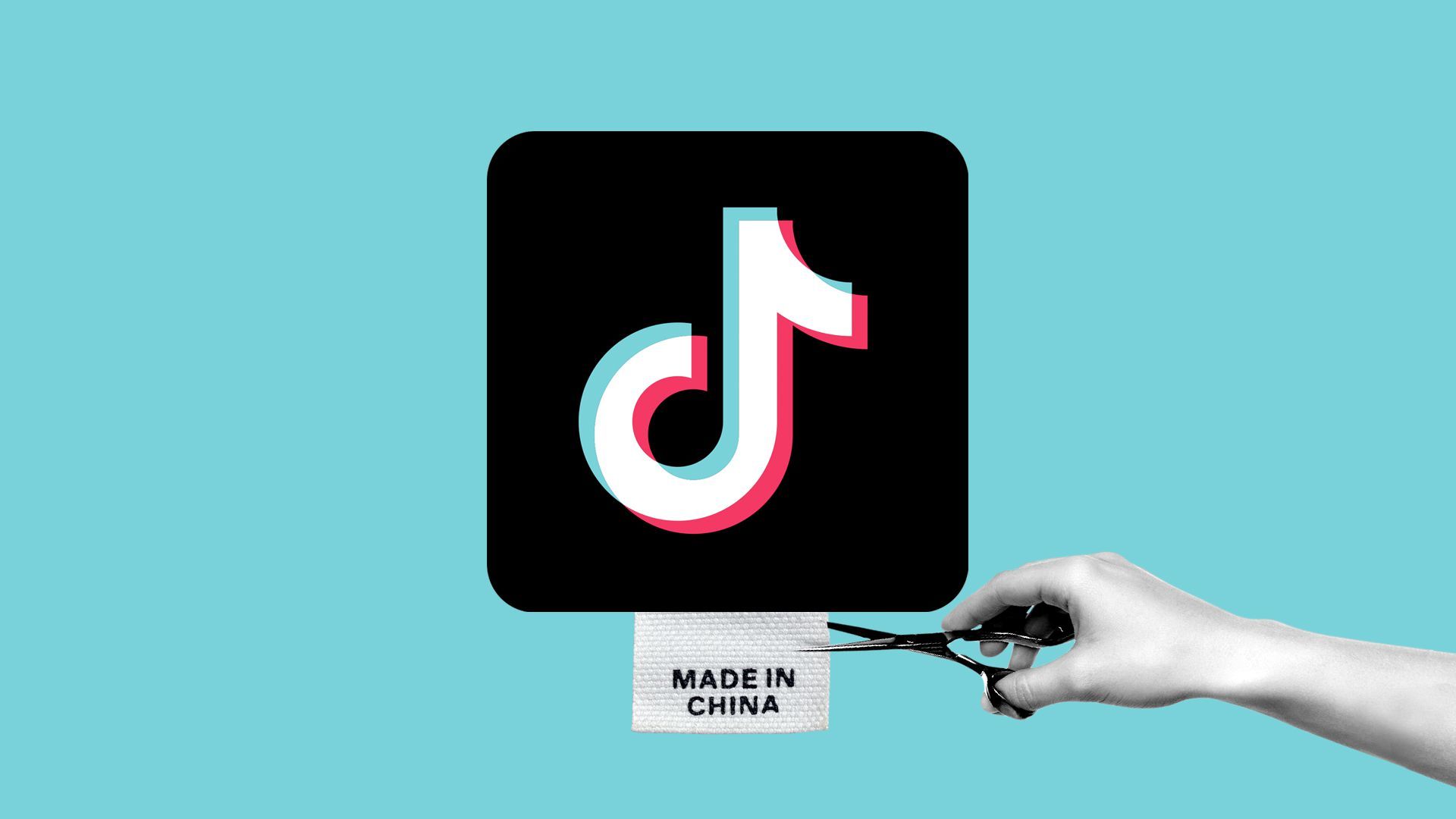
Illustration: Aïda Amer/Axios
As lawmakers and regulators zero in on issues around Chinese tech companies and U.S. tech companies' ties to China, the longstanding low U.S. profile of Chinese tech brands is beginning to change.
The big picture: Our devices are made in China but our software and services, for the most part, aren't. TikTok is a big exception — and now the video-sharing network is under fire amid concerns over its Chinese ownership and the potential for censorship or risks to user data.
- The company, which acquired Musical.ly in 2018 to bring TikTok to the U.S., faces a national security probe over that deal, as well as inquiries from Congress.
For its part, the company has broken its silence and is on a media campaign to distance itself from the Chinese government, an effort that could include a rebranding to disassociate the service from its Chinese ownership, per the Wall Street Journal.
- Meanwhile, CEO Alex Zhu told the New York Times that he would go as far as to personally reject an appeal for user data even if it came from Chinese leader Xi Jinping. He also reiterated that TikTok doesn't store U.S. user data in China and doesn't share such data with its Chinese parent company.
As TikTok looks to play down its Chinese roots, it is following a path similar to the few Chinese companies who have gone after the U.S. consumer market.
- TCL is a Chinese hardware giant that sells a ton of consumer devices in the U.S., but mostly under other, more American-sounding brands. With phones, for example, it sells under the Alcatel and BlackBerry brands. In TVs TCL now uses its own name in the U.S., but sold for a long time under the RCA moniker.
Yes, but: Chinese companies aren't the only tech firms that don't trumpet their ownership of high-profile brands. A surprising number of people fail to connect Instagram and WhatsApp with Facebook, which owns them. Ditto for Google and YouTube.
History lesson: The first Chinese tech company to make a serious run at the U.S. consumer market was Lenovo, which bought IBM's PC business back in 2005.
- It initially had the rights to use the IBM brand on computers for five years but switched over to ThinkPad after three years. It now sells tablets and PCs under the Lenovo brand.
- On the phone side, it uses the Motorola name exclusively in the U.S., even though in other countries it sells under both brands.
Meanwhile: U.S. brands, outside of Apple, have largely struggled in China, where the internet is dominated by homegrown brands like Tencent, Baidu and Alibaba. The Chinese hardware scene is also dominated by domestic players such as Oppo, Xiaomi and Huawei.
Go deeper:
