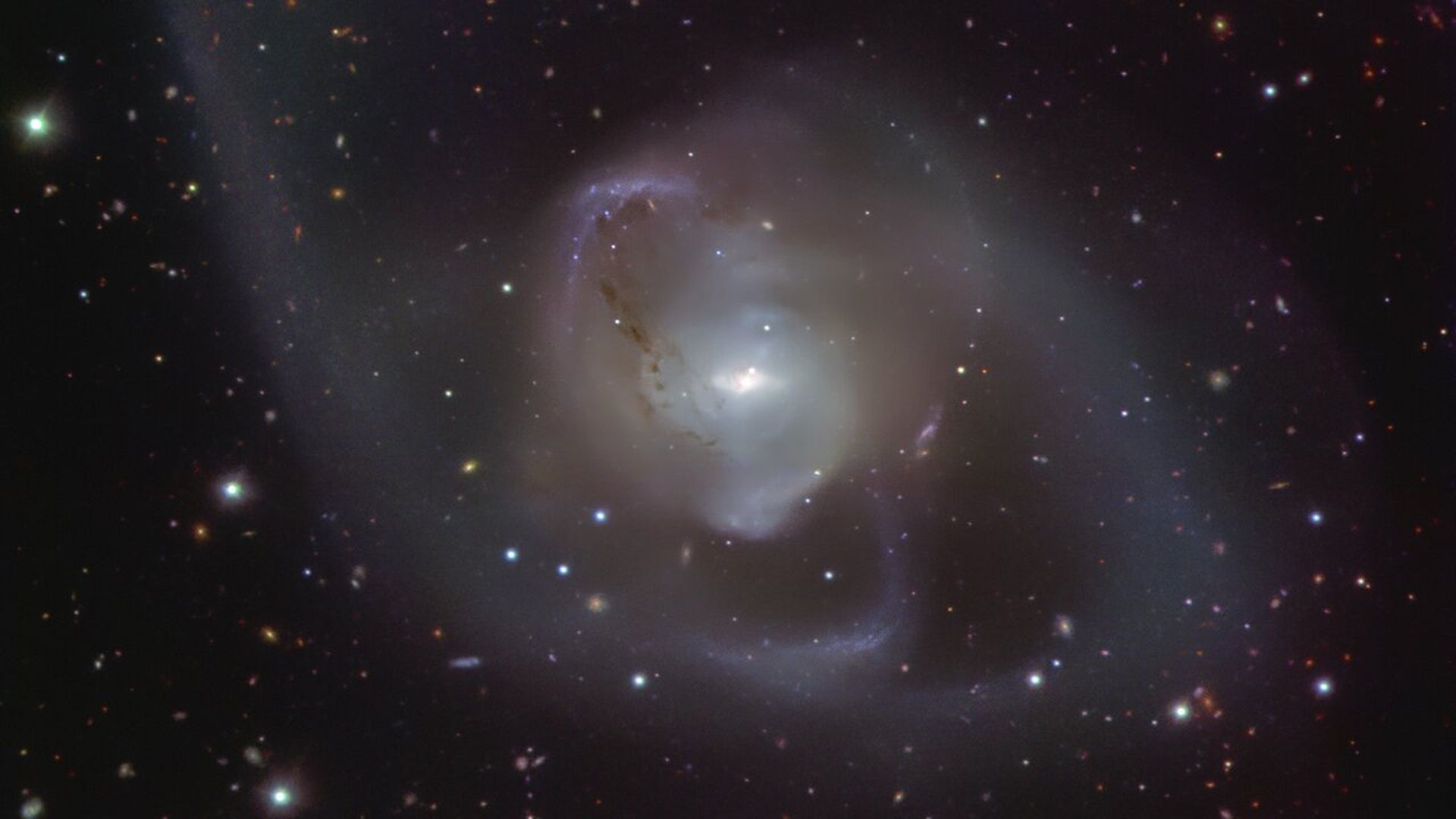
About 1 billion years ago, two galaxies merged, creating a new galaxy seen in a photo taken by a telescope in the Southern Hemisphere.
Why it matters: Galaxies can grow and evolve through collisions like this one, giving scientists a glimpse into the diversity of these types of objects out there in the universe.
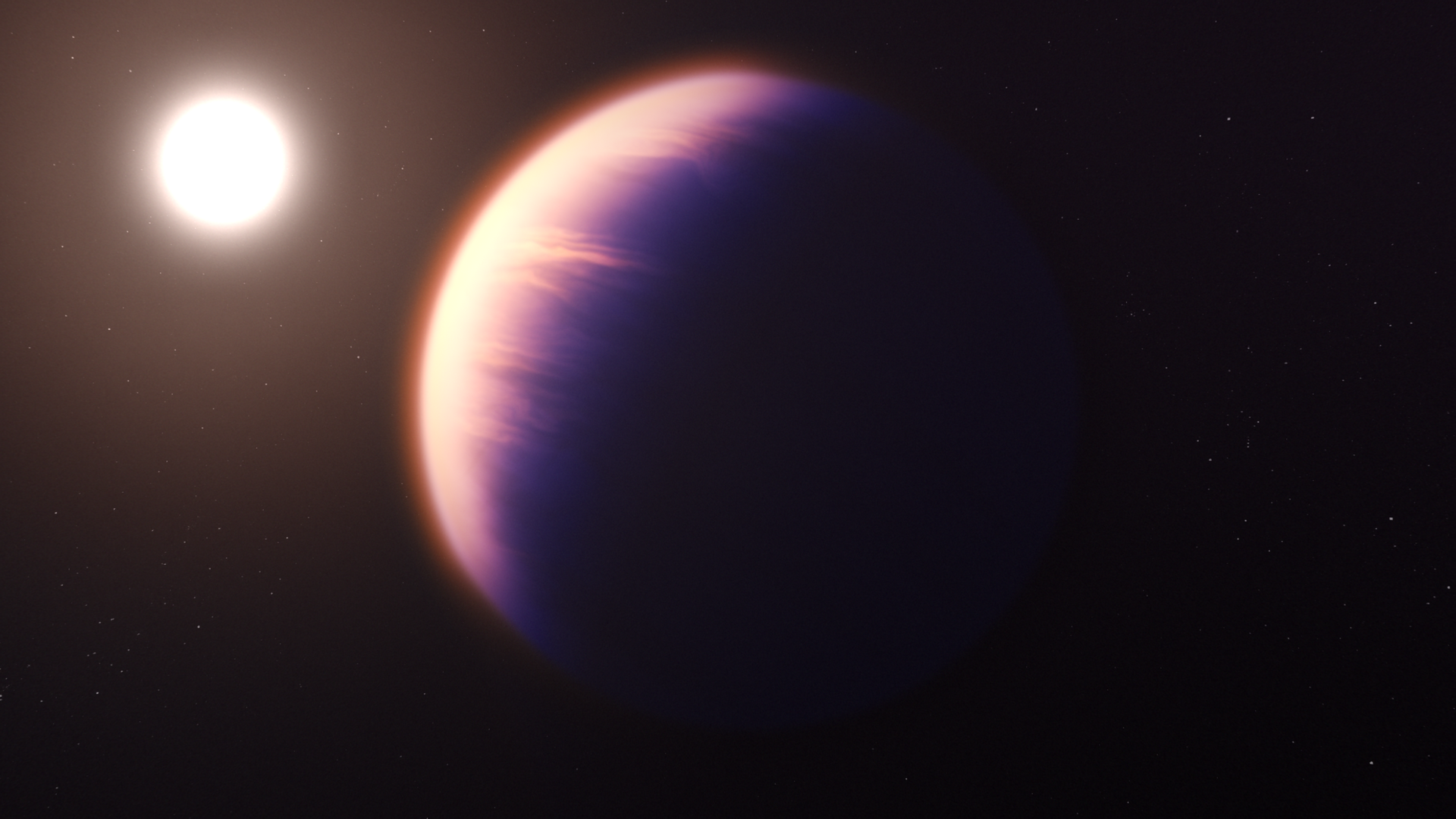
The James Webb Space Telescope has detected carbon dioxide in the atmosphere of a distant planet circling a Sun-like star for the first time.
Why it matters: The JWST is designed to investigate and help scientists understand the compositions of exoplanet atmospheres in the hopes of eventually figuring out exactly what might make a world habitable.
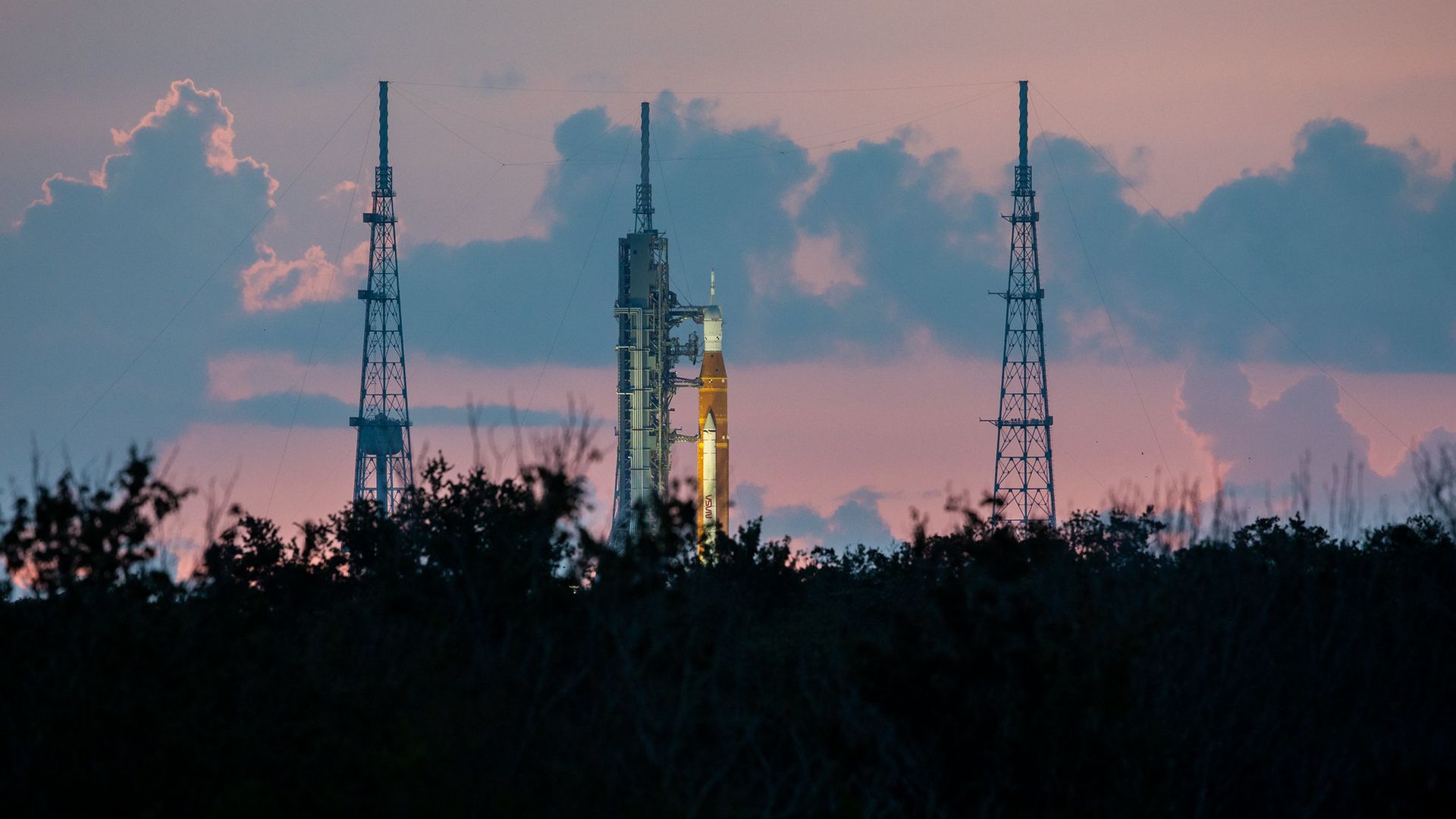
NASA delayed the much-anticipated launch of its Space Launch System rocket and uncrewed Orion capsule on Saturday.
The latest: NASA says it won't be able to launch the SLS before late September or October, opting to stand down and fix the issues that scuttled liftoff on Saturday.
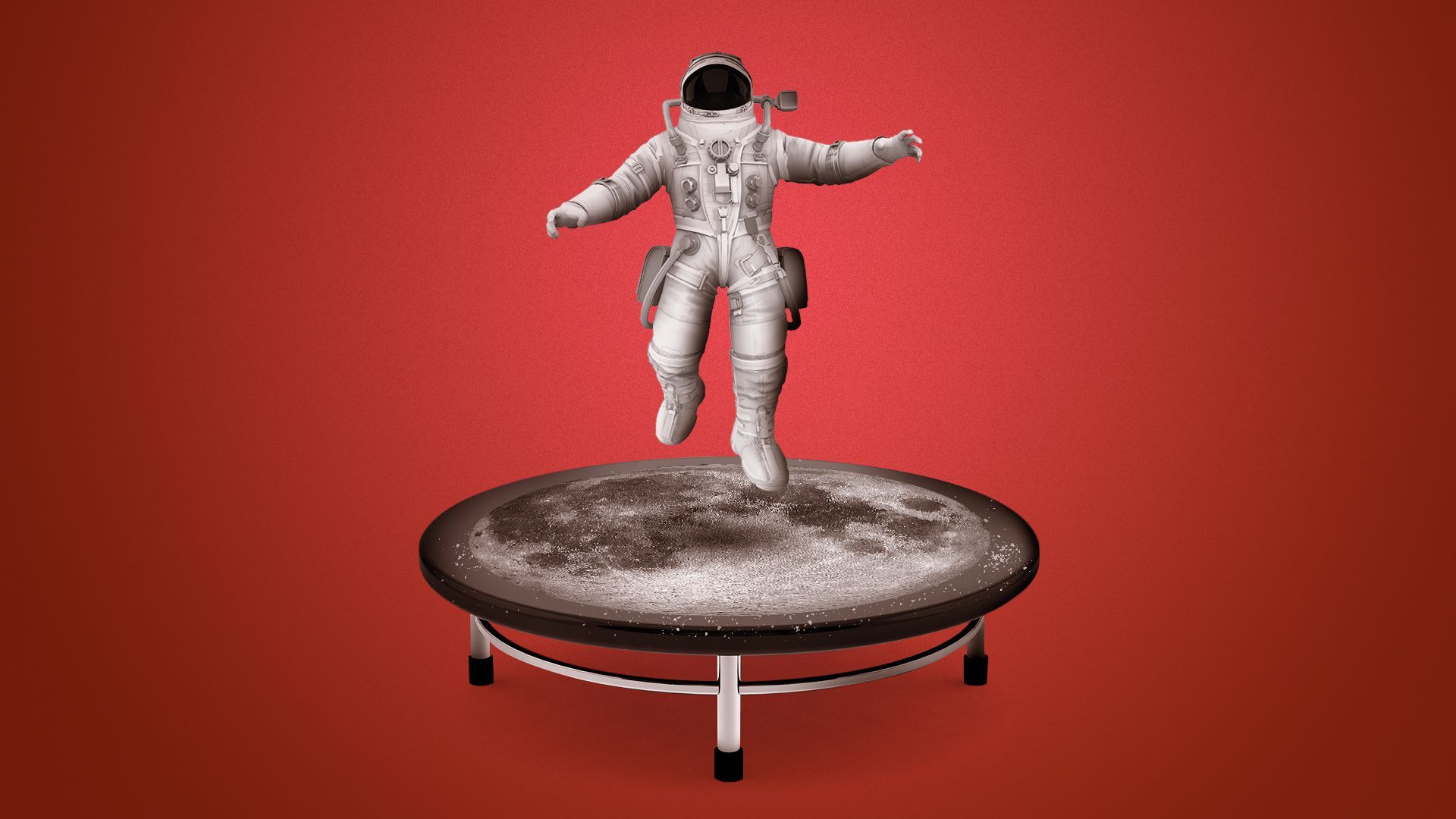
NASA's vision of astronauts walking on Mars hinges on first getting them back to the Moon.
Why it matters: NASA is planning to launch its first test flight of its new Moon rocket today, marking one of the agency's first major steps along a decades-long journey to Mars.